The Cost of This Job
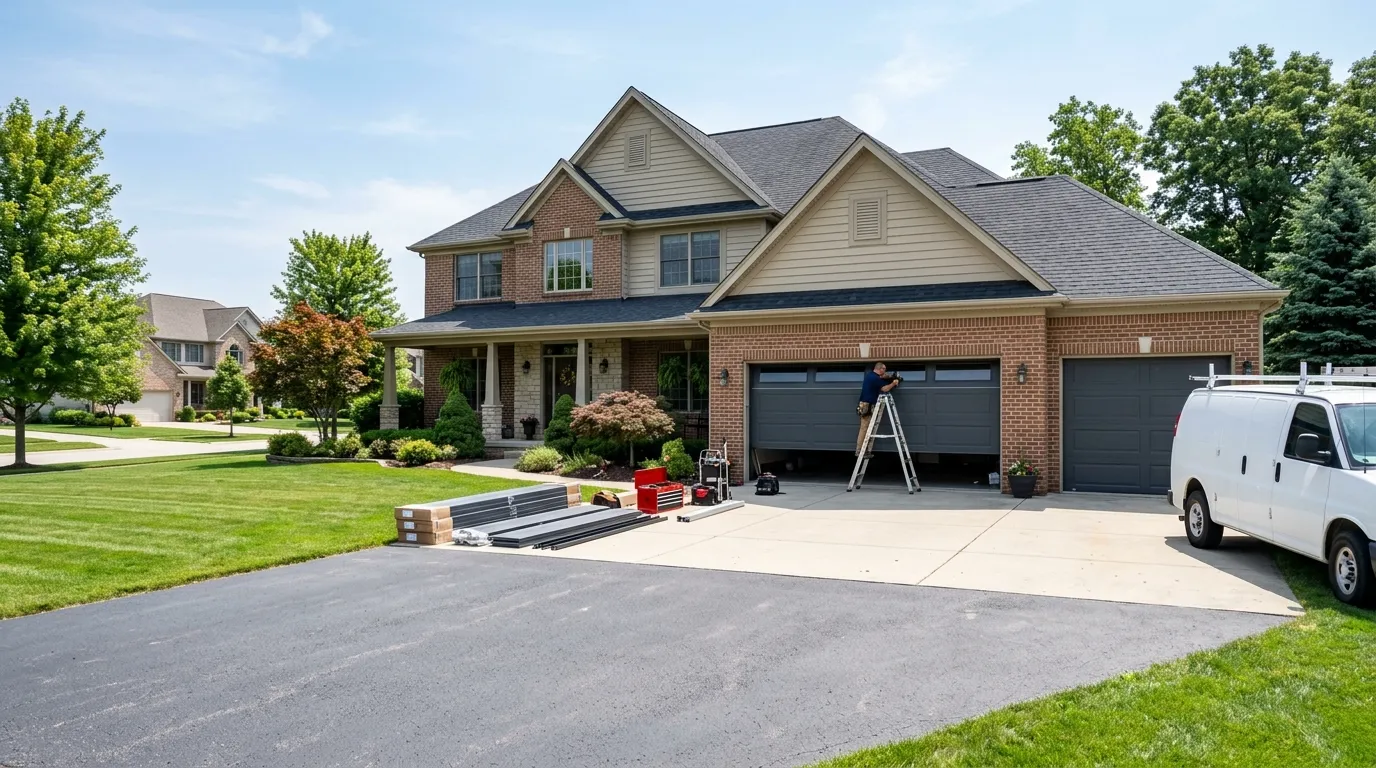
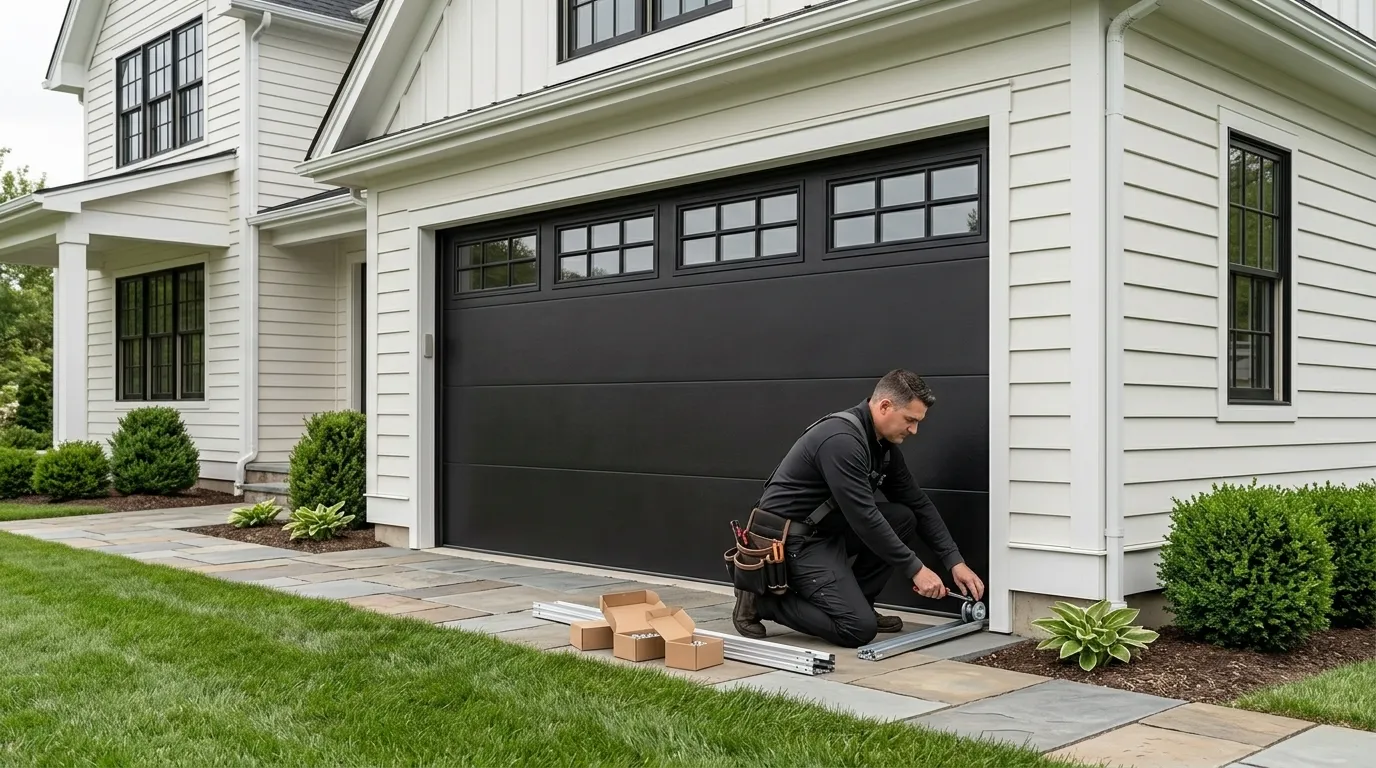
Carnuel's 333 households sit on the newer edge of what we see out this direction - most of the area's stock was built around 1975, which is later than a lot of the older valley neighborhoods we work in. That means fewer of the ancient extension-spring setups and more torsion systems, and that changes the repair math: torsion hardware costs more in parts but usually lasts longer and fails cleaner, a snapped spring instead of a slow-motion cable fray. Median household income here runs $89,432, well above the $72,188 median across the wider service area, and that shows up in what people choose when a door finally dies - more full replacements with insulated steel doors, fewer patch jobs meant to squeeze one more year out of a door that's already worked past its life. We don't price a job over the phone. Spring size, drum type, and opener parts vary enough by door that a quote given sight-unseen is a guess, and we'd rather quote after we've actually looked at the hardware.
What the Fix Involves
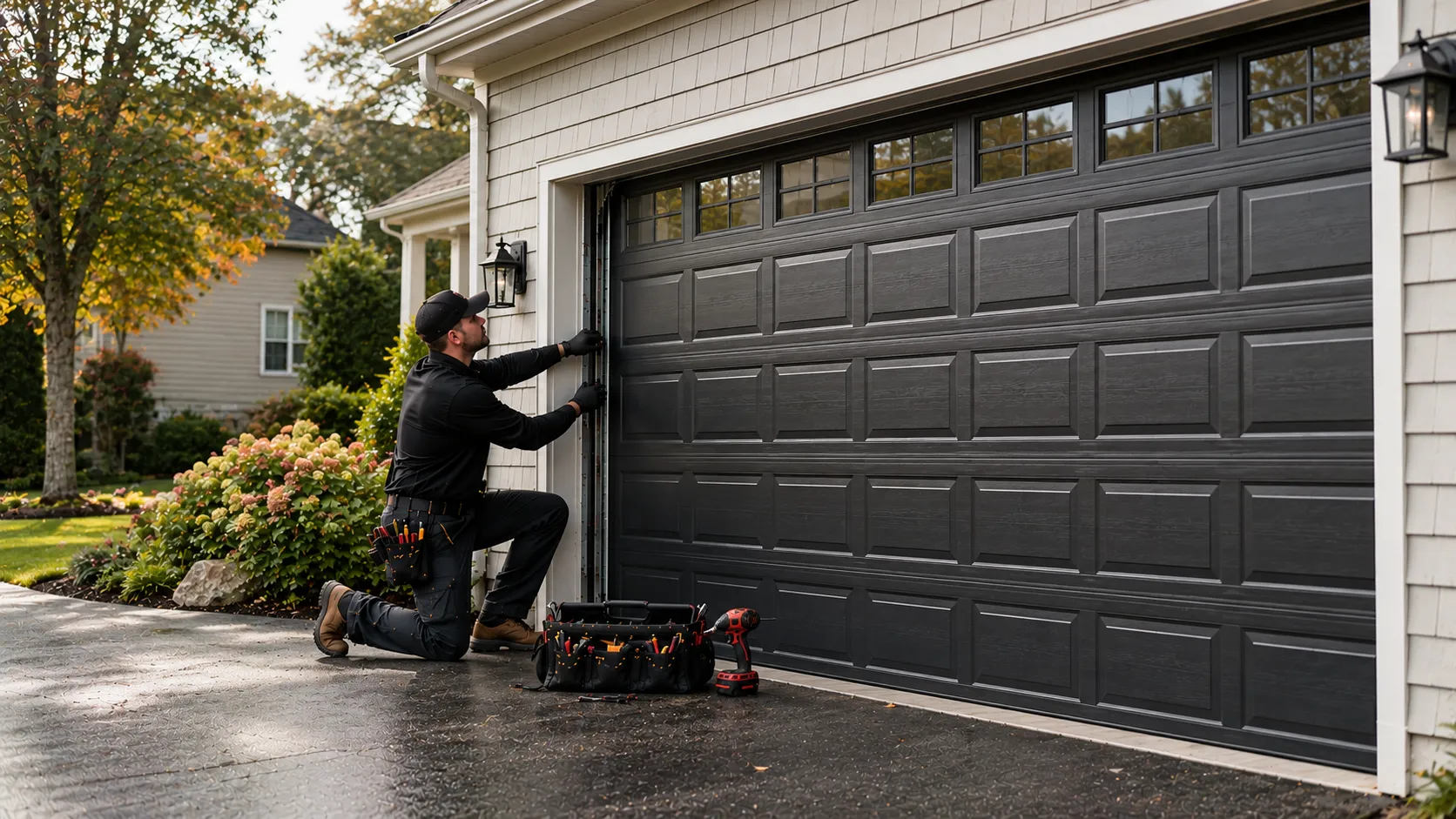
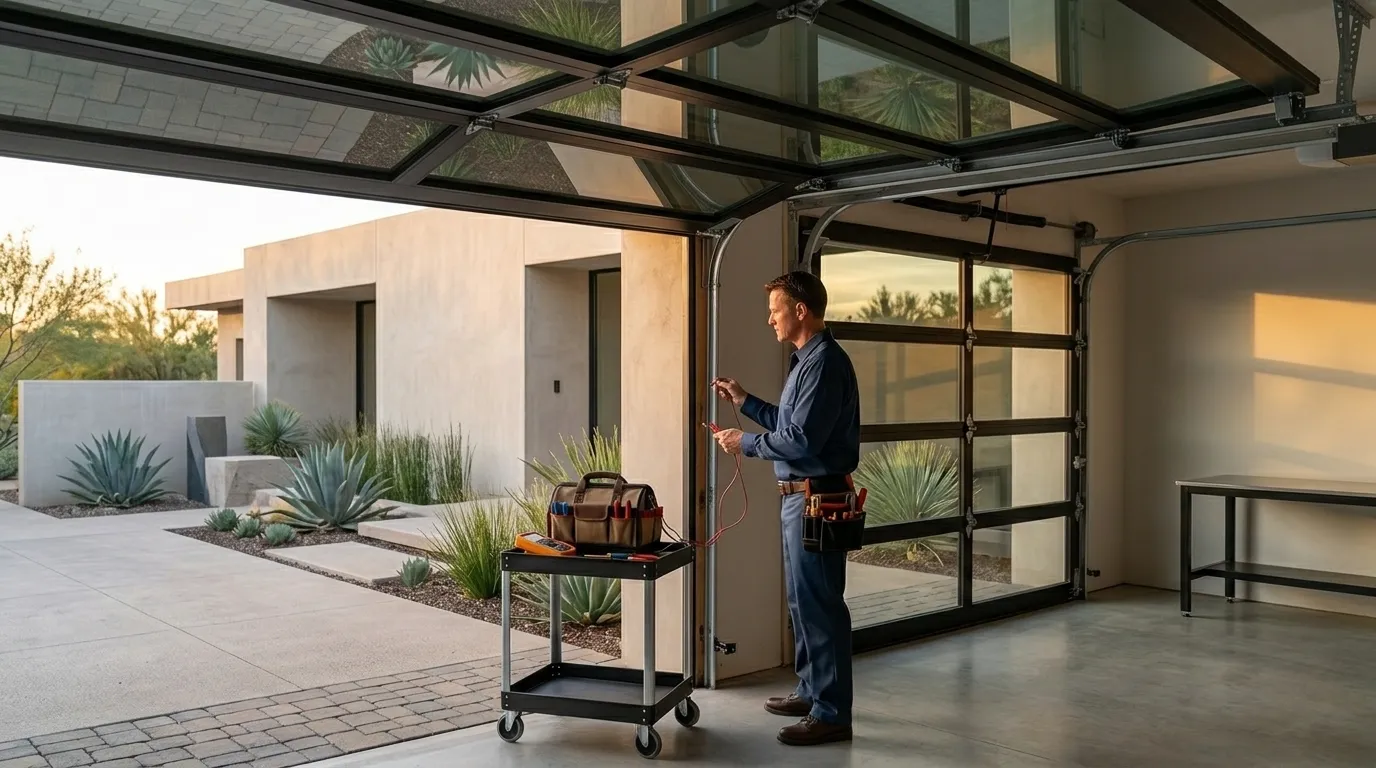
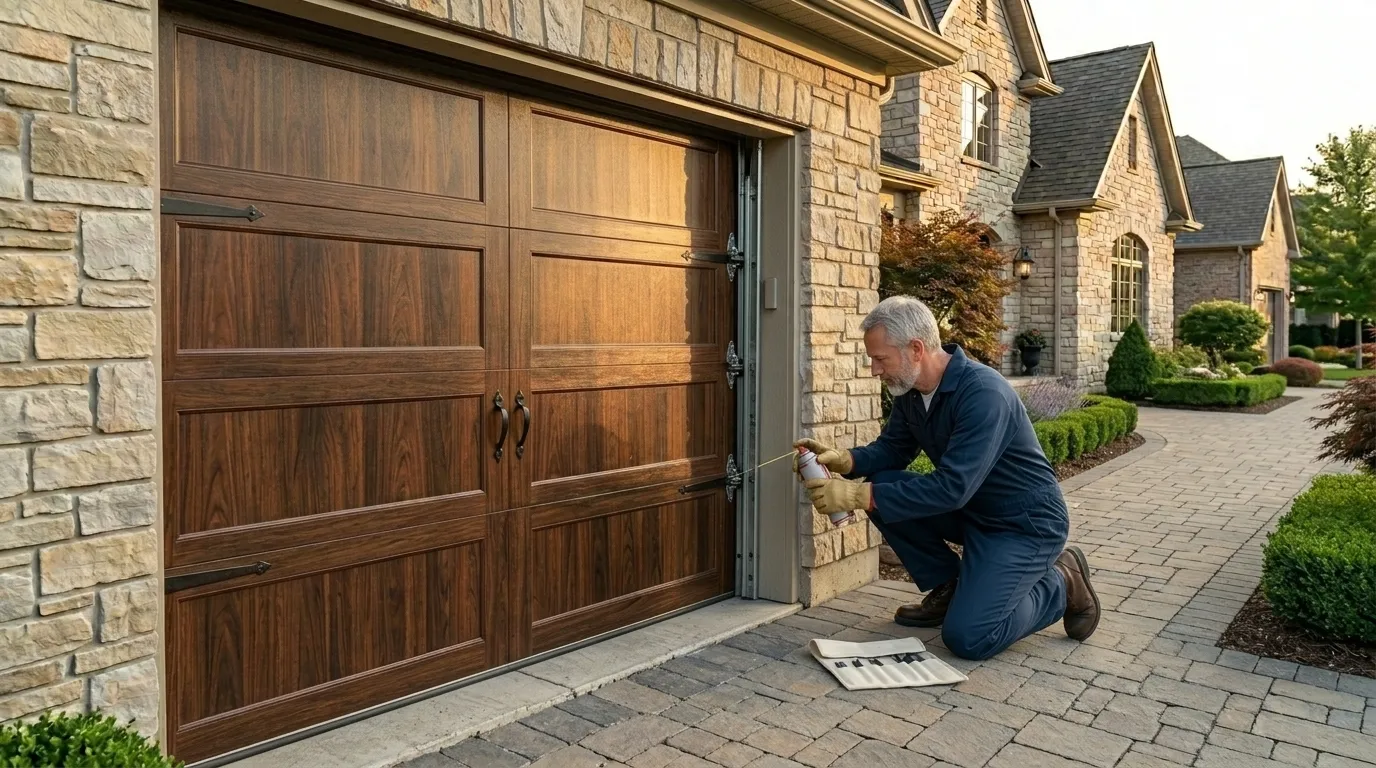
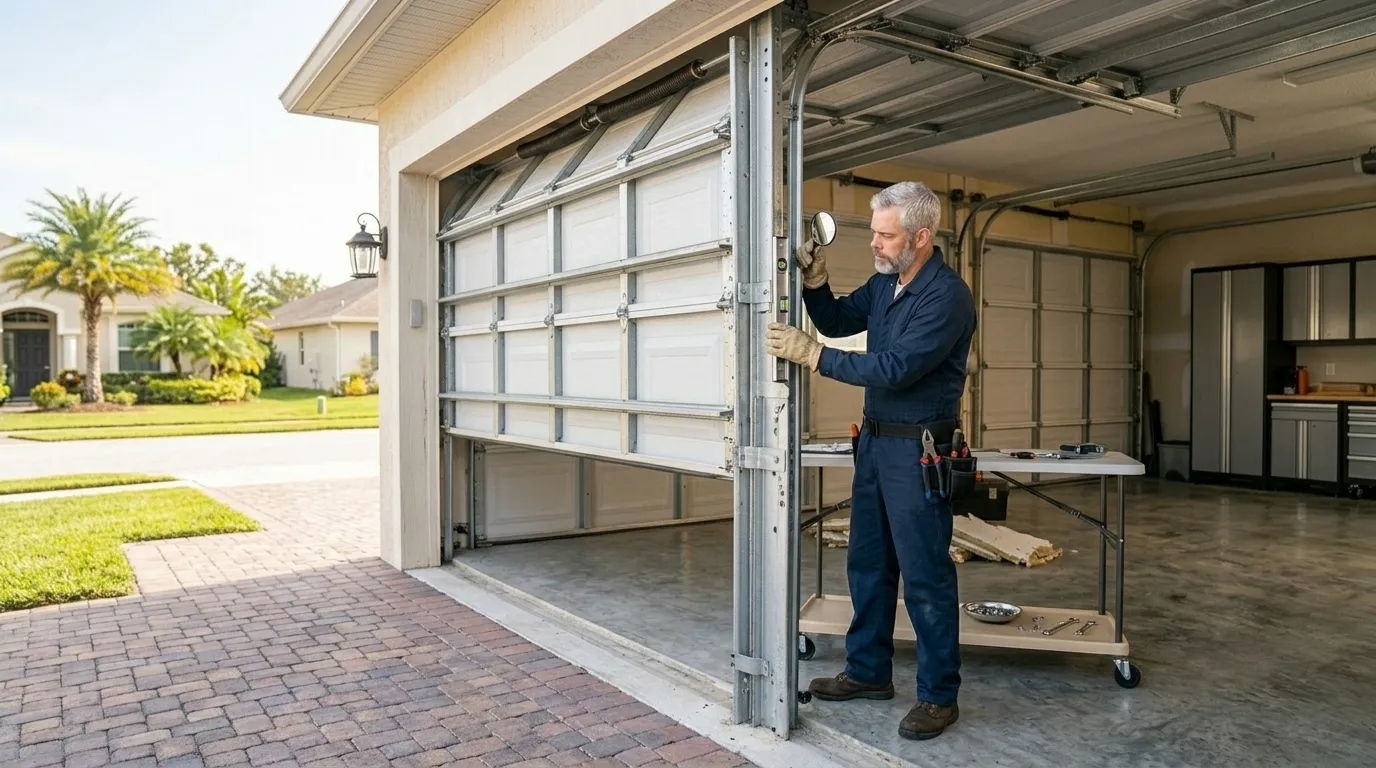
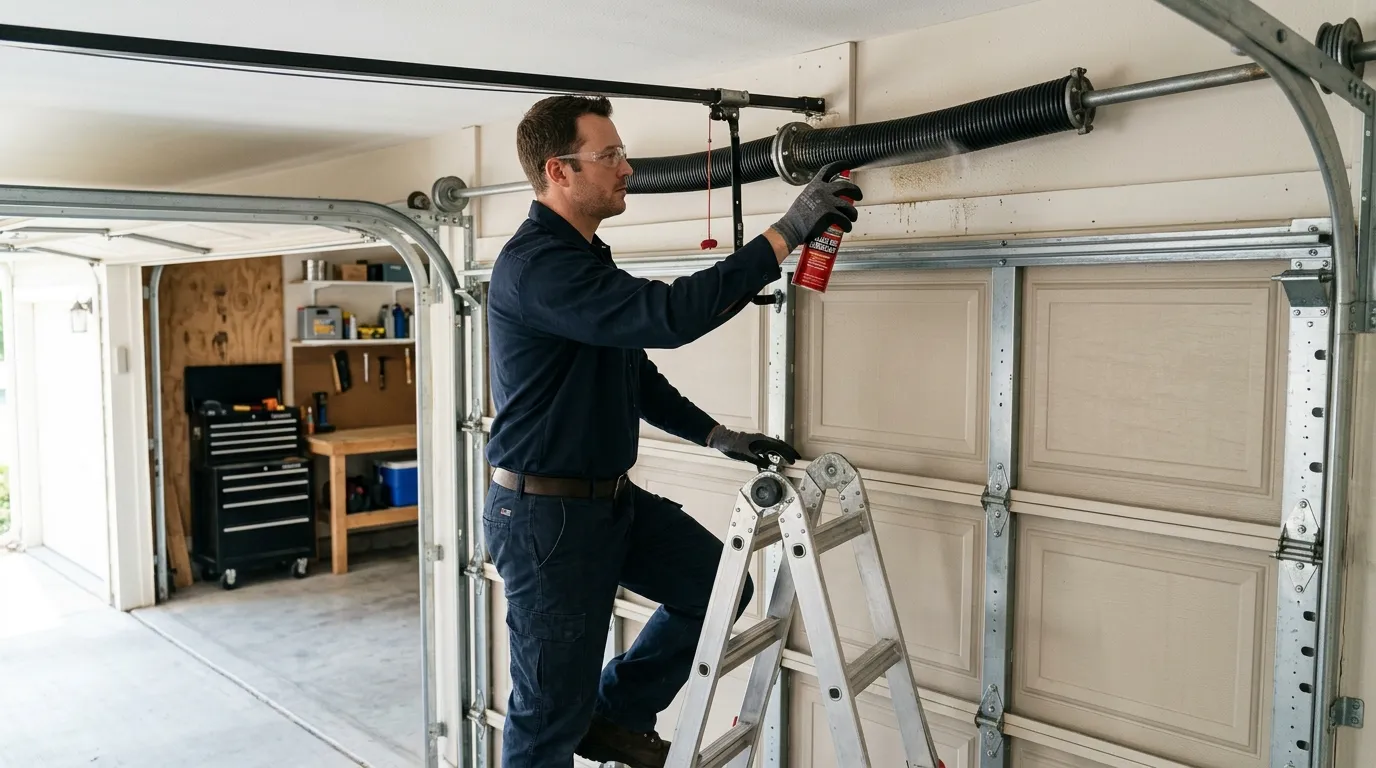
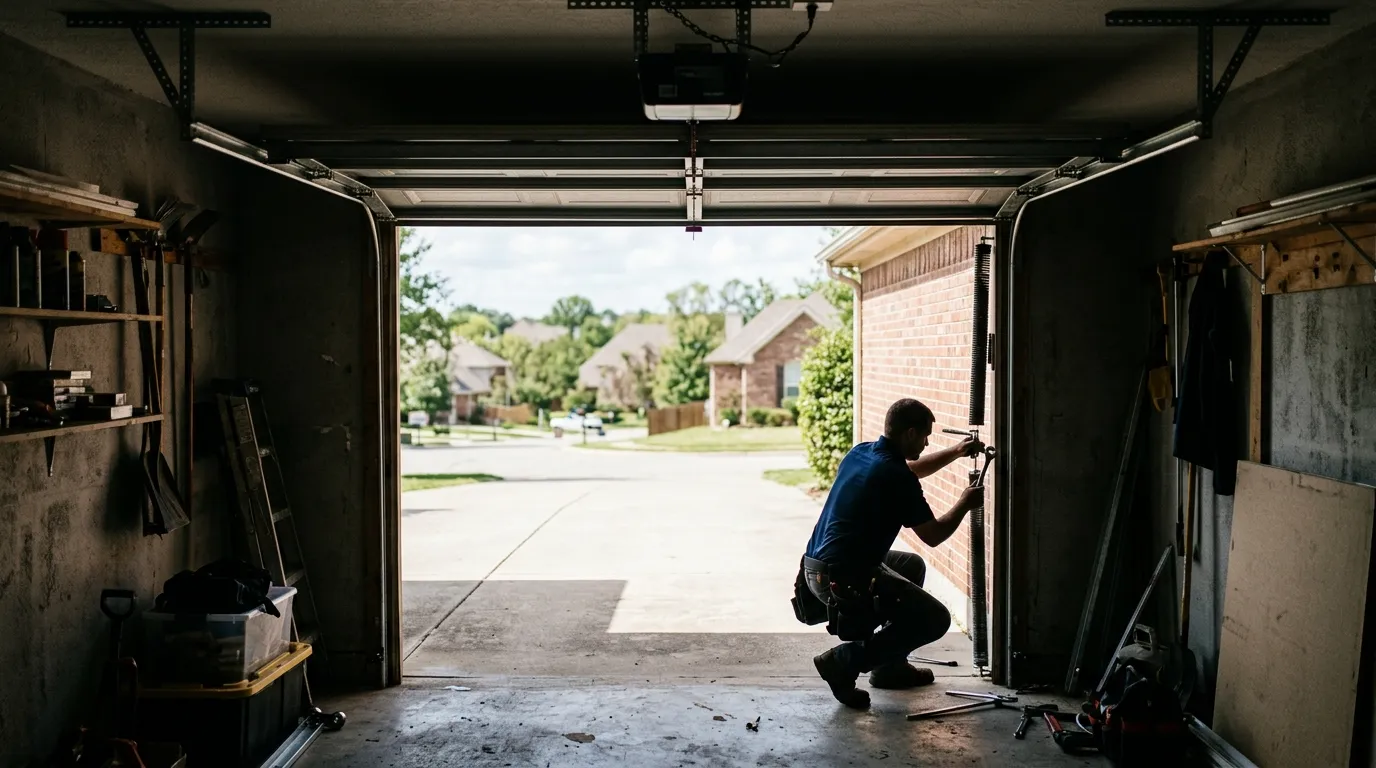
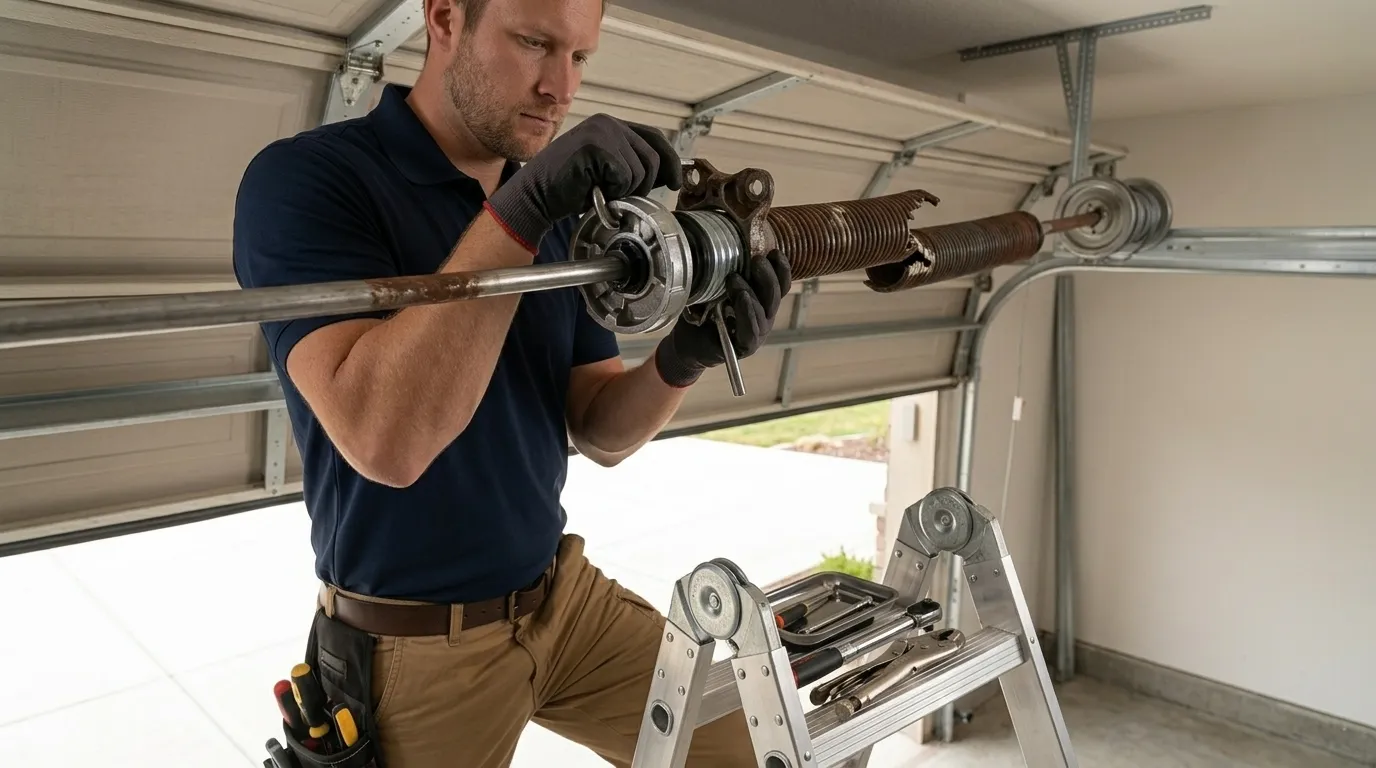
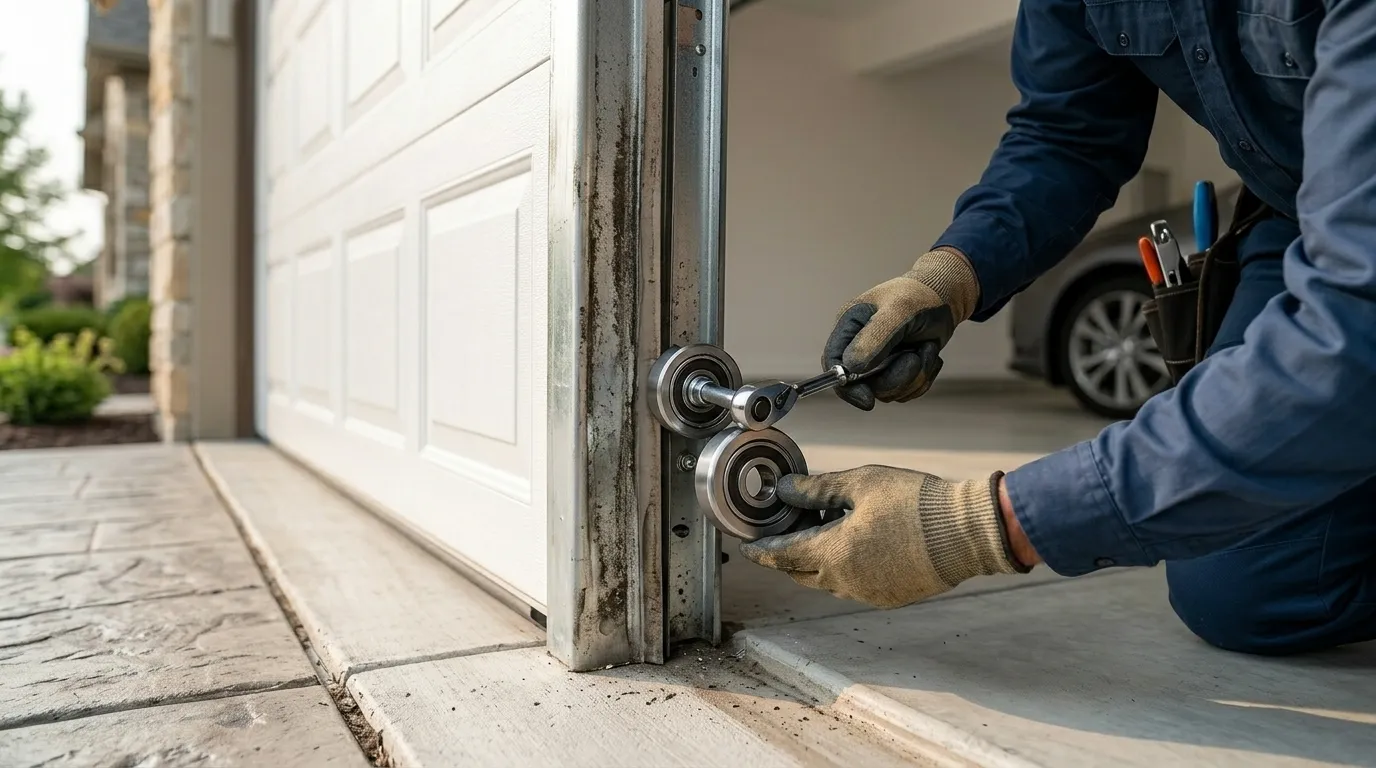
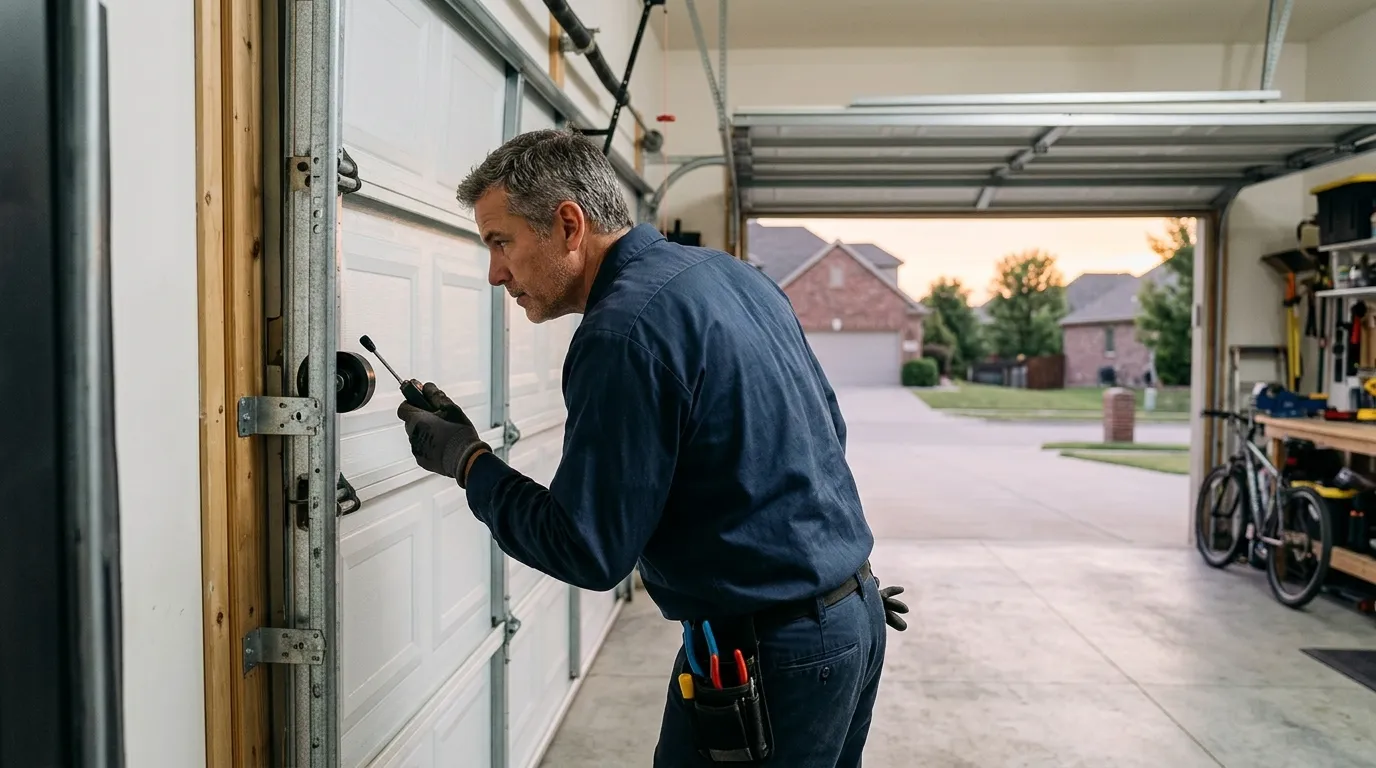
A door built around 1975 usually has steel panels on a torsion spring set above the opening, with galvanized track and roller hardware that's held up fine but wasn't built to run forever. Winters here sit in the same cold-moderate band as the rest of the metro, and that means seals and rollers work harder than they would in a mild climate - vinyl weatherstripping that's gone brittle, roller bearings that have dried out from repeated temperature swings. On a Carnuel job we're usually looking at one of three things: a torsion spring that's lost its temper and needs replacing as a pair, an opener whose logic board has started skipping cycles after fifty years of on-and-off use in these houses, or a track that's walked out of alignment because a roller finally gave up. We replace springs in pairs even when only one has snapped, because the other one is close behind it and neither of us wants a second trip out here for the match a month later.