The Cost of This Job
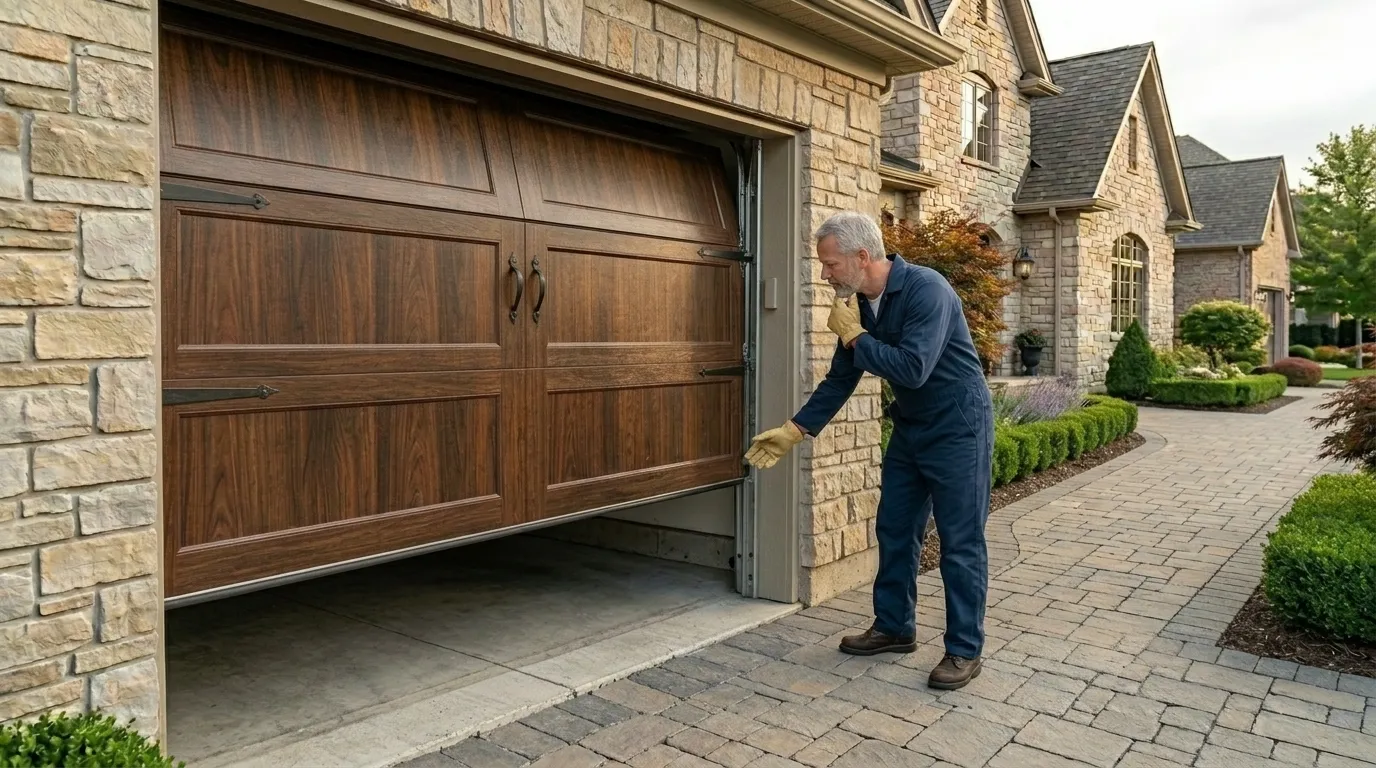
What this costs depends on how far the door got before someone stopped trying to close it. A door caught early - off one roller, track otherwise straight - is a bracket and roller job. A door that's been driven by the opener while off-track usually means a bent section of rail, sometimes a cracked panel where the roller stem punched through, and that's a track replacement plus panel repair instead of a simple realignment.
Carnuel sits about 11 miles out from our Albuquerque base, and we quote the job itself the same way we would anywhere in the service area - by what's actually broken, not by the drive. We don't add a standing trip charge on top of the repair price. What we can't do is give you a number over the phone before we've seen the track, because a $200 fix and an $600 fix look identical from the driveway: door crooked, door stuck. We tell you that up front rather than guess low and revise it once the truck's here.
The honest limitation: if the track is original 1970s steel and badly rusted through in more than one spot, we're not going to patch it. Patching a rusted rail just moves the failure six months down the road, and at that point full track replacement is the cheaper call over the life of the door.
What the Fix Involves
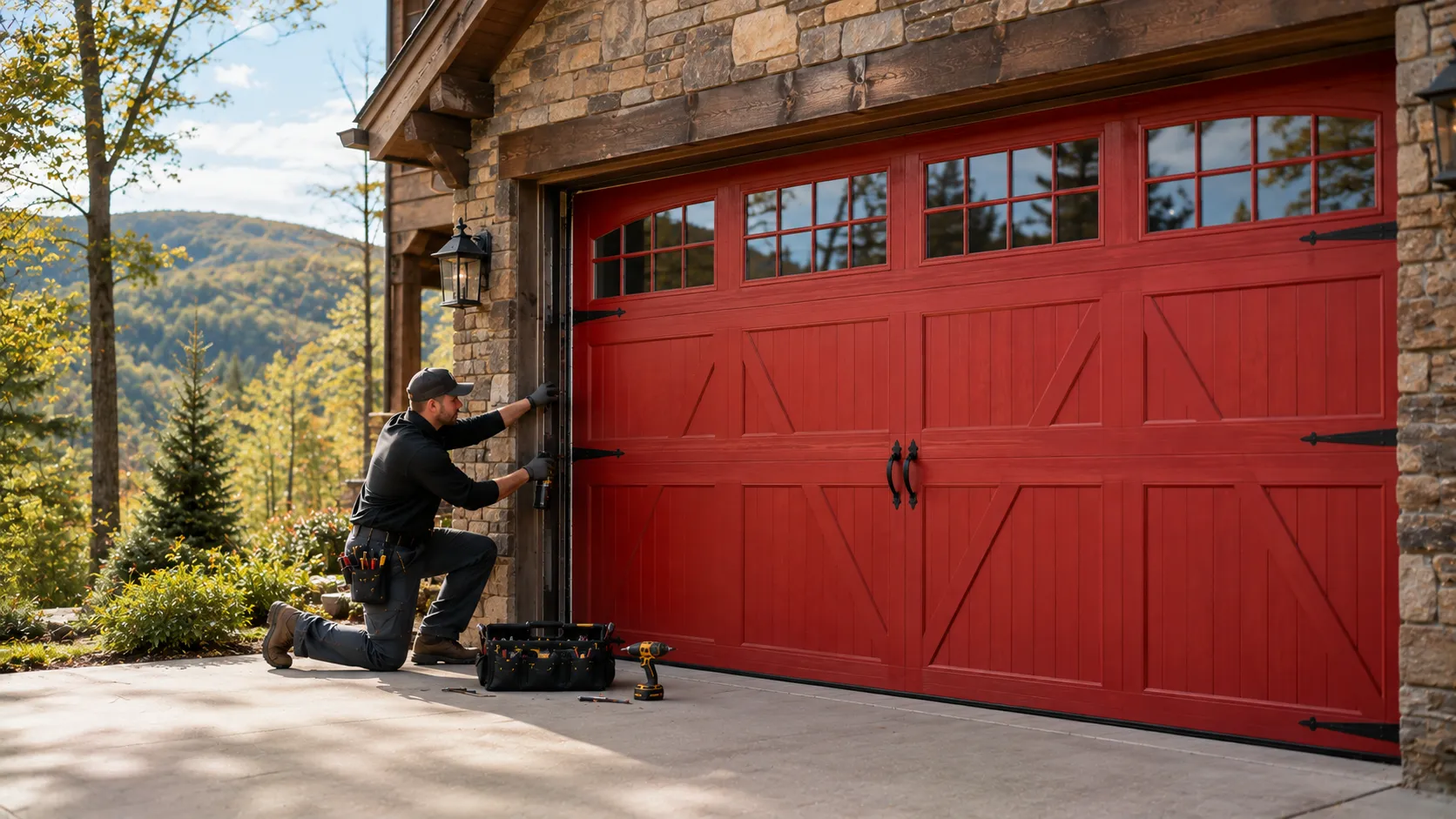
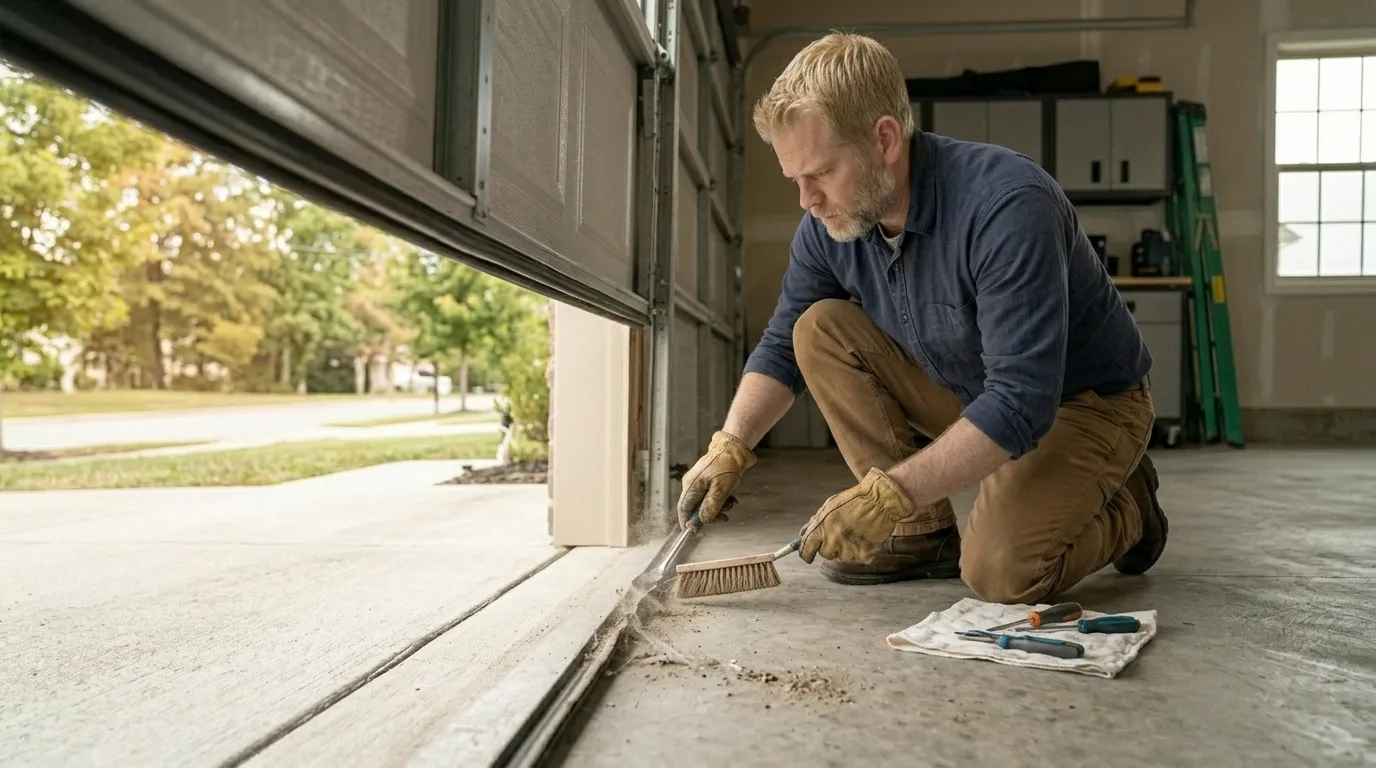
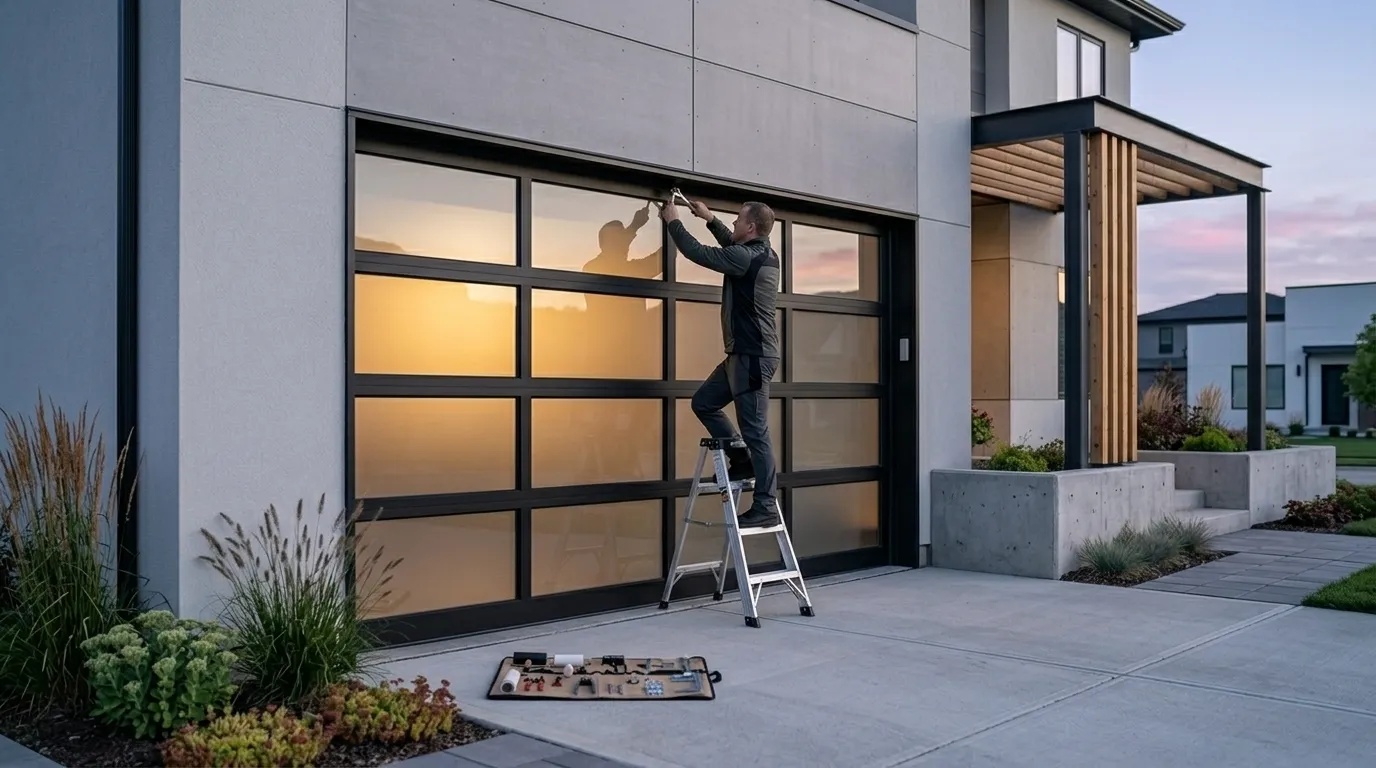
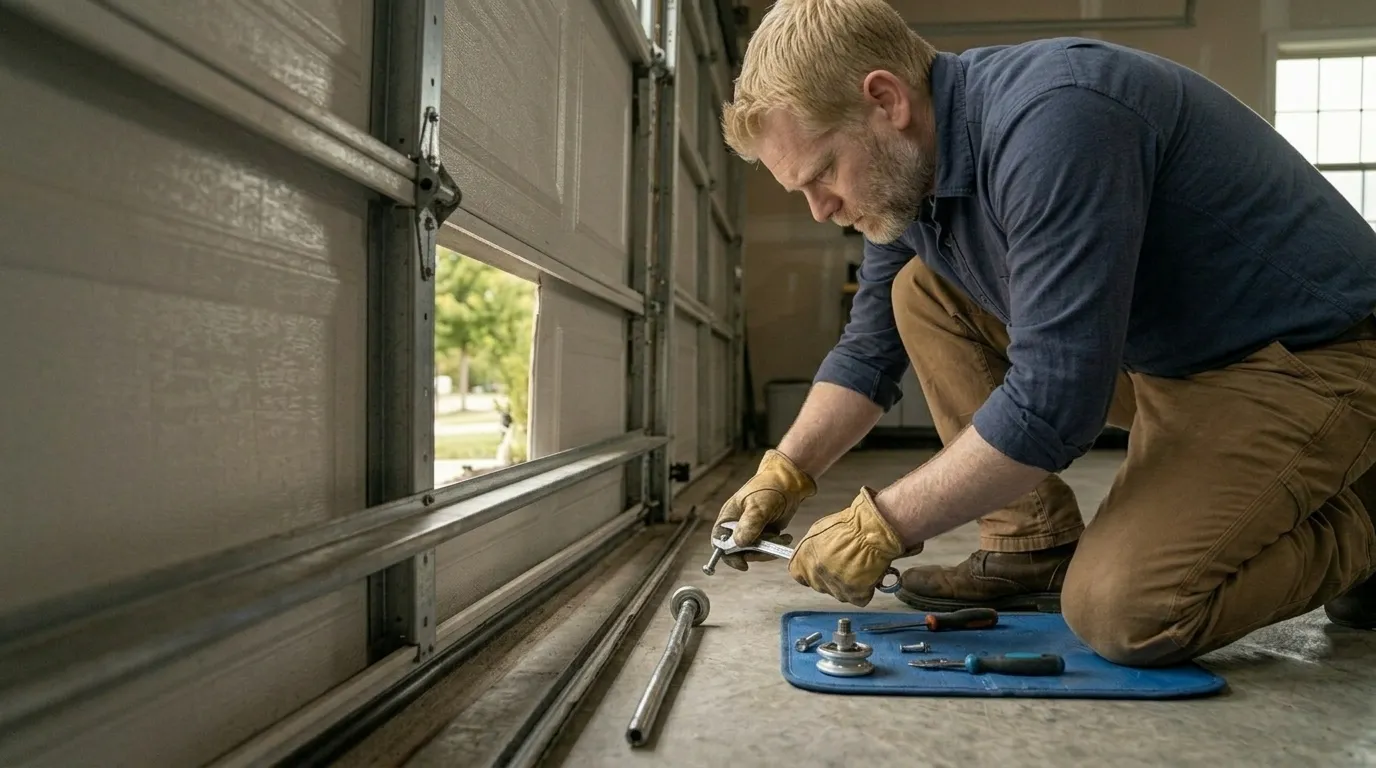
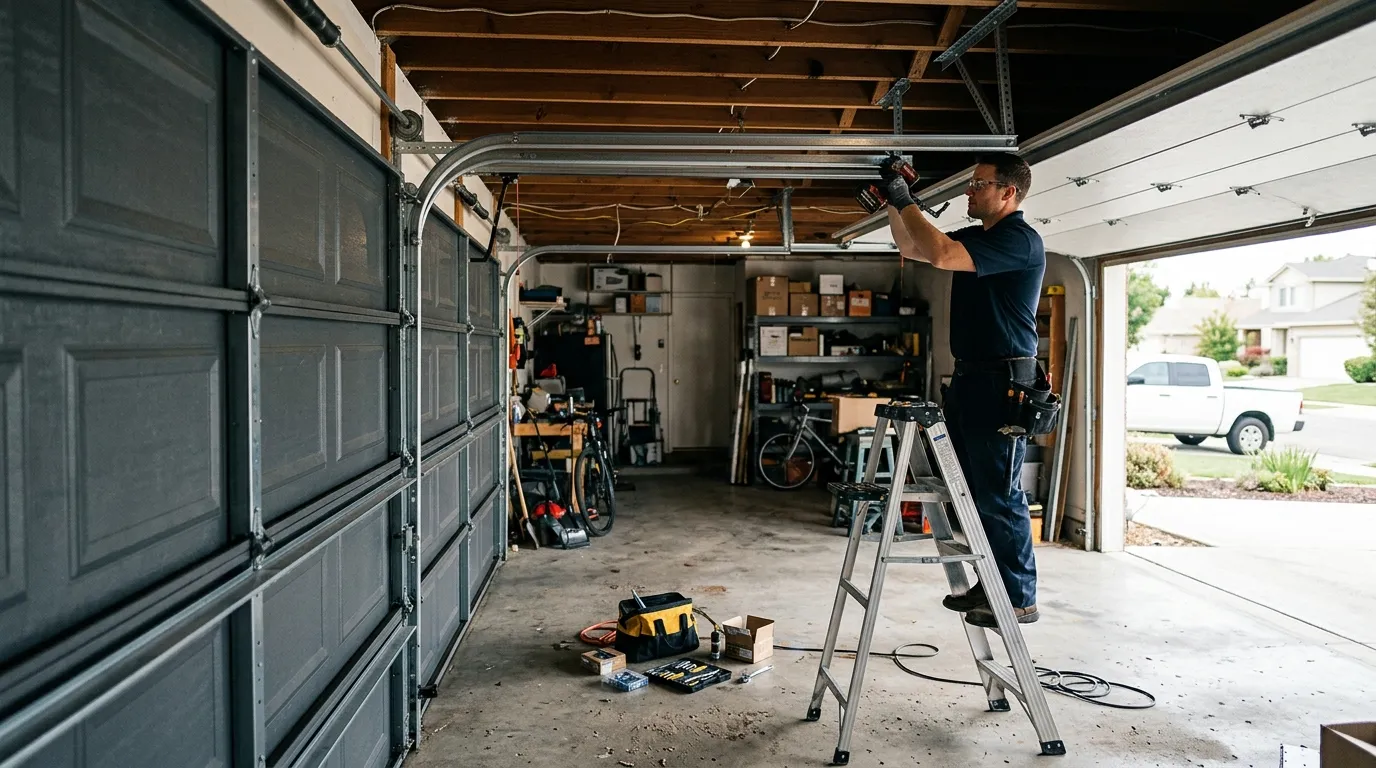
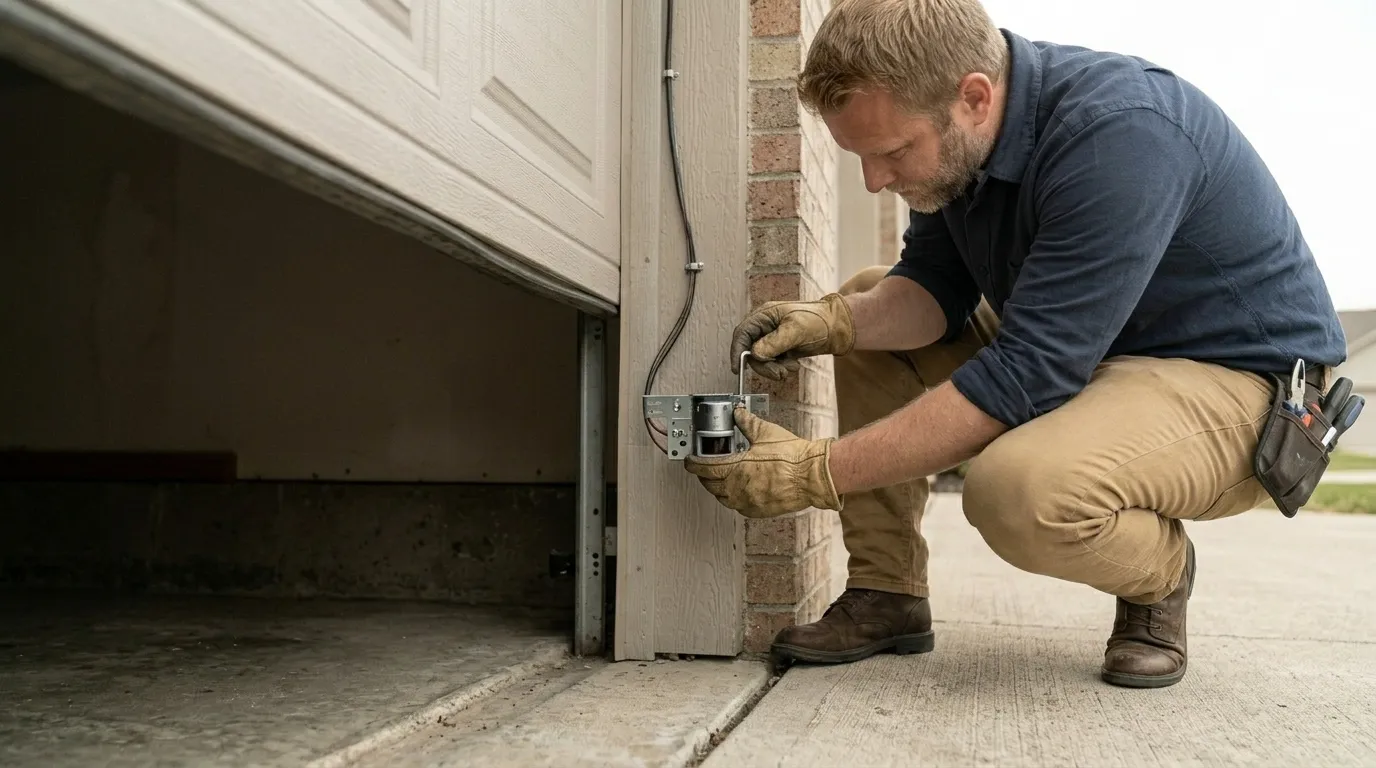
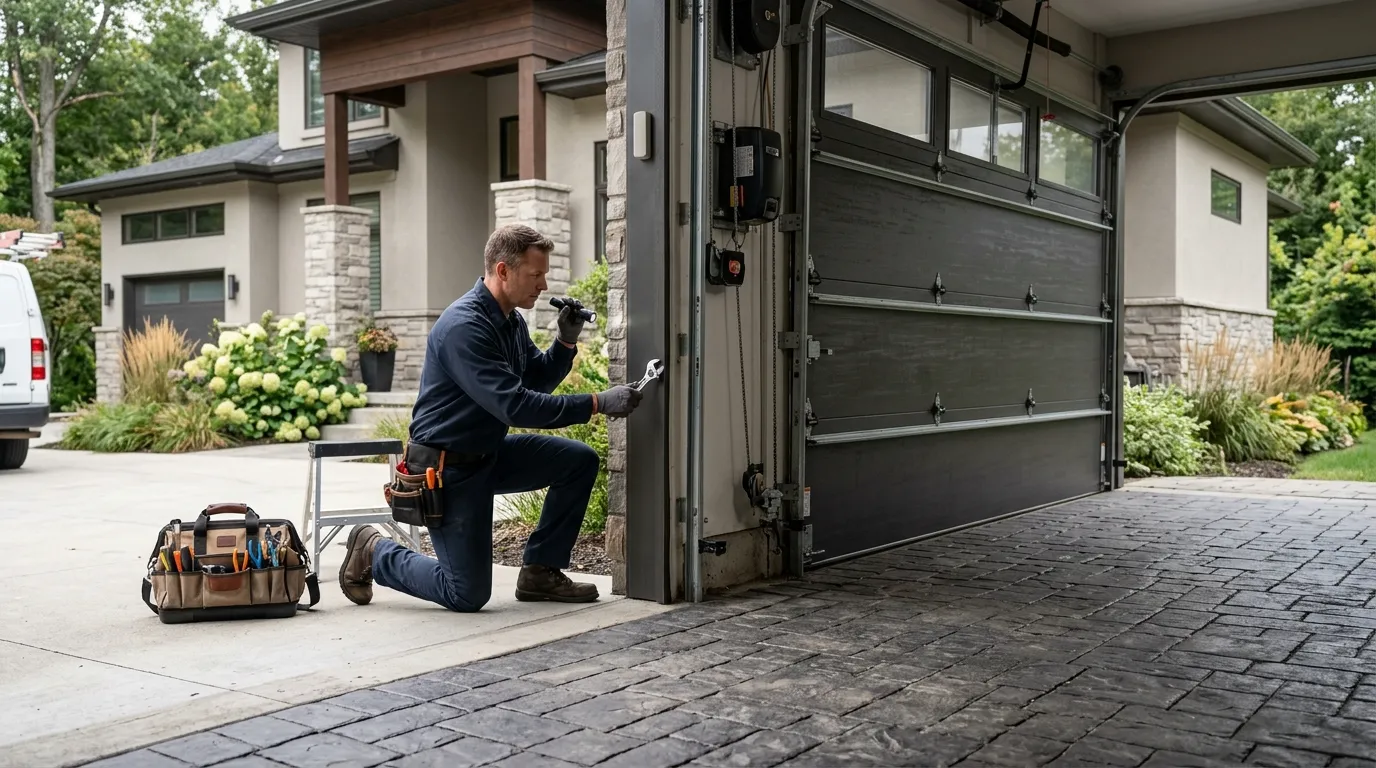
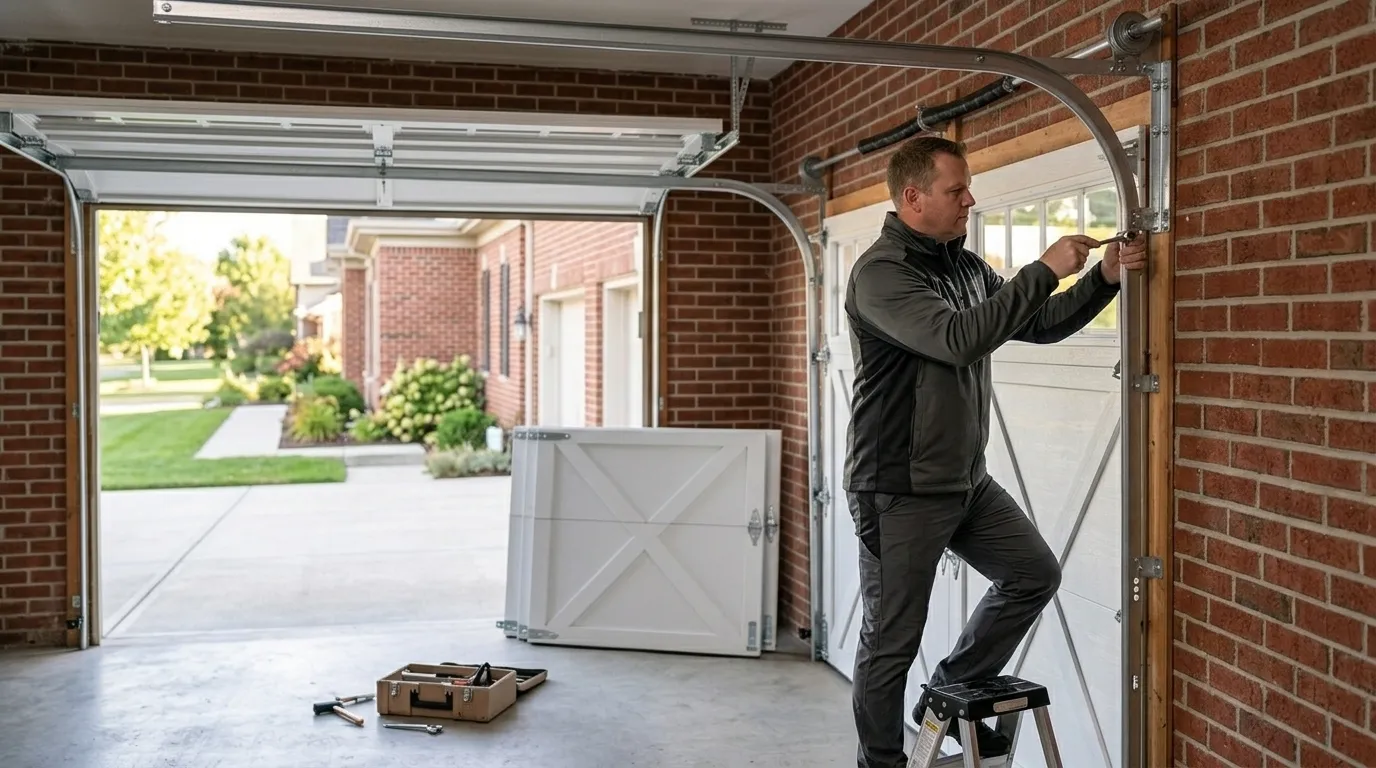
First step is getting the door safely closed or secured before anyone touches tools - a door hanging on one roller under spring tension is not something to push back into place by hand. Once it's stable, we check whether the rail itself bent when the roller left it. If the rail's straight, this is a bracket-and-roller repair: reset the jamb bracket, replace the worn roller, run the door through a few full cycles to confirm it's tracking true top to bottom.
If the rail bent - which happens more often on these older two-piece steel tracks than on the newer aluminum ones - we replace the damaged section rather than try to hammer it straight. A track that's been bent and straightened once is weaker at that bend and it will fail there again, usually within a year.
We also check the horizontal track's pitch against the wall. On houses from Carnuel's build era, the original mounting shims can compress over time, tilting the whole track a few degrees off level. That tilt is often what put the roller off the rail in the first place, so realigning the roller without correcting the pitch just buys you a repeat visit.