The DIY Question
A lot of homeowners look at a garage door and see a big flat panel, not a machine under spring tension strong enough to break a hand or worse. That's the honest limitation here: we don't walk people through torsion spring swaps over the phone, and we won't sell a spring kit to a customer who wants to do it themselves. The wound spring on a double door section is storing enough force to lift a few hundred pounds of steel and wood, and the tools to safely wind or unwind it aren't something most garages have sitting around.
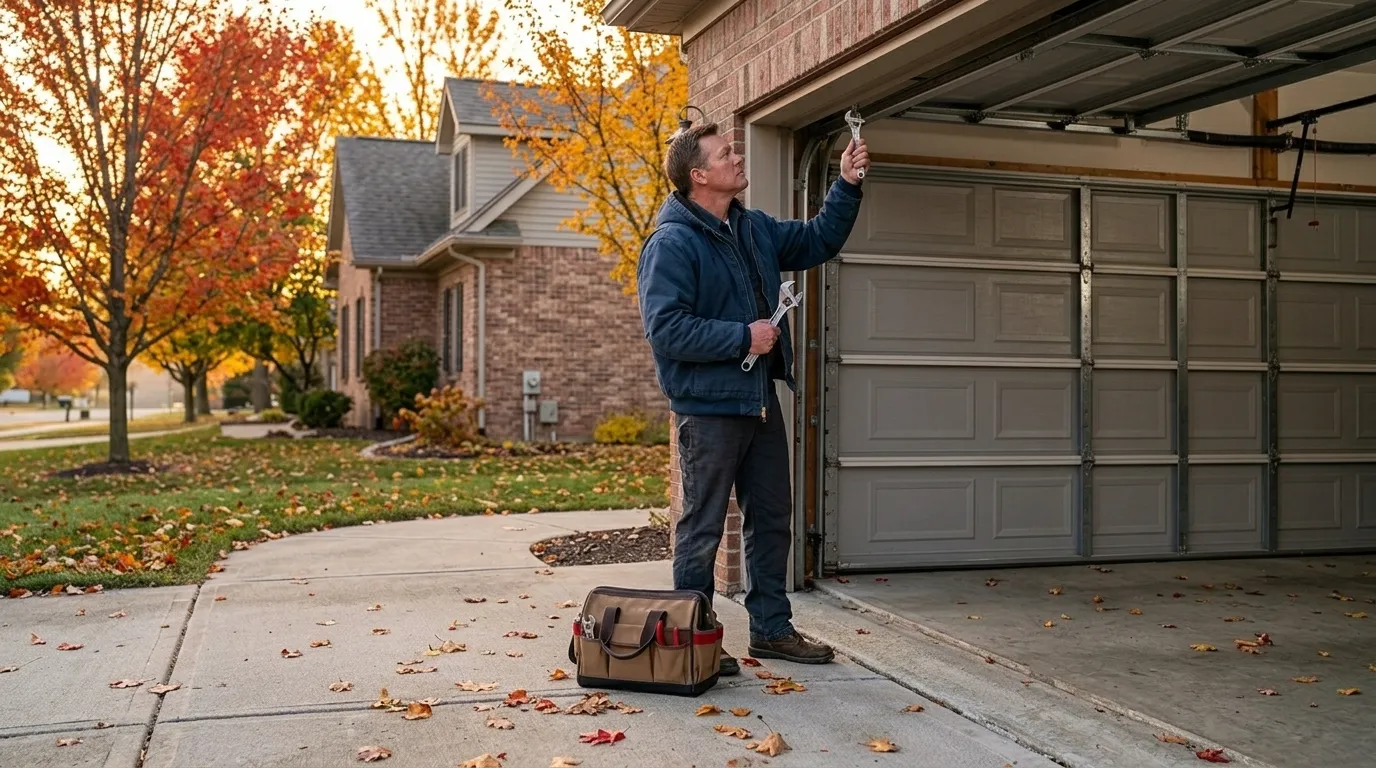
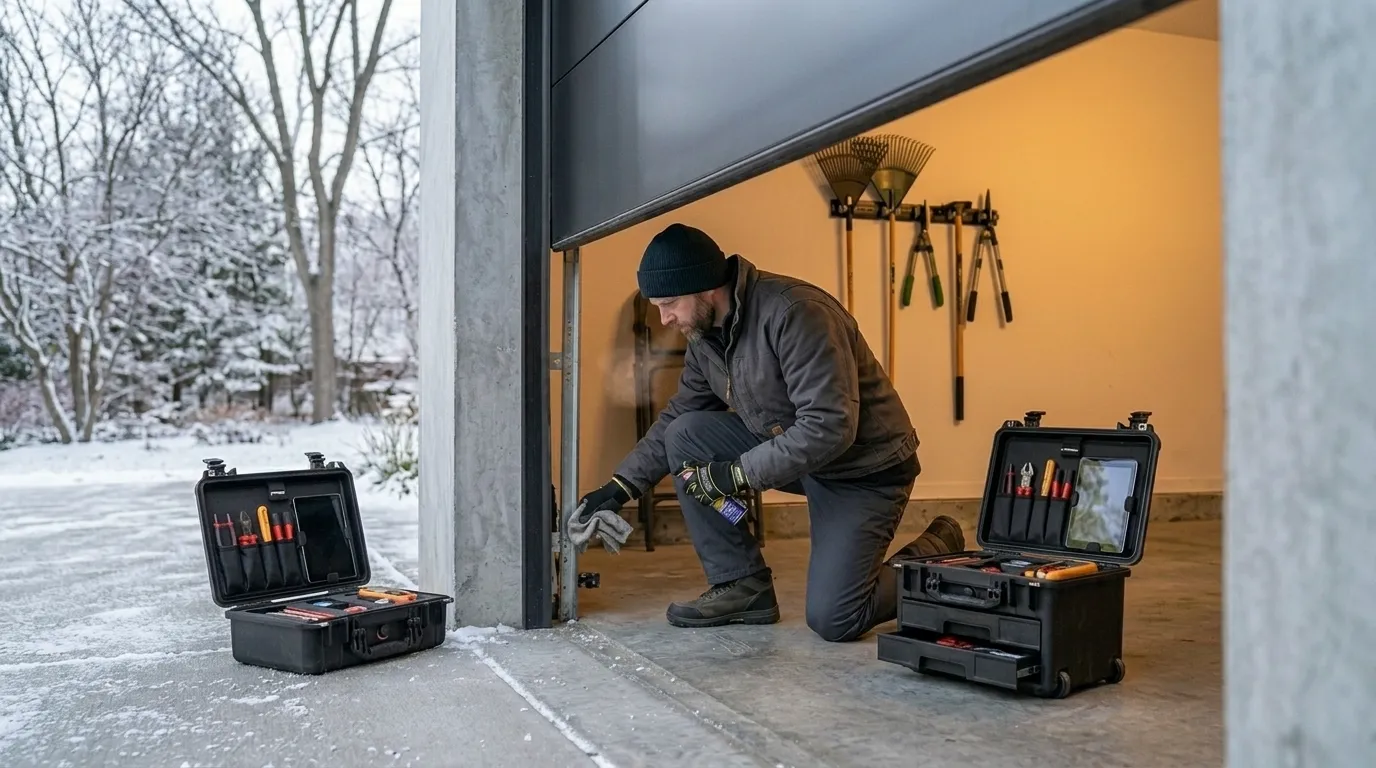
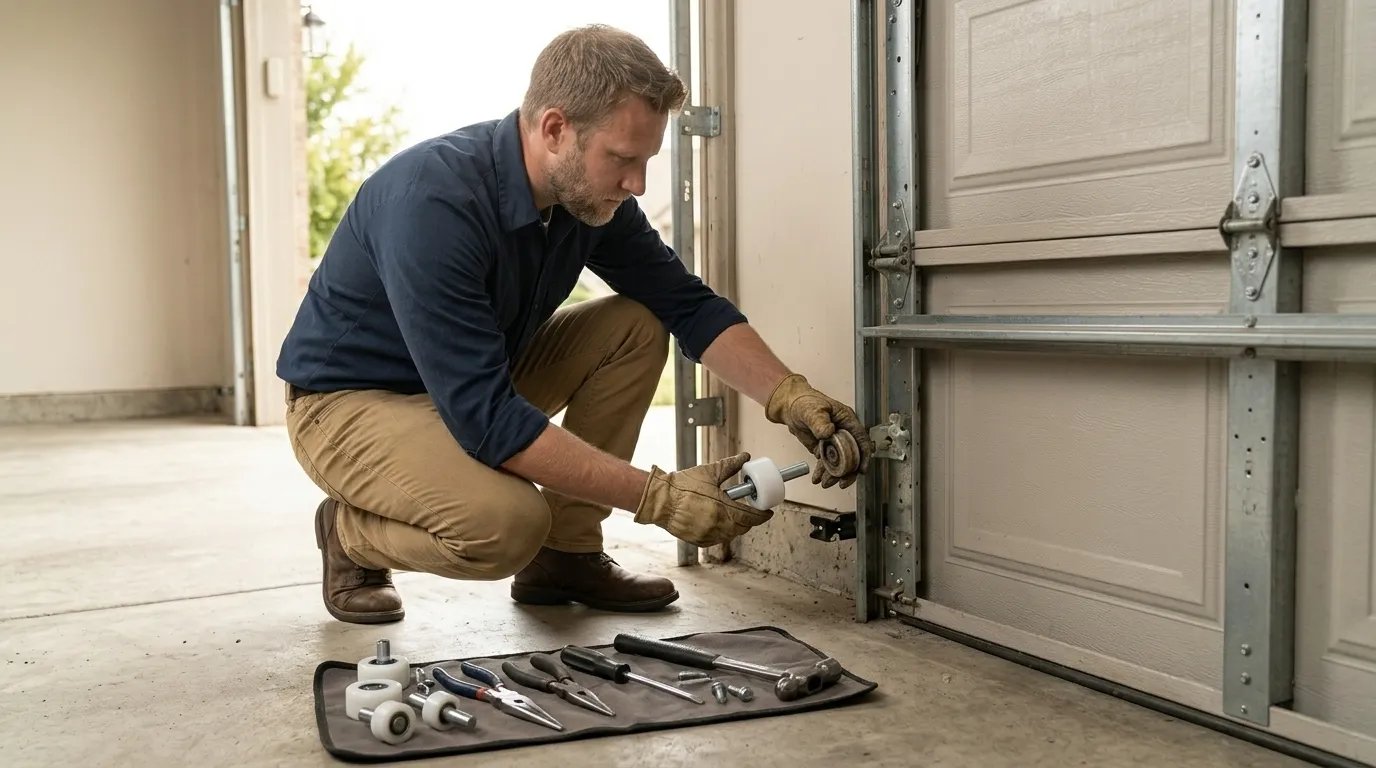
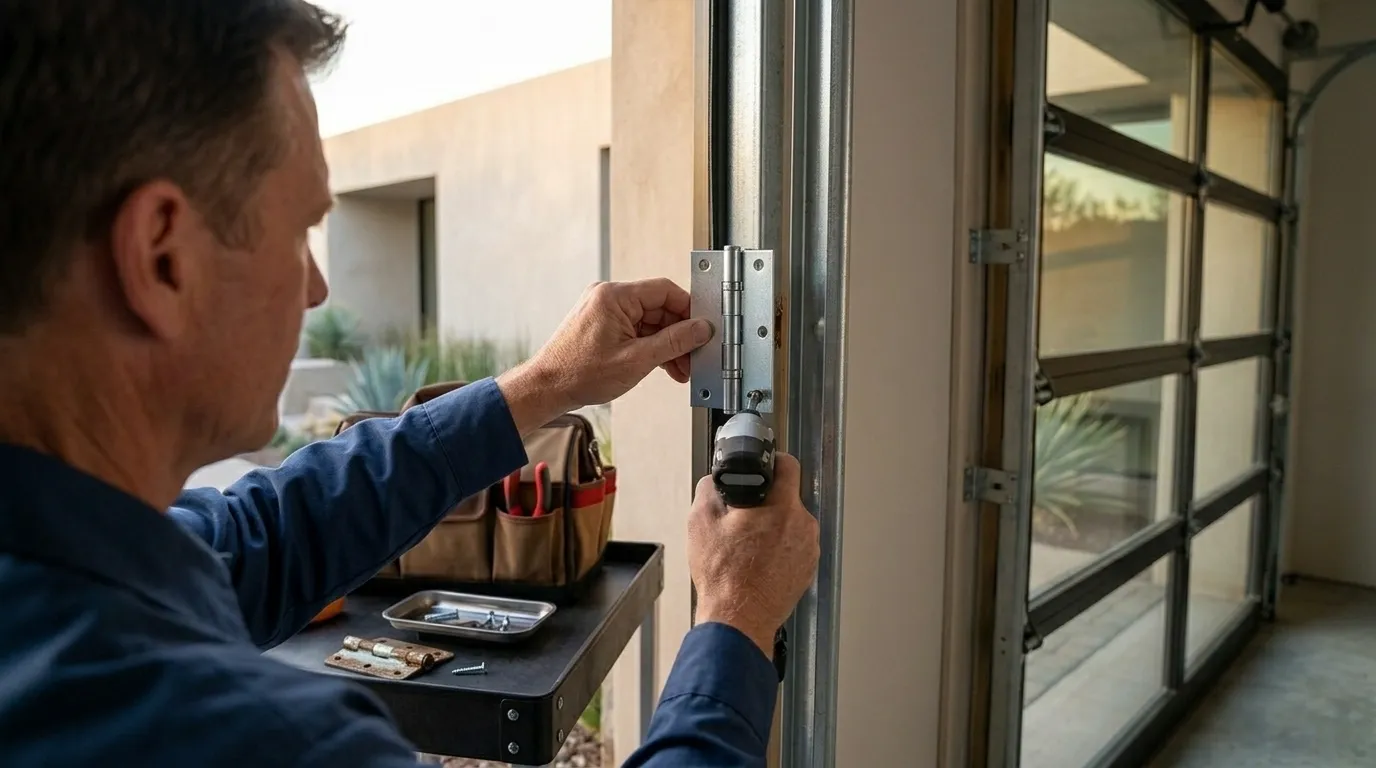
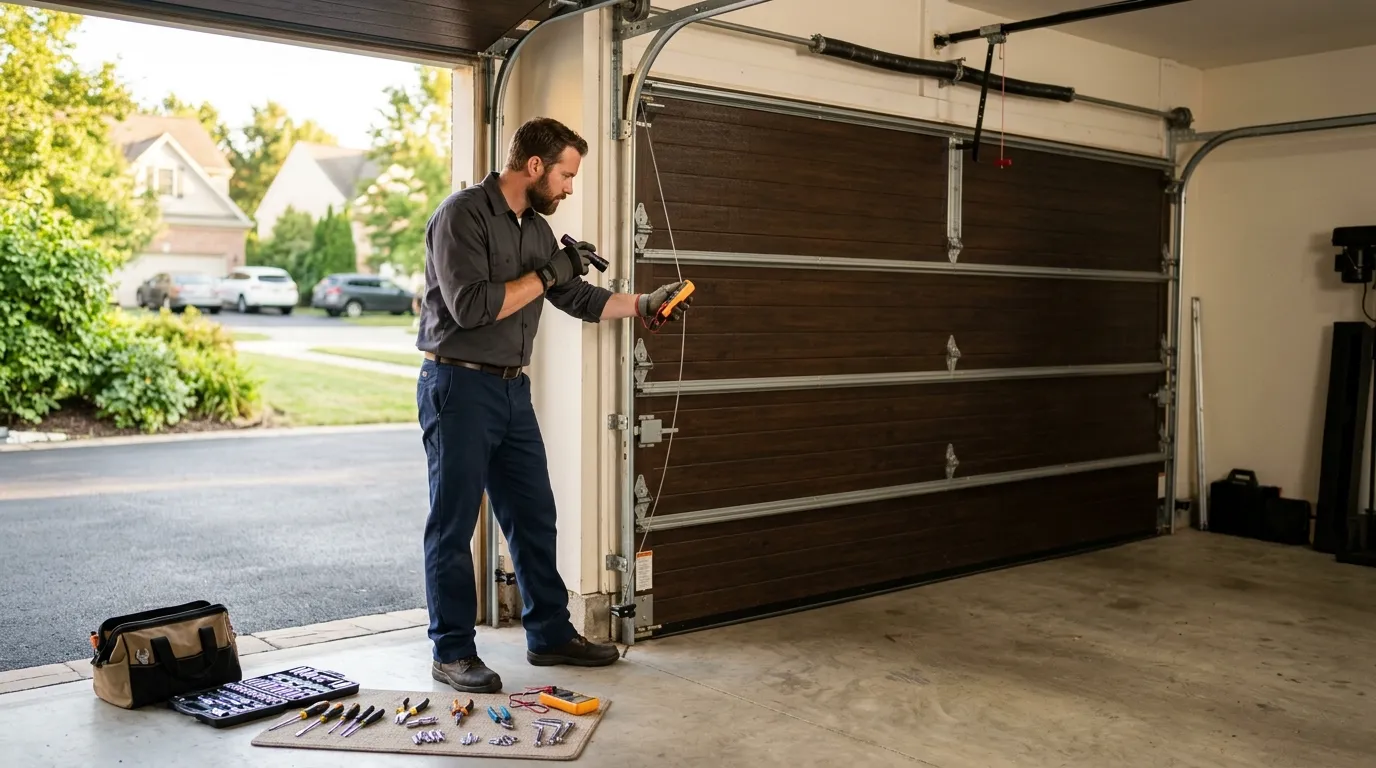
Where DIY makes sense: swapping a broken remote battery, lubricating hinges and rollers, tightening loose bolts on the track brackets, or replacing weatherstripping along the bottom of the door. Those are low-risk jobs with hand tools. Where it doesn't: springs, cables, the torsion bar itself, or anything that requires the door to be manually held open while you work under it. If a door built around 1979 is original end to end, chances are more than one system needs attention at once, and that's a job better scoped by someone who's opened up that specific vintage of hardware before.
What the Fix Involves
A full new-door install starts with pulling the old track, spring, and opener rail out entirely rather than reusing brackets that were sized for a 1970s-era opening. Framing on houses from this build period can run slightly off standard dimensions, so measuring the rough opening before ordering the door matters more here than it would on newer construction with factory-standard bays.
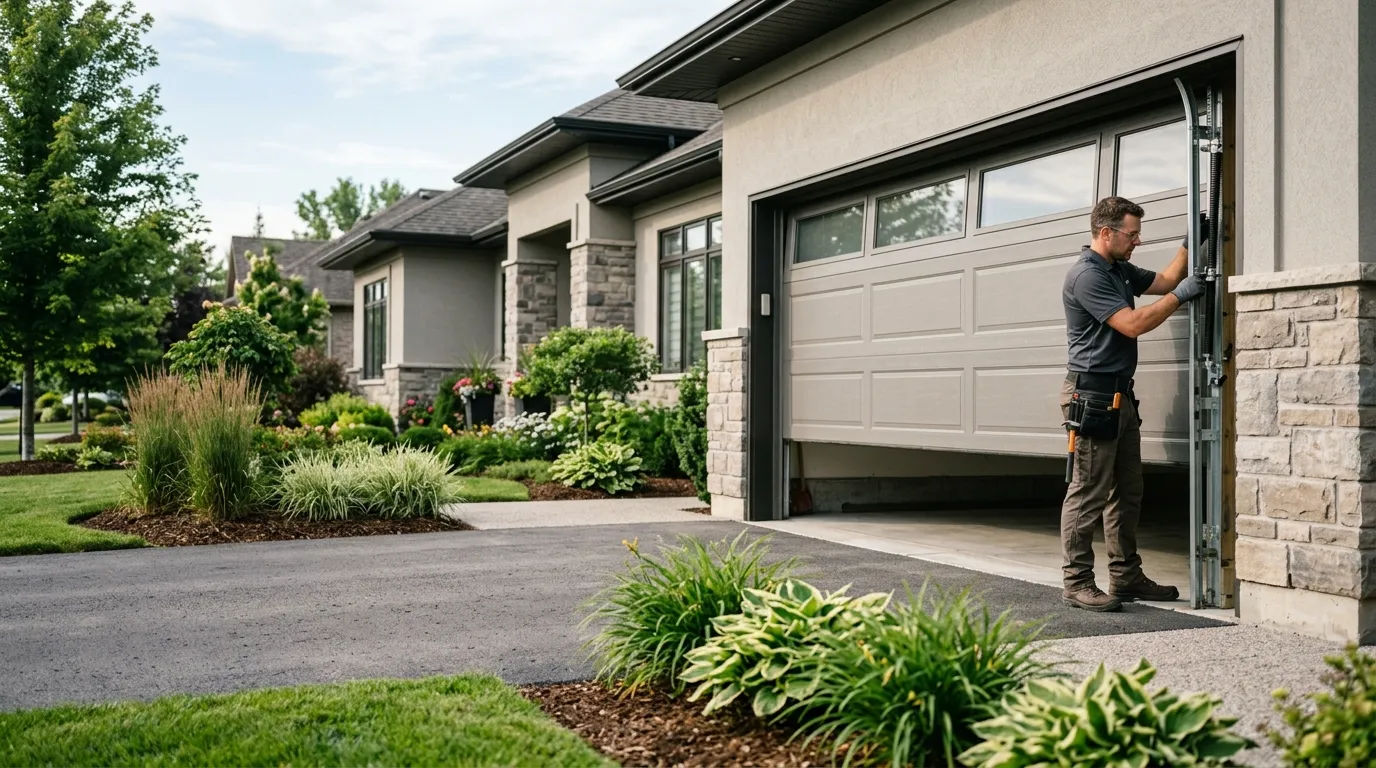
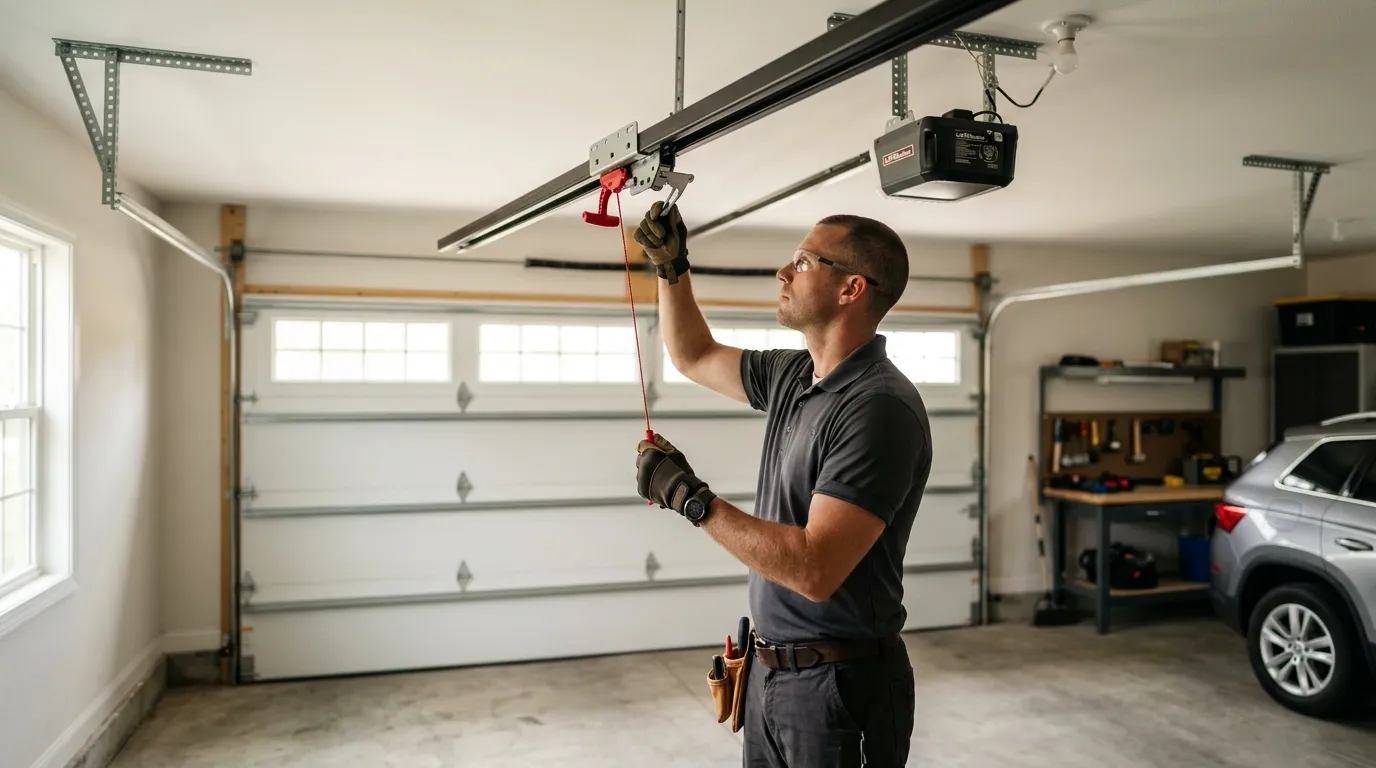
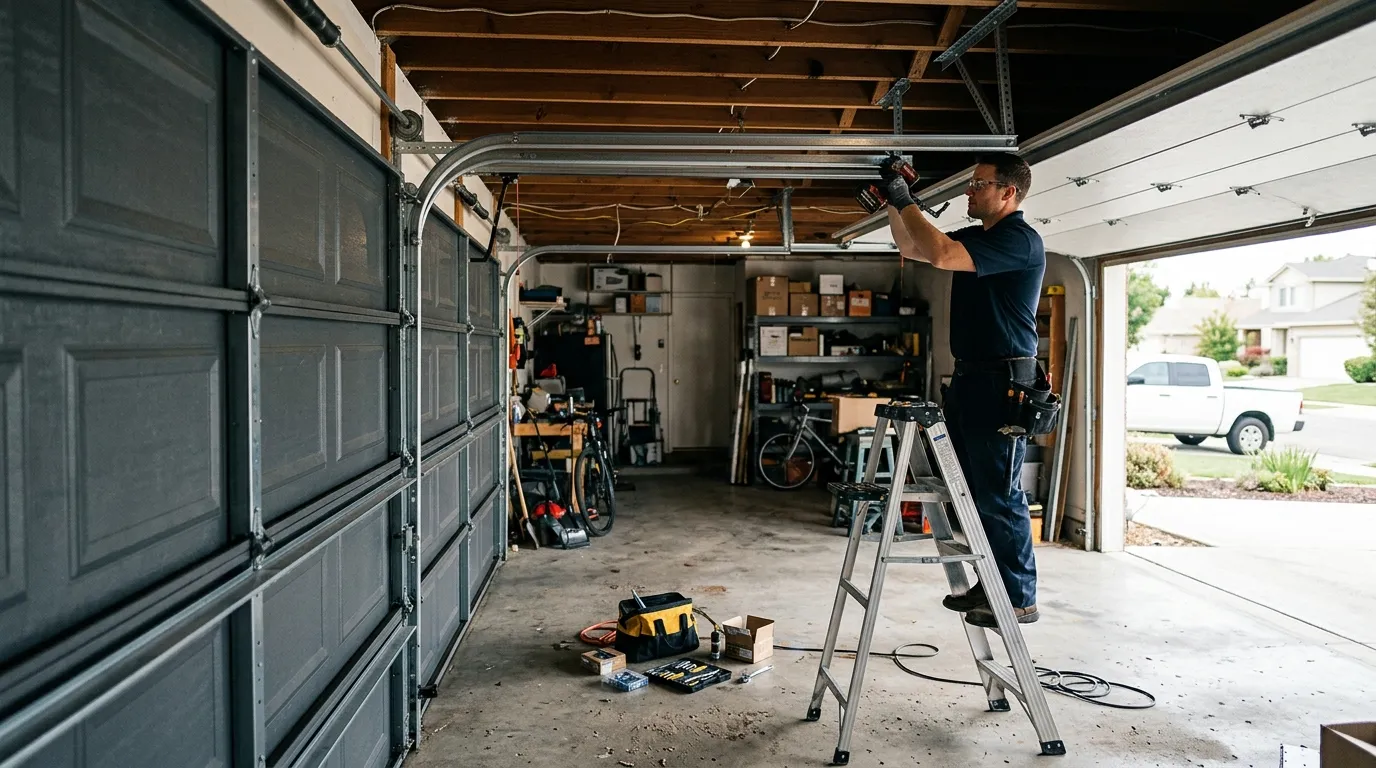
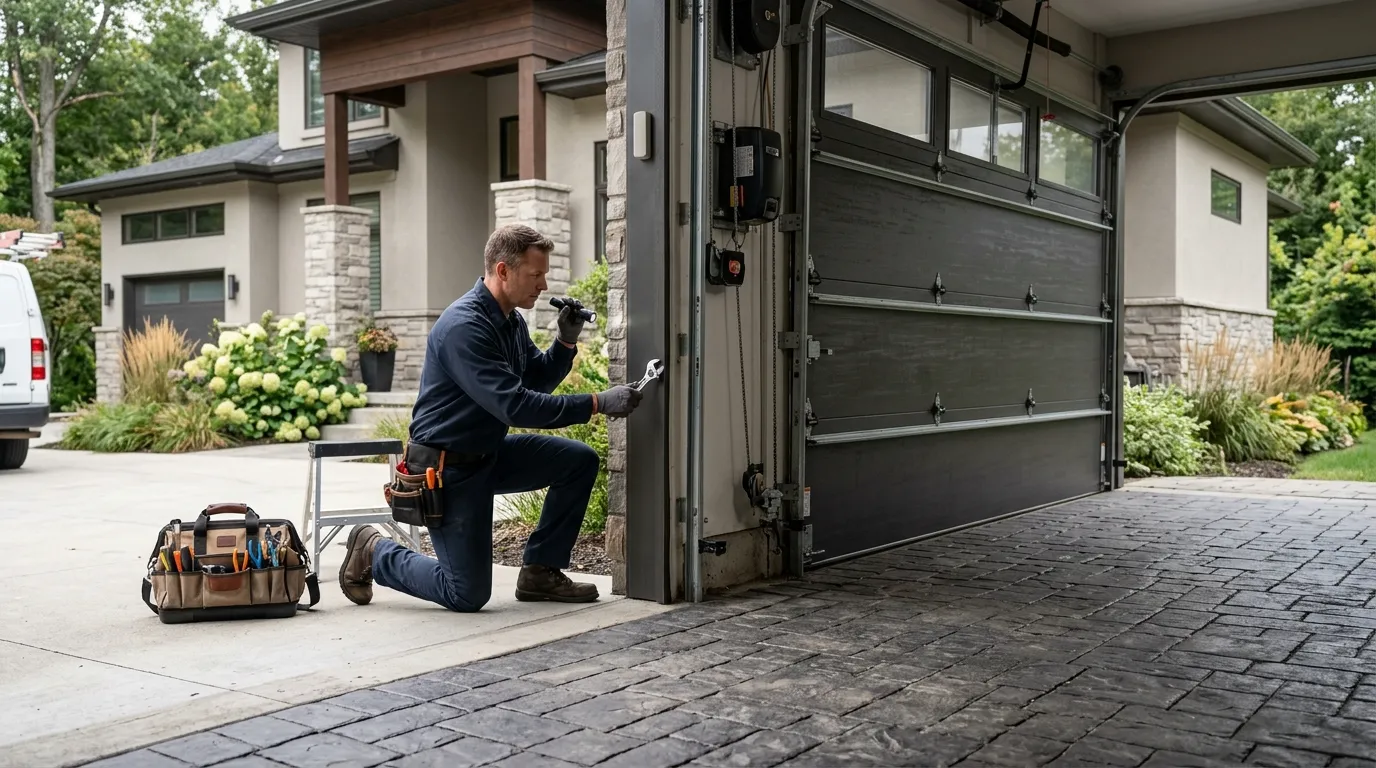
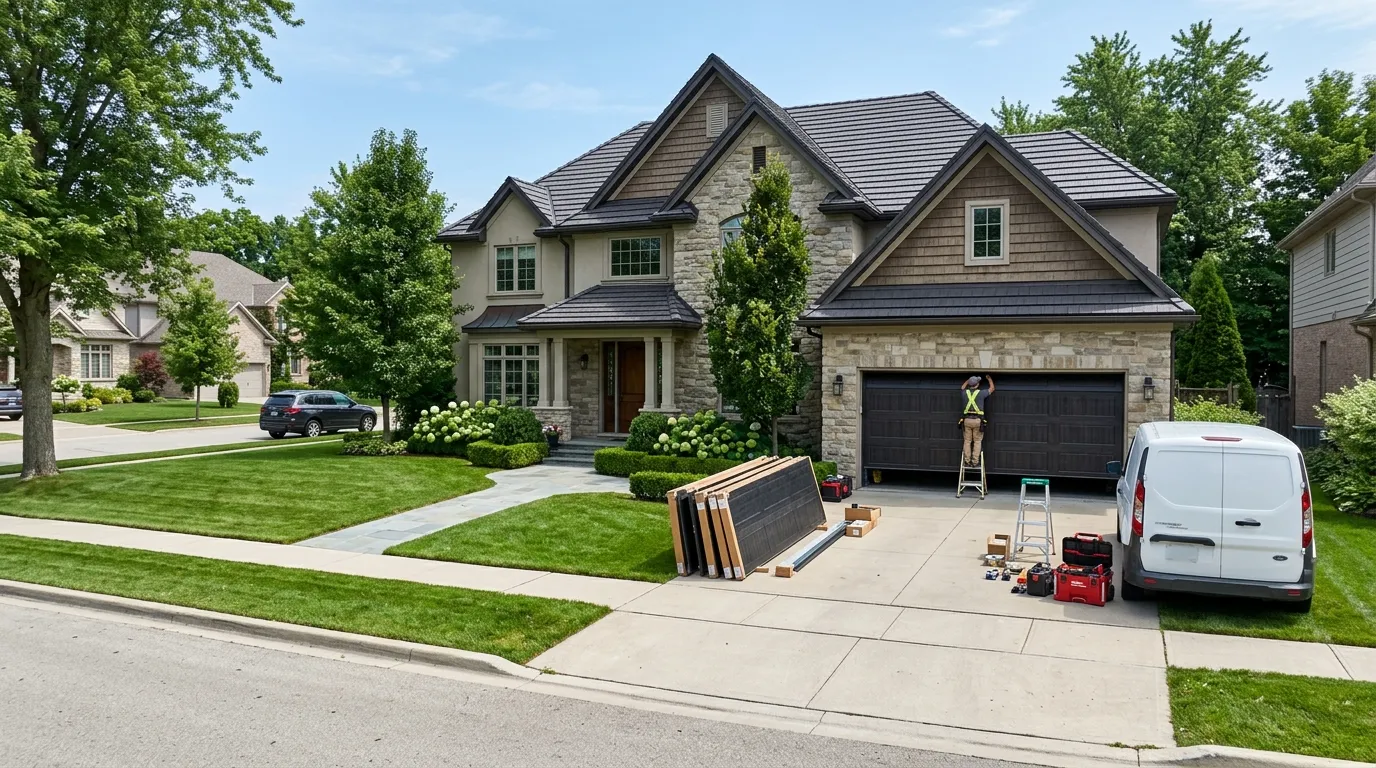
Once the door's on site, the job is: mount new vertical and horizontal track, set a new torsion spring rated to the door's actual weight (not a generic size), install new lift cables, hang the panels, and square the whole assembly before the opener goes on. In a cold-moderate climate, an insulated steel door with a sealed bottom panel does more work than the old single-layer doors common in the 1979 building wave - those doors leak heat at the panel seams in a way that shows up on a winter energy bill. We test balance and travel limits before we call it done, and we walk the homeowner through manual release in case the opener ever loses power.