
Why This Fails Locally
South Valley's median year built sits at 1968, older than the 1968-1999 range that covers this whole service area, with a median closer to 1979 across the wider footprint. That gap matters for cables specifically. A door from 1968 was very likely built with a stationary drum cable system or an early extension-spring setup, and on a lot of these houses nobody has ever swapped the lift cables - they've stretched, rusted, and frayed for over five decades on the original drums.
The cold-moderate climate band this area sits in doesn't help. Temperature swings make galvanized cable strands work-harden and snap at the drum end, usually without warning, usually on the coldest morning of the week. On a door this old, when one cable goes, the other is close behind it - same age, same wear, same fatigue.
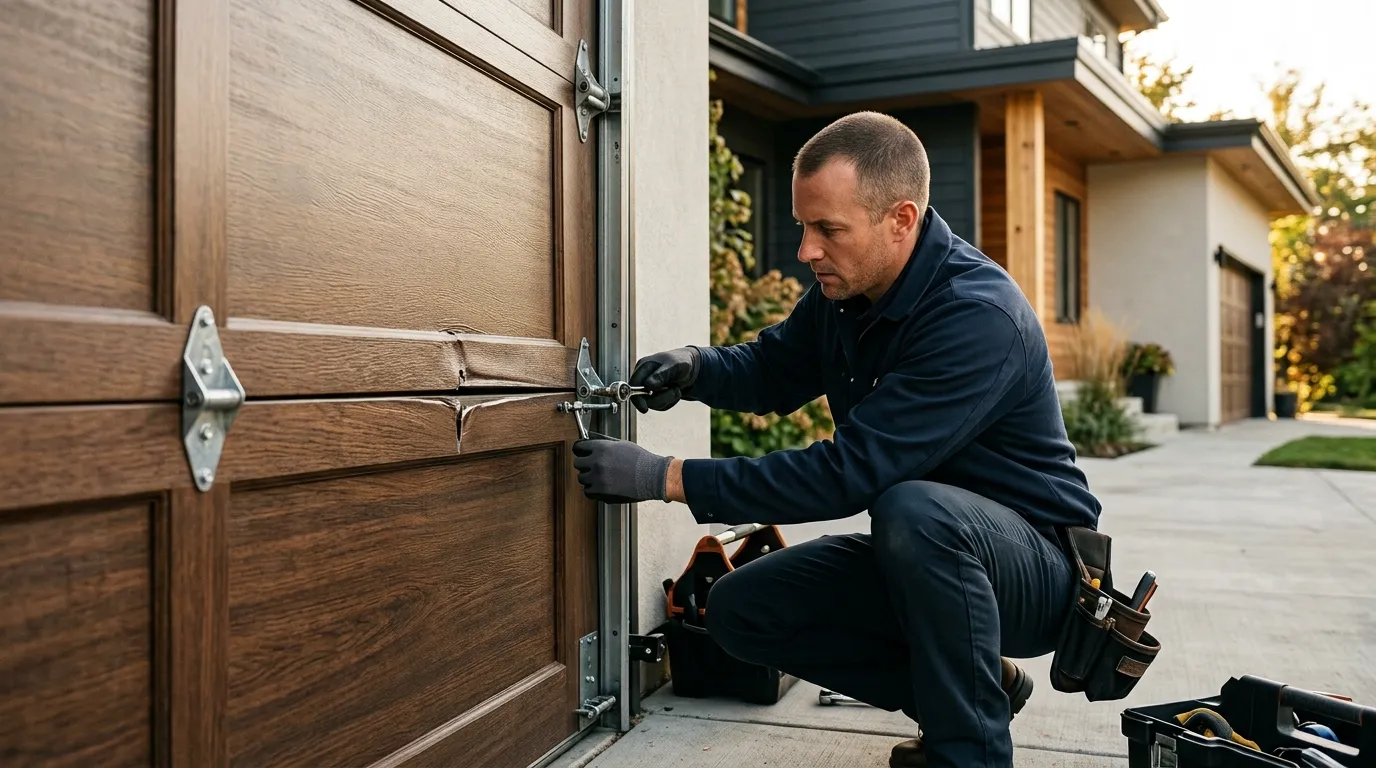
We also see cable failures tied to worn pulleys and bent drums that were never replaced when the cable was, decades back, by whoever touched the door last. Swapping the cable alone on a door this old, without checking the drum and pulley it rides on, is why some repairs don't hold.
Time on the Job
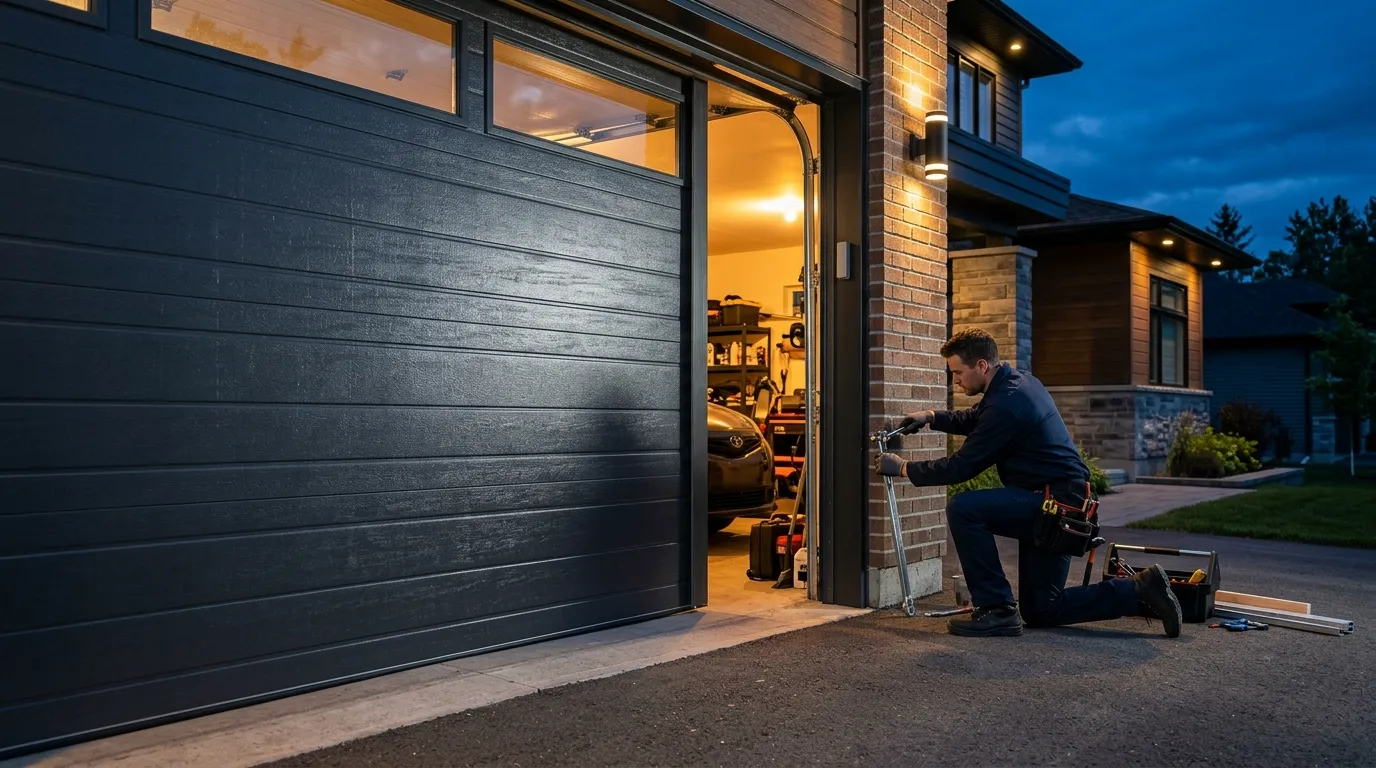
A straight cable swap on a door with intact drums and pulleys is a same-visit job - we're not rebuilding the whole lift system, just replacing the cable itself and adjusting tension. Where it slows down is when we get the panel open and find the drum grooves worn from decades of the original cable riding in the same track, which happens more often on doors from the 1968 era than on newer stock.
If the drum's worn or the pulley bracket has rusted into the track - both common on a door that's never had this hardware touched - that adds parts and time to the same trip rather than a second visit, since we carry drum and pulley stock on the truck.
We won't promise a fixed hour count here, because a stationary-drum system built in the 1960s and a modern torsion setup take different amounts of time to service, and we don't know which one is behind your door until we're standing in front of it.
The DIY Question
Don't do this one yourself. A garage door cable under tension, especially on an extension-spring system common on 1960s-built doors, can whip hard enough to break fingers or worse if it slips off a drum while you're working on it. That's true everywhere, not just here - but it's worth saying plainly given how much of South Valley's door hardware is original to a 1968 build and has never had a professional look at the drum or pulley since.
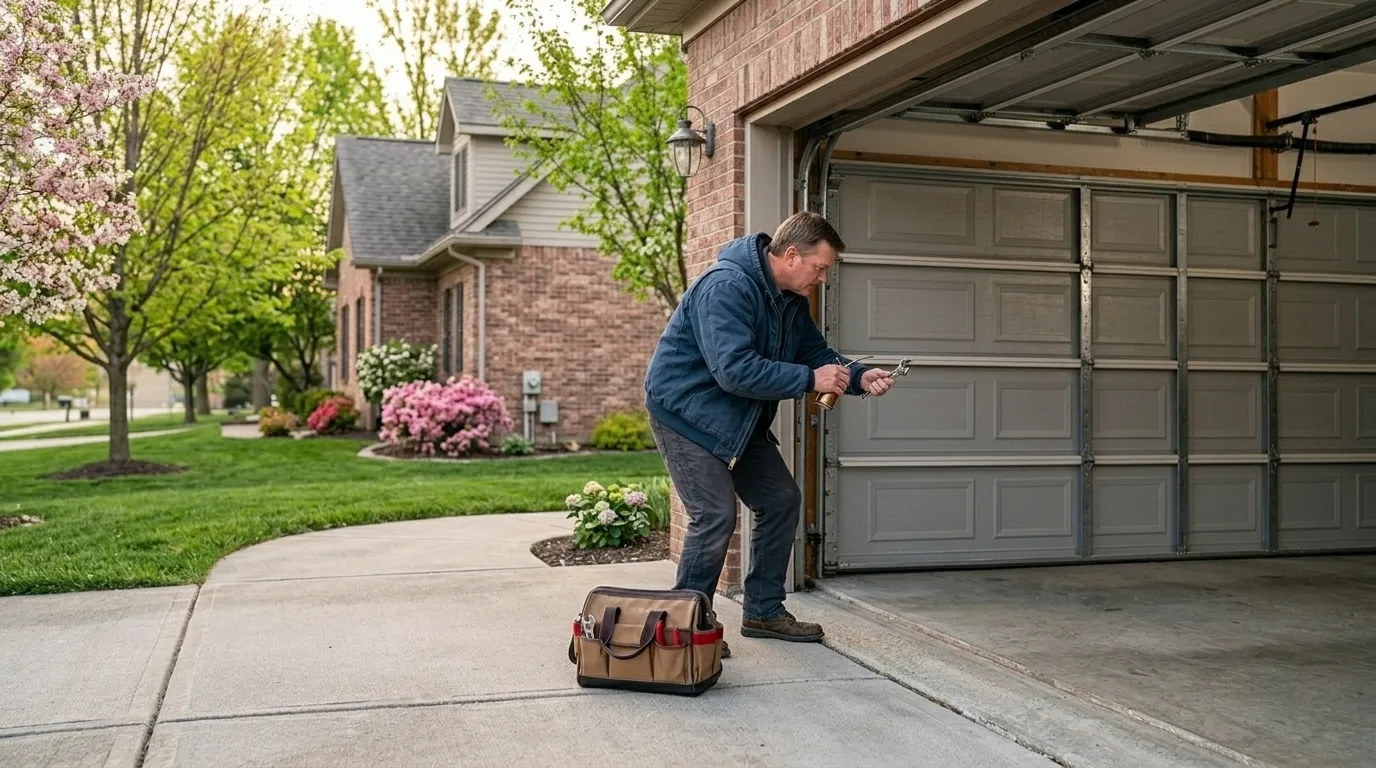
What you can safely check yourself: look at the cable where it wraps the drum for fraying or rust bloom, and look at the bottom bracket where the cable attaches for cracks. If you see either, stop opening and closing the door and call - a cable that's already fraying at the drum can go at any pull, not just a hard one.
We won't talk you through tensioning a stationary-drum cable system over the phone. It's not a corner we'll cut, and it's not one you should either.