Why So Many Albuquerque Garage Doors Have No Insulation at All
Albuquerque garage doors built between 1968 and 1999 often lack insulation and weather seals codes now require across the service area's older neighborhoods.
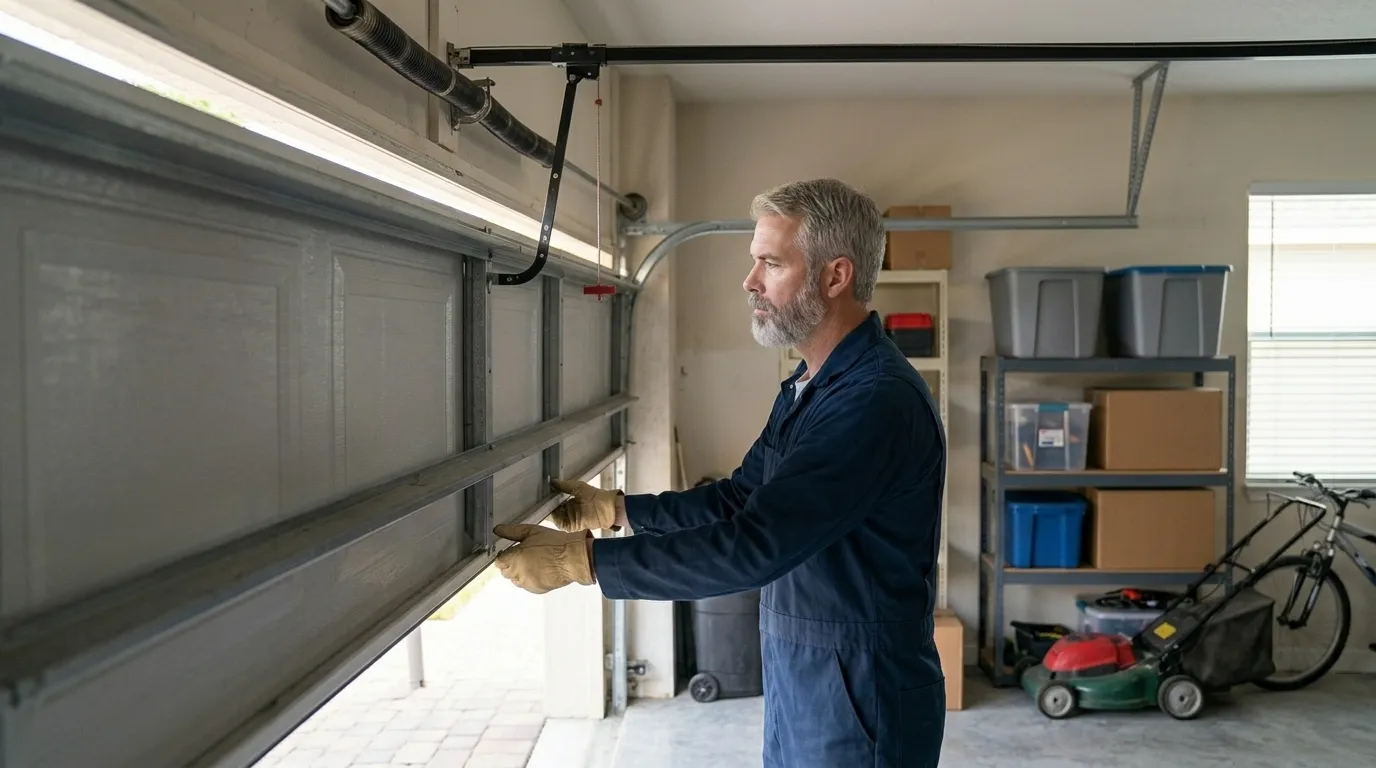
Most people call us because a door is loud, slow, or stuck halfway, and they assume it's a spring or a sensor. Half the time the real issue is the door itself. Housing across this service area went up mostly between 1968 and 1999, with the median build year sitting at 1979 - well before the energy codes that require insulated garage doors became standard. That means a lot of houses in the 13 named areas we work in still have the original single-layer steel or wood panel doors, or a close replacement copy of one, with no foam core and no thermal break at the bottom seal. Homeowners think a new opener or a tune-up will fix a door that bangs and sags in the cold, but a hollow steel panel from that era just doesn't behave like a modern insulated one, no matter what hardware is bolted to it. The mistake isn't neglect. It's assuming a door built in 1979 and a door built in 2015 have the same problems, when they're really two different products doing the same job.
The Seasonal Bit
This area sits in a cold-moderate climate band, which sounds mild until you live through the swing between a January morning and a July afternoon on the same uninsulated steel panel. Metal expands and contracts across that range, and on a door with no insulation layer to buffer it, the panel itself does the moving - not just the weatherstrip. On older doors from the 1960s-70s stock still common across this area, that repeated flex loosens the fasteners holding hinges to panels, and eventually you get a hinge that rattles or a panel seam that won't sit flush. It's not dramatic, and it's not a single event you can point to. It's cumulative, one seasonal swing at a time, on hardware that was never built to compensate for it. A newer insulated door handles the same swing with almost no panel movement because the foam core keeps the interior and exterior skins from responding to outdoor temperature the same way.
What Is Going On
Across the neighborhoods this company works in - from areas close in like Near North Valley and North Campus out to Los Ranchos de Albuquerque, North Valley, and South Valley - the housing stock skews to that same 1960s-70s build era, and the garage doors on those houses tend to be original or first-generation replacements. That's the pattern we see on service calls: a door that's mechanically fine but was never designed with an insulation layer, running an opener that's fighting a slightly heavier, slightly less balanced panel than the specs assume. Springs sized for a lighter, thinner steel skin end up working harder to lift these panels once they've absorbed decades of small warps and adjustments. None of this means the door is broken. It means the door predates the standard the rest of the industry has since adopted, and a repair that would fully solve the issue on a newer insulated door sometimes only gets you partway there on one of these.
What the Weather Here Does to It
In a cold-moderate climate, the damage isn't from one bad storm - it's from steady temperature swings acting on a door that has no insulation layer to absorb them. On the older steel doors common to houses built in the 1968-1999 window, that means the panel skin itself flexes season to season, which over years pulls at the roller brackets and can throw a track slightly out of parallel. Wood doors from the same era, less common but still around, dry and shrink at the panel joints for the same reason - no insulation core to stabilize the moisture and temperature inside the panel. We can true a track, resize a spring, and swap weatherstripping, and that solves real problems. What we can't do is make a 45-year-old uninsulated steel panel perform like a foam-core door - if the panel itself is warped past a certain point, insulated replacement is the honest answer, not another round of adjustments.
How it works
From “it’s stuck” to “it’s fixed”
01
Tell us what’s wrong
Describe the symptom - won’t open, loud bang, opener runs but the door won’t move.
02
On-site diagnosis
A technician tests the door under power and by hand and finds what actually failed.
03
Clear, up-front plan
You get the fix that’s needed and what drives the cost - before any work starts.
04
Repaired & tested
The repair is done, the door is set true and tested, and the work area left clean.
Serving Albuquerque, NM - tell us what your door’s doing and we’ll take it from there.
If your house was built in the 1968-1999 window that's common across this area, it's possible, especially if the door has never been replaced and shows a single flat steel or wood panel with no visible foam core along the edge. A quick look at the panel edge and the back of the door tells us fast.
Can you just add insulation to my existing door?
Retrofit foam kits exist and can help a little with noise and temperature, but they don't fix a panel that's already warped from decades of temperature swings, and they don't rebalance the spring for the added weight. On a door that's structurally sound we'll say so. On one that's warped, insulation on top of it isn't the fix.
Why does my door get harder to open in winter?
On an uninsulated steel panel, cold makes the metal contract slightly and can stiffen the weatherstrip at the bottom, adding drag right as the opener is already working against a heavier, older panel. It's a small effect each winter, but it compounds over years.
Do newer insulated doors need less maintenance here?
Less, not none. The foam core keeps the panel from flexing with the daily and seasonal temperature swings typical of this climate band, so hinges and fasteners stay tighter longer. Springs and rollers still wear on any door regardless of insulation.
Ready to get your garage door sorted?
Tell us what it’s doing and where you are in Albuquerque - we’ll take it from there.