Garage Door Repair for Albuquerque's 1970s and 80s Housing Stock
Garage door repair for Albuquerque homes built 1968-1999. We fix the torsion spring and track failures tied to original 1970s hardware and cold-dry temperature swings.
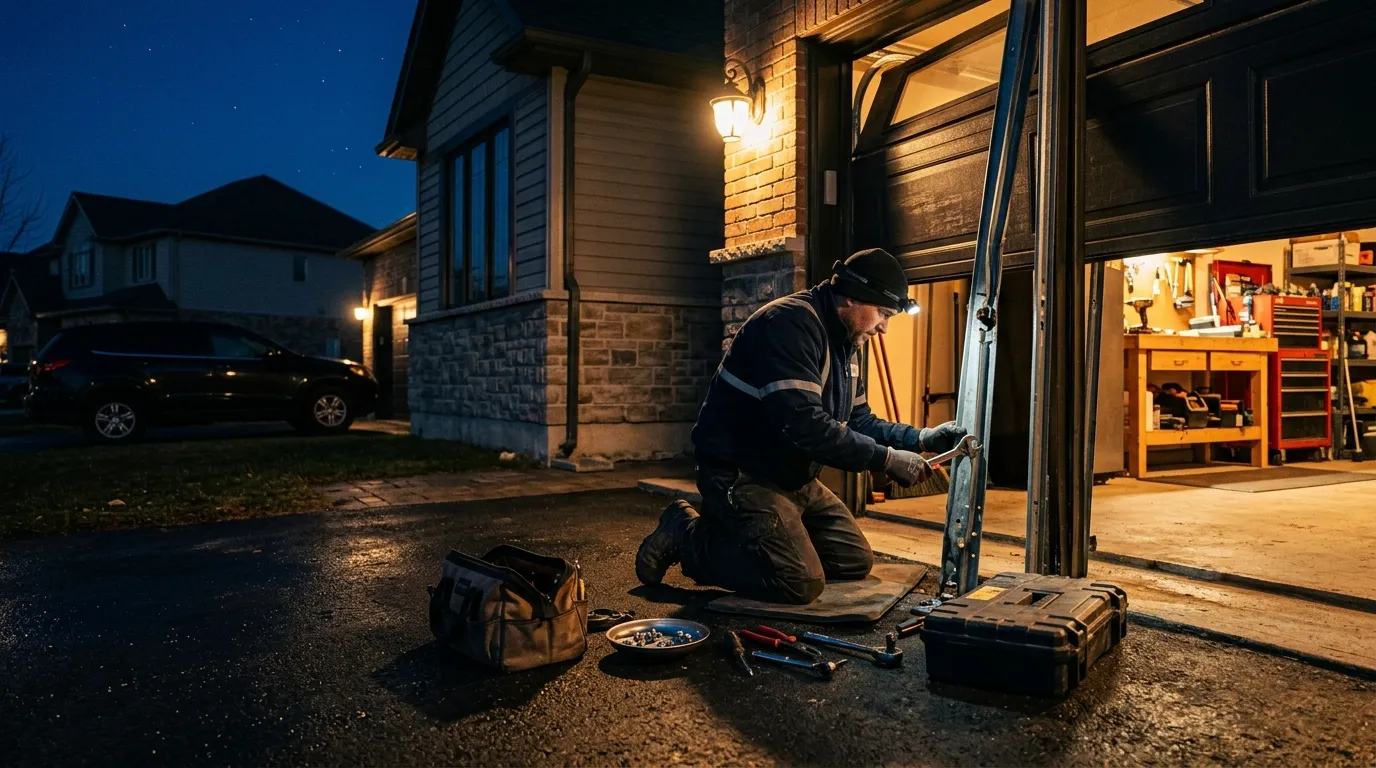
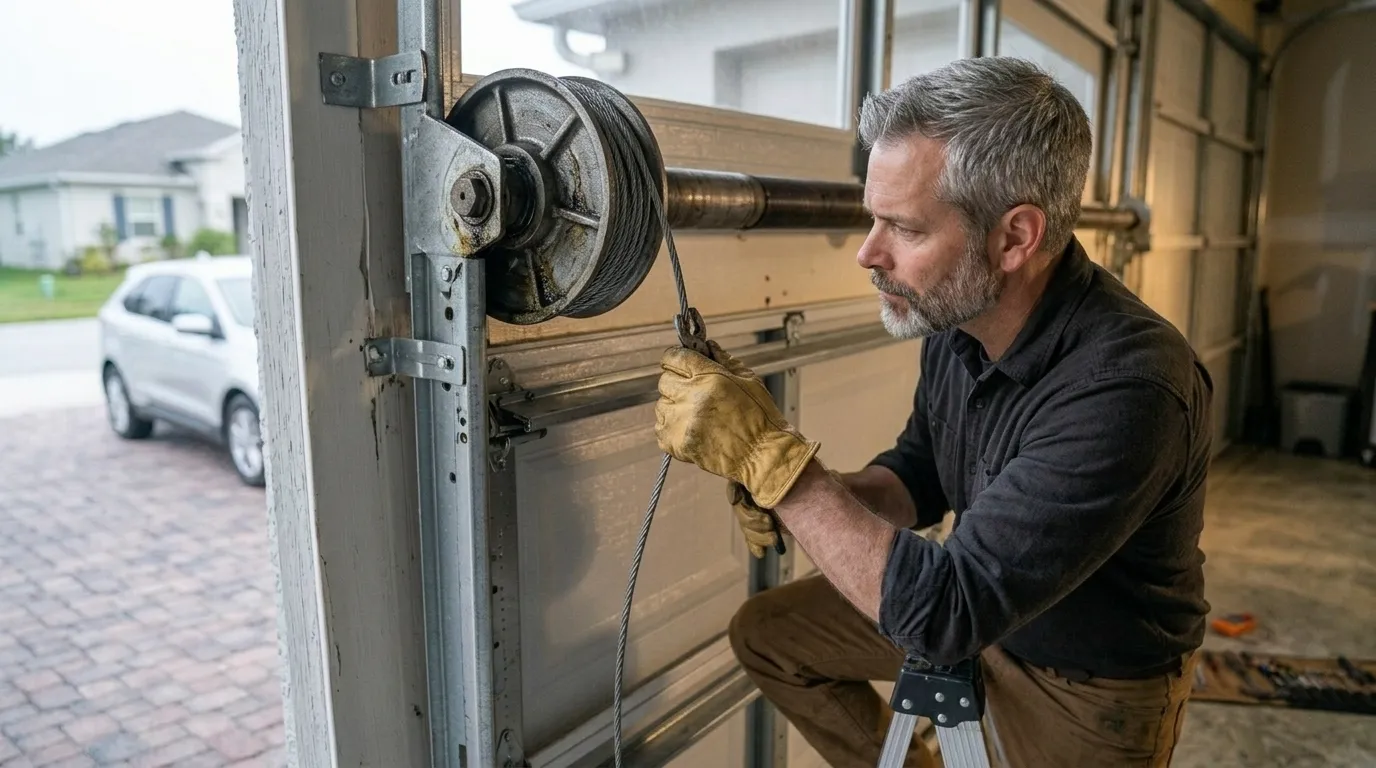
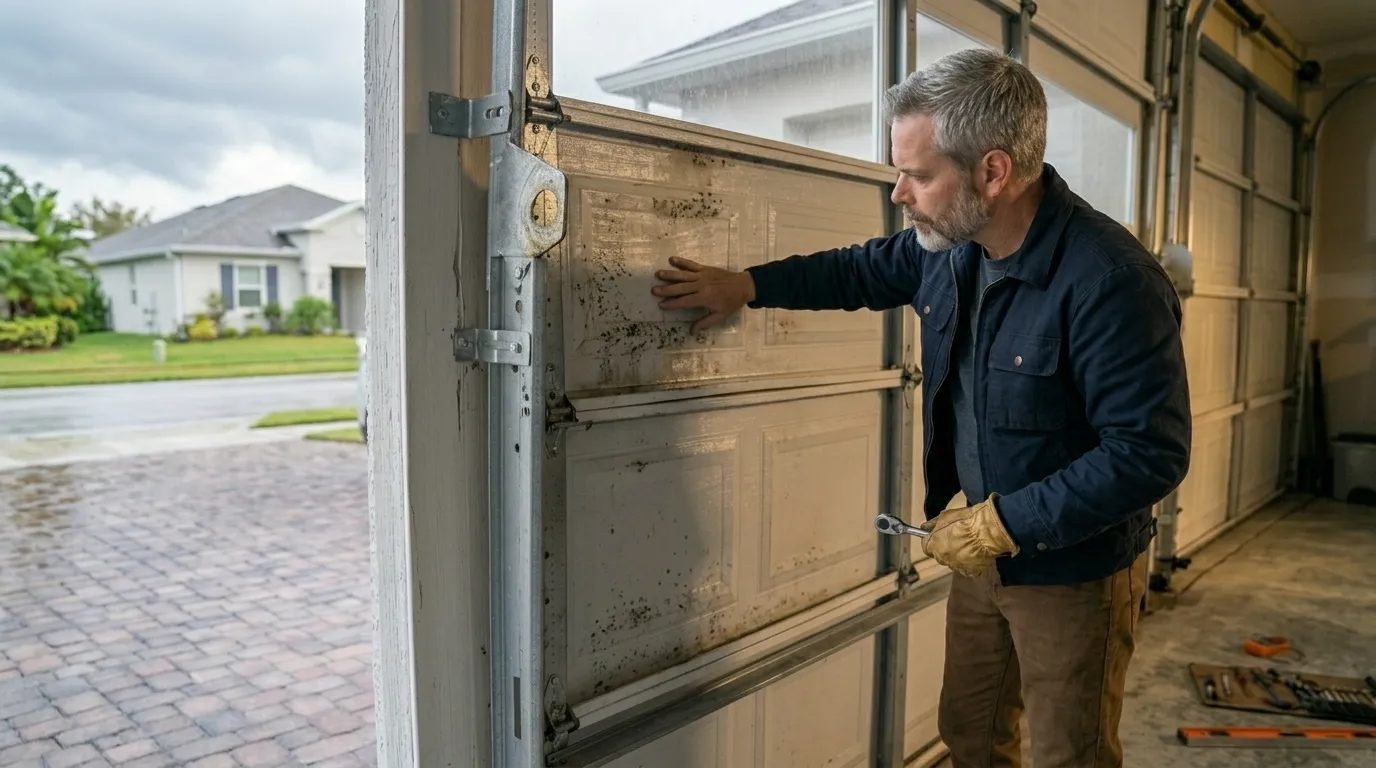
Most calls we get start the same way: the door won't go up, or it goes up and slams down. In a city where the housing stock runs 1968 to 1999 with a median build year around 1979, that pattern almost always traces back to a torsion spring that's outlived its cycle count, or track hardware that was never upgraded from what the builder put in. Neighborhoods like Taylor Ranch, Los Volcanes, and the North Valley still carry a lot of that original equipment, since nobody replaces a spring until it breaks. The failure doesn't happen gradually and politely. One morning the cable is off the drum, or the spring has split at the coil, and the door is either stuck shut or unsafe to lift by hand. That's the sideways moment - not a slow decline, a sudden stop. Waiting past the first grinding noise or visible sag usually turns a $200 repair into a full hardware replacement, because a snapped spring under tension can bend the track or crack a panel on its way down.
The Symptom
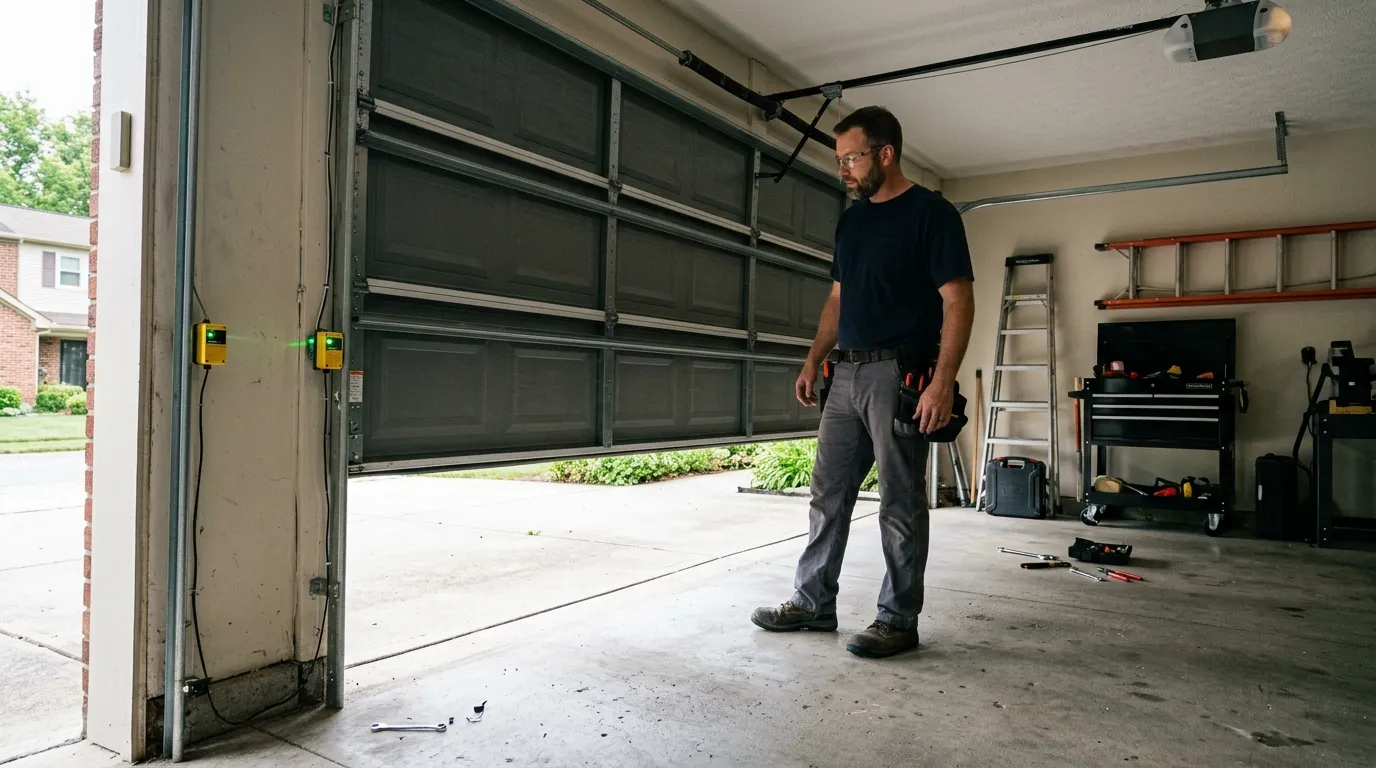
The door is heavy to lift by hand, or the opener strains and reverses partway up. Sometimes there's a loud bang from the garage - that's the spring letting go, not a track falling. Other times it's quieter: the door creeps down an inch after the opener says it's closed, which points to worn cable drums or a spring that's lost tension gradually rather than snapping. On older torsion setups common in Albuquerque's 1960s-70s stock, you'll also see the door go crooked in the frame, one side higher than the other, because a single spring is doing the work of two. None of these are opener problems even though the opener usually gets blamed first, since it's the part making noise when it fails to do its job.
Why This Fails Locally
Albuquerque sits in a cold-moderate climate band, and that matters more for garage doors than most homeowners assume. It's not humidity swelling wood panels the way it does in wetter regions - it's the dry, wide temperature swing between a cold desert night and a sunny afternoon that stresses metal spring coils and steel track brackets over and over across a winter. Combine that with the age of the housing stock - a lot of it going up between 1968 and 1999, with the bulk of the older tier concentrated in the 1960s-70s across areas like Los Ranchos de Albuquerque and North Valley - and you get springs and track hardware that have gone through several decades of thermal cycling on original parts. Builder-grade torsion springs from that era weren't rated for the service life these doors are now being asked to give. The steel fatigues at the coil ends first, which is exactly where we find the cracks.
The DIY Question
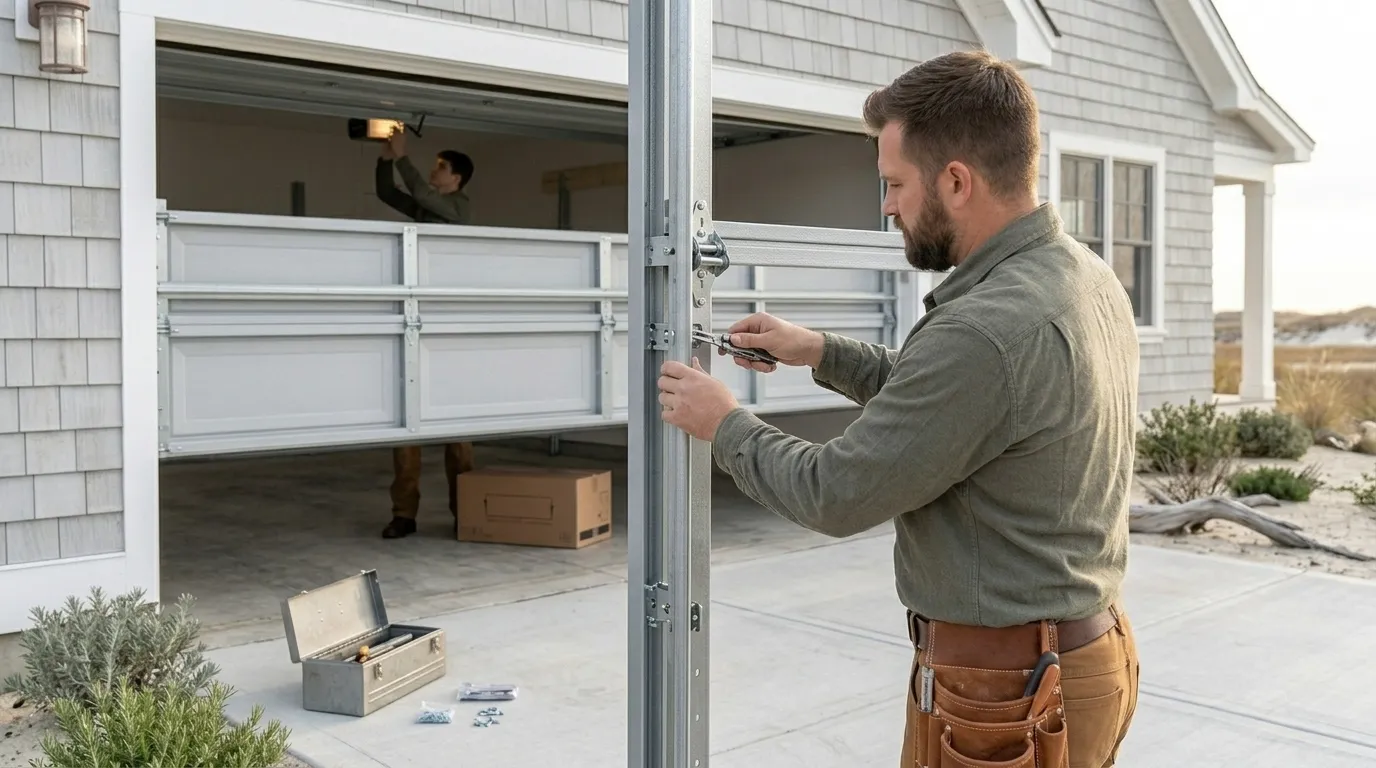
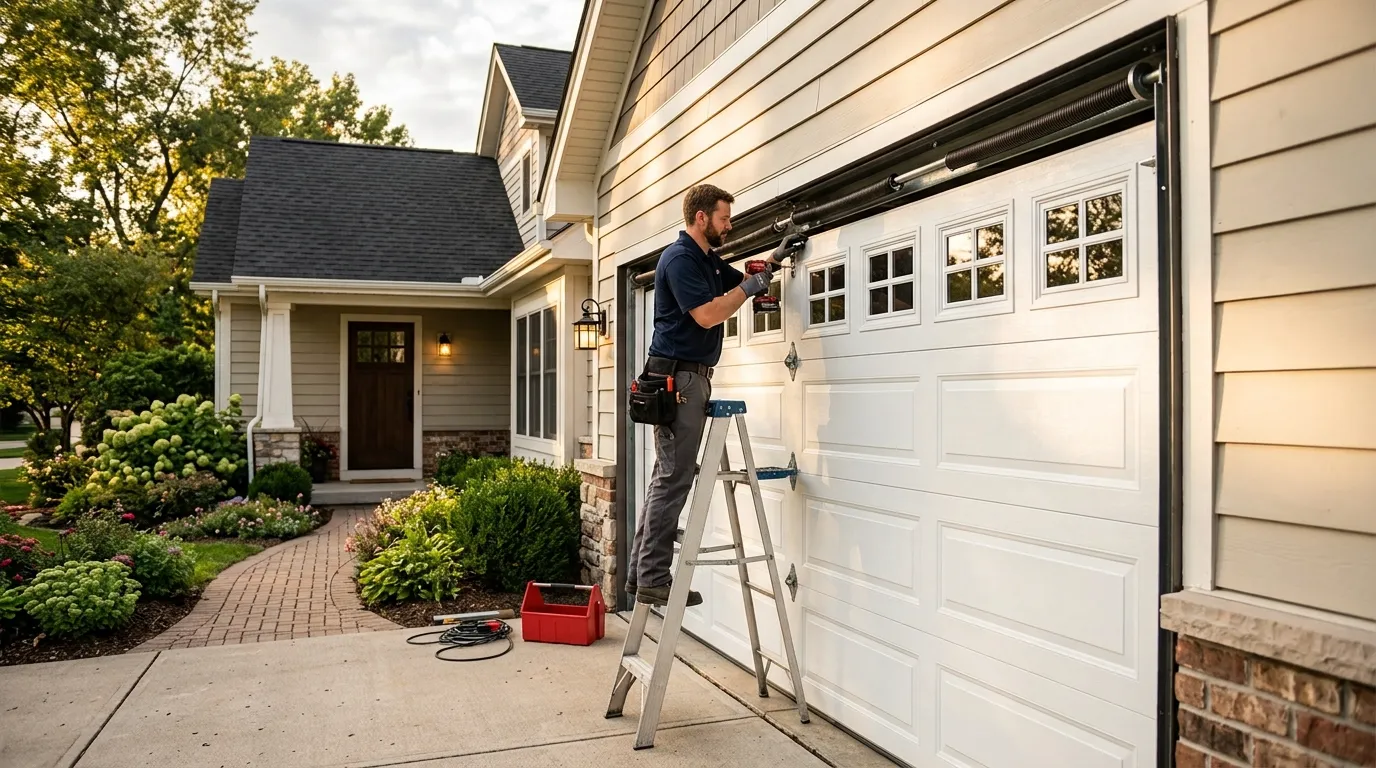
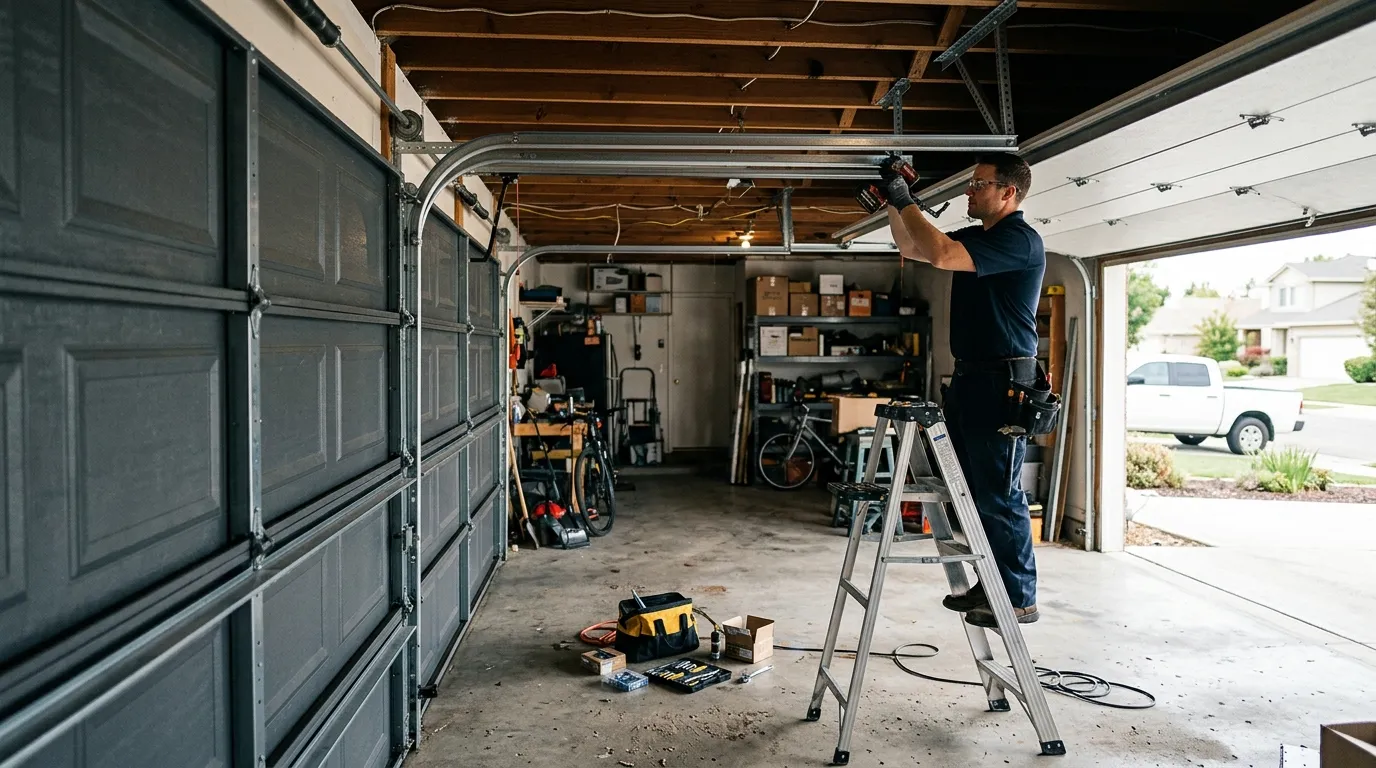
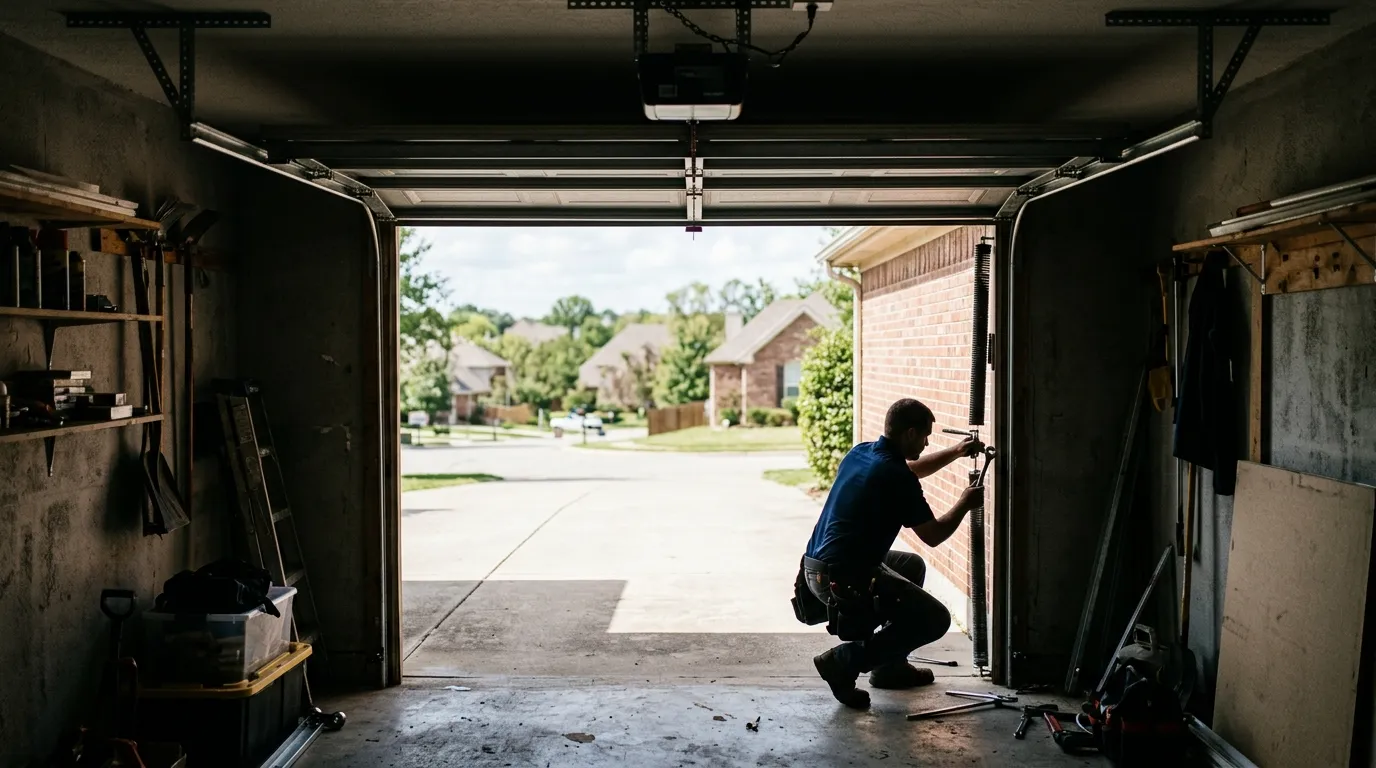
Some of this is genuinely fine to handle yourself. Lubricating rollers, tightening loose bolts on the track, replacing weatherstripping - none of that needs a call. Torsion springs are a different matter. They're wound under enough tension to break a bone or worse if the winding bars slip, and we don't recommend homeowners touch them, full stop. That's not upselling; it's the one part of this job where the margin for error is genuinely thin. If you're not sure whether what you're looking at is a spring, a cable, or just a misaligned sensor, a photo or a call before you start is worth more than any tutorial. And honestly - if your door was installed before the 1990s and the spring finally goes, replacing the whole spring and drum setup usually makes more sense than patching one side, since the other spring is on the same clock.
How it works
From “it’s stuck” to “it’s fixed”
01
Tell us what’s wrong
Describe the symptom - won’t open, loud bang, opener runs but the door won’t move.
02
On-site diagnosis
A technician tests the door under power and by hand and finds what actually failed.
03
Clear, up-front plan
You get the fix that’s needed and what drives the cost - before any work starts.
04
Repaired & tested
The repair is done, the door is set true and tested, and the work area left clean.
Serving Albuquerque, NM - tell us what your door’s doing and we’ll take it from there.
Why did my garage door spring break with no warning?
Torsion springs fail from metal fatigue after thousands of open-close cycles, and a lot of Albuquerque homes still have springs original to construction in the 1970s-80s. The crack forms slowly at the coil end but the actual break is sudden - there's no gradual warning stage once the metal fatigues that far.
Is it the cold causing my garage door problems?
Albuquerque's cold-moderate climate means real day-to-night temperature swings, and that thermal cycling stresses spring steel and track brackets over years. It's not the cold itself breaking things in one shot - it's decades of expansion and contraction wearing down hardware that was already near the end of its rated cycle life.
Can I replace a garage door spring myself?
We don't recommend it. Torsion springs are wound under high tension and can cause serious injury if the winding bars slip. Everything else - rollers, weatherstripping, loose track bolts - is reasonable DIY territory, but the spring itself is where we tell people to call instead of watch a video.
Ready to get your garage door sorted?
Tell us what it’s doing and where you are in Albuquerque - we’ll take it from there.