24/7 Emergency Service Open 7 days · 7am–8pm Serving Albuquerque, NM & nearby
(505) 496-3381
Albuquerque, NM

What Actually Happens on a Service Call in Albuquerque

A real look at what our techs check on an Albuquerque service call, from spring tension to track alignment, based on the age and climate of homes here.

What Actually Happens on a Service Call in Albuquerque

The Common Mistake

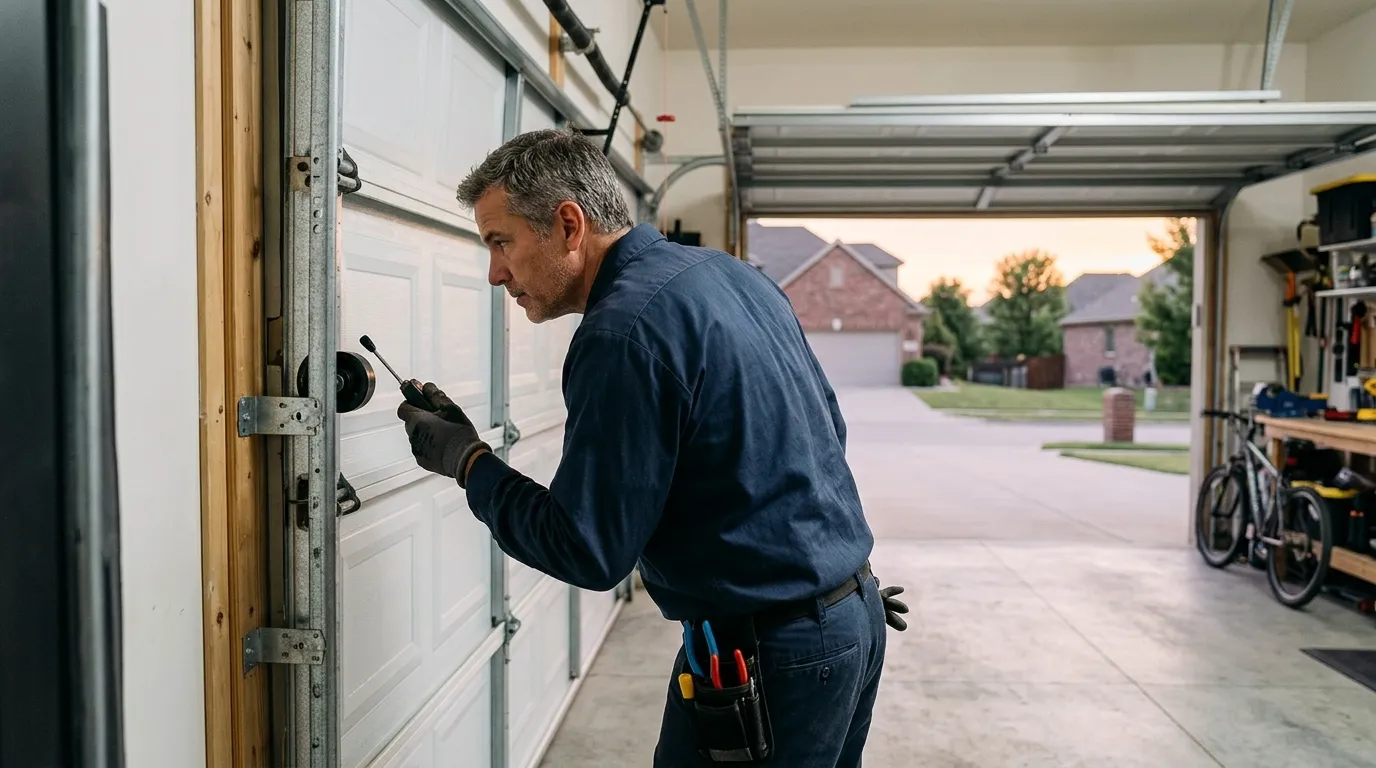
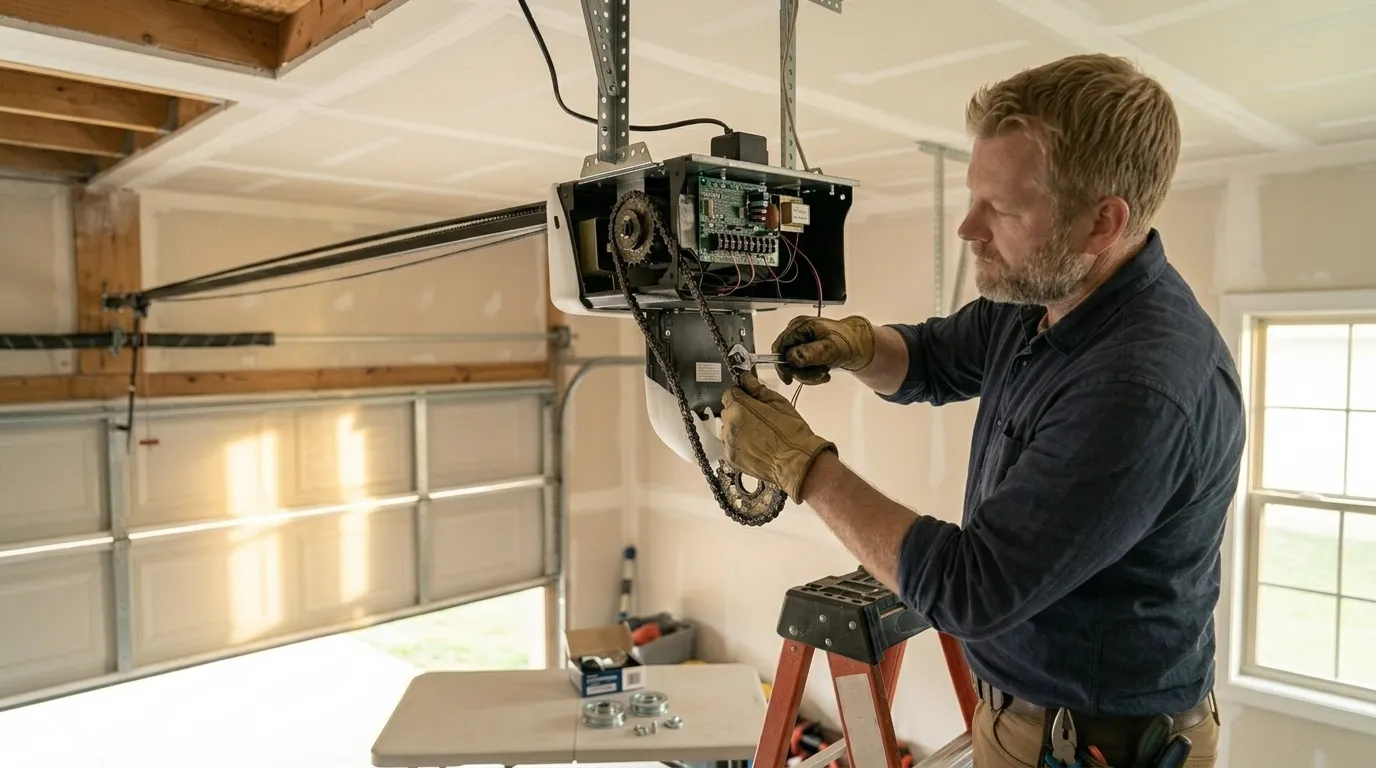
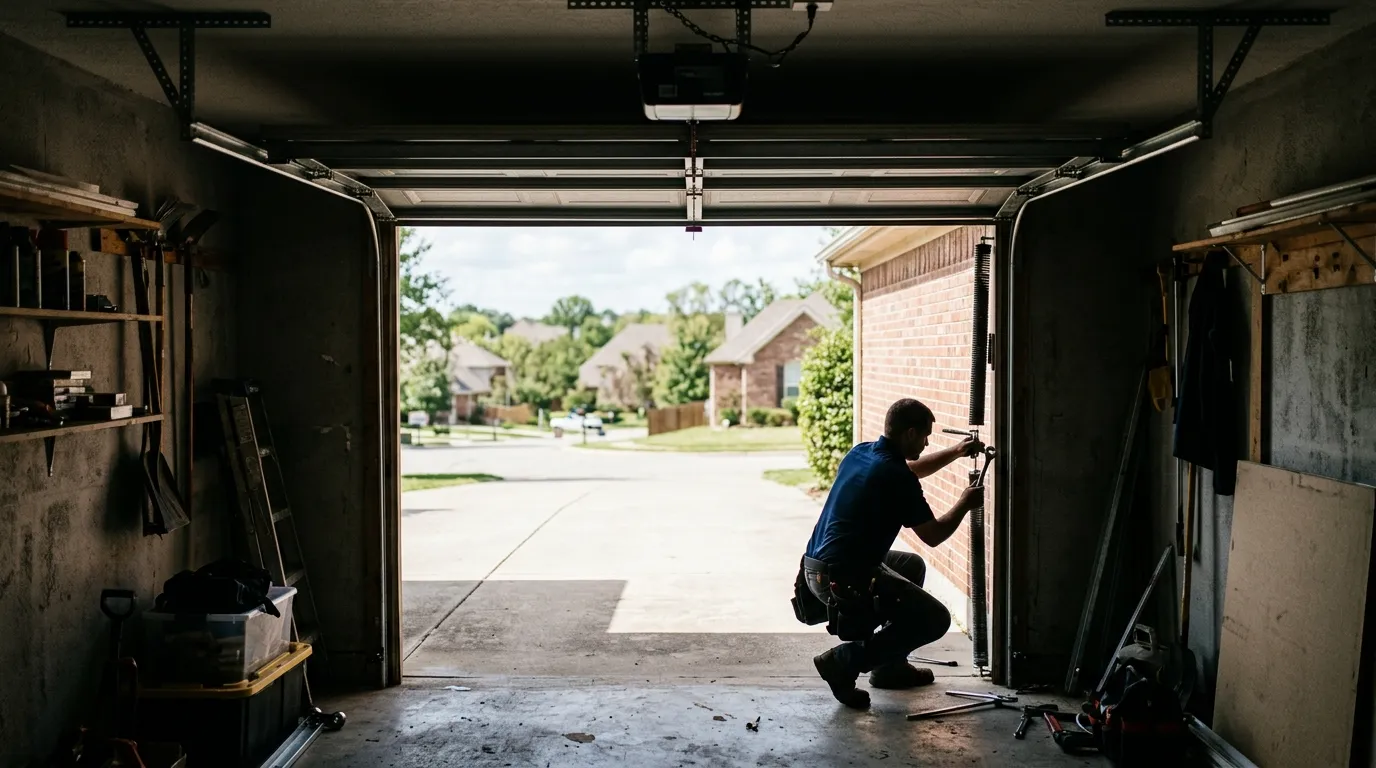
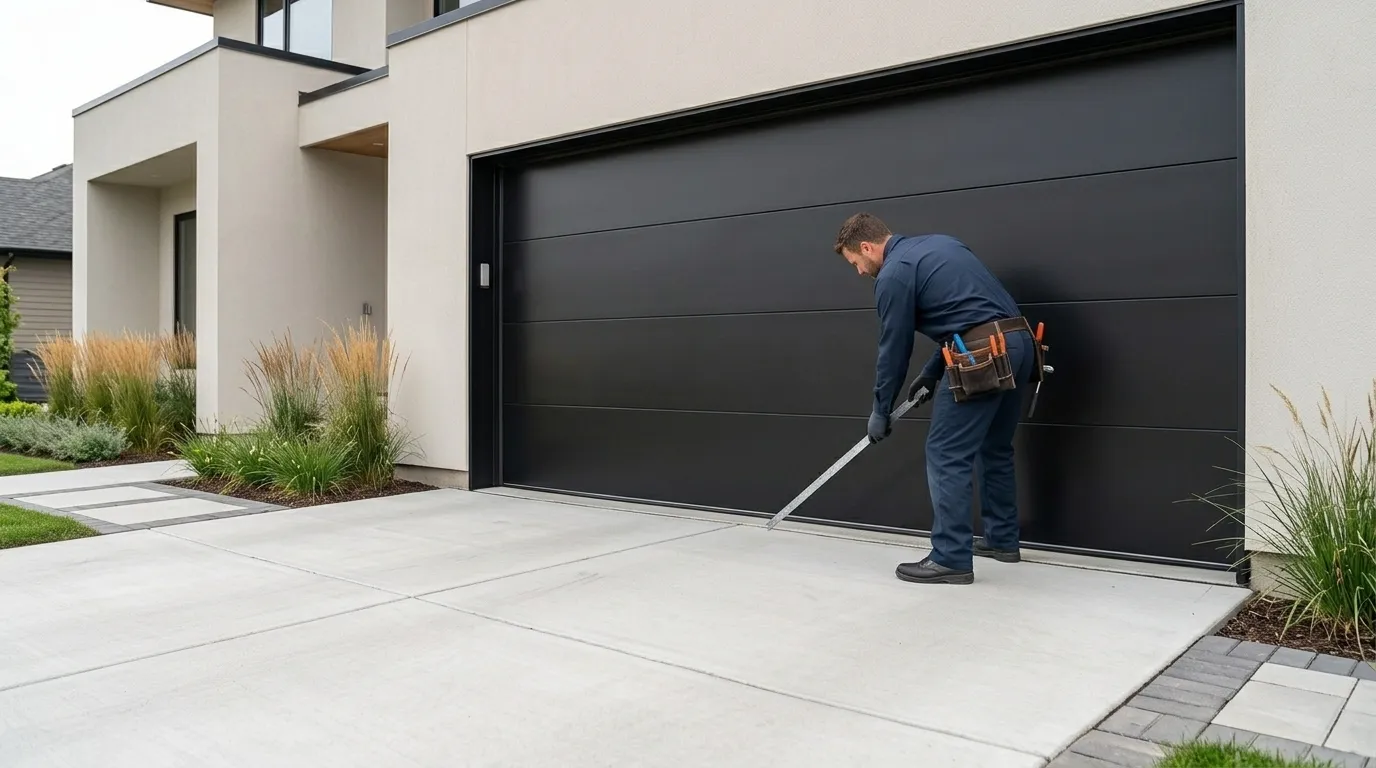
Most people book a service call thinking it means someone sprays the rollers and tightens a bracket. That's maybe five minutes of a forty-minute visit. What actually happens: we check spring tension by hand, look at cable wear at the drum, check the track for bow or pull-away from the wall, and run the opener through its force and travel limits. On a lot of the housing stock in this area - built between 1968 and 1999, with a good chunk going up right around 1979 - the original torsion hardware is still doing the lifting. That's 45 to 55 years of cycles on springs that were never designed to last that long. The mistake homeowners make is treating a service call like an oil change instead of what it really is: a check on whether the whole system is still matched to itself. A door with a new opener and a tired spring will fight the opener every time it closes, and that fight shows up as noise, jerking, or an opener that burns out early. A proper call catches that mismatch before it becomes a bigger bill.

The Seasonal Bit

Albuquerque sits in a cold-moderate climate band, which means the same door has to handle hard overnight freezes and 90-degree afternoons within the same season, sometimes the same week. That swing matters more on a service call than most owners expect. Steel track expands and contracts enough over a year to shift alignment a little at a time, and it's usually not visible until the door starts binding on one side. Lubricant behaves differently too - grease that's fine in July gets stiff enough in a January morning cold snap to slow the door down and make the opener work harder to compensate, which is often what actually trips a force-limit fault, not a bad opener board. On a seasonal check we're looking at whether the door is still centered in the track after a year of that expansion and contraction, and whether the lubricant on the rollers and hinges is still doing its job at both ends of the temperature range, not just the one the owner happened to notice it in.

What Is Going On

Across the areas we work - Near North Valley, Taylor Ranch, Los Volcanes, Alameda, and the rest of the thirteen named areas in this service footprint - most of the housing dates to the 1960s and 70s, sitting inside that broader 1968-1999 build window. That means a large share of the doors we're called to are original or close to it: single torsion spring, older extension springs on some of the 1960s builds, steel panels with decades of paint layers changing how much they weigh. A service call on one of these houses is different from one on a five-year-old build. We're not just checking settings, we're checking whether parts original to the house are still within safe tension, whether the drum and cable are the right pairing for the door's current weight, and whether the track was ever upgraded when the opener was replaced somewhere along the way. Across the roughly 22,430 owner-occupied houses in this area, that's a lot of doors carrying hardware older than the owner who's calling us. One honest limitation: if a spring or drum is a discontinued size, we may need to order the part rather than carry it on the truck, and that adds a day or two.
What the Weather Here Does to It

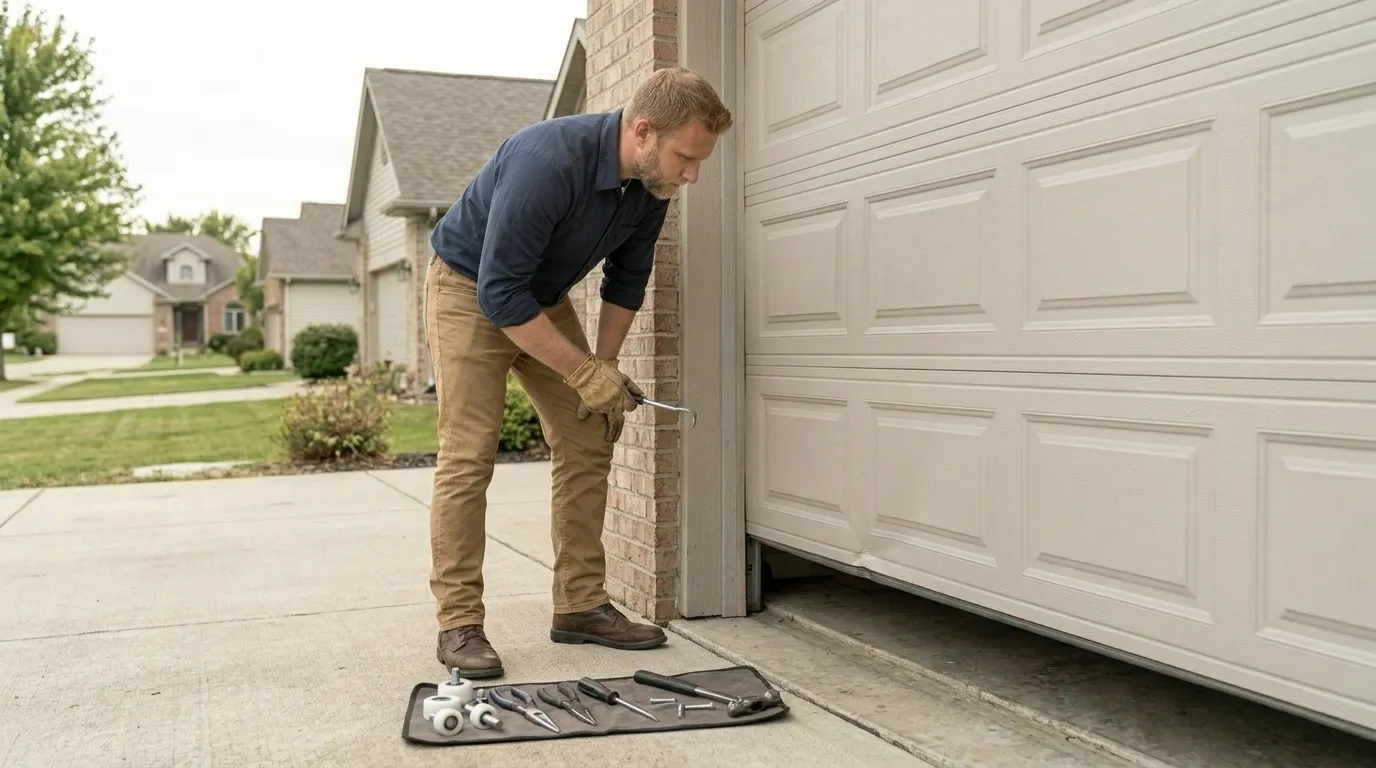
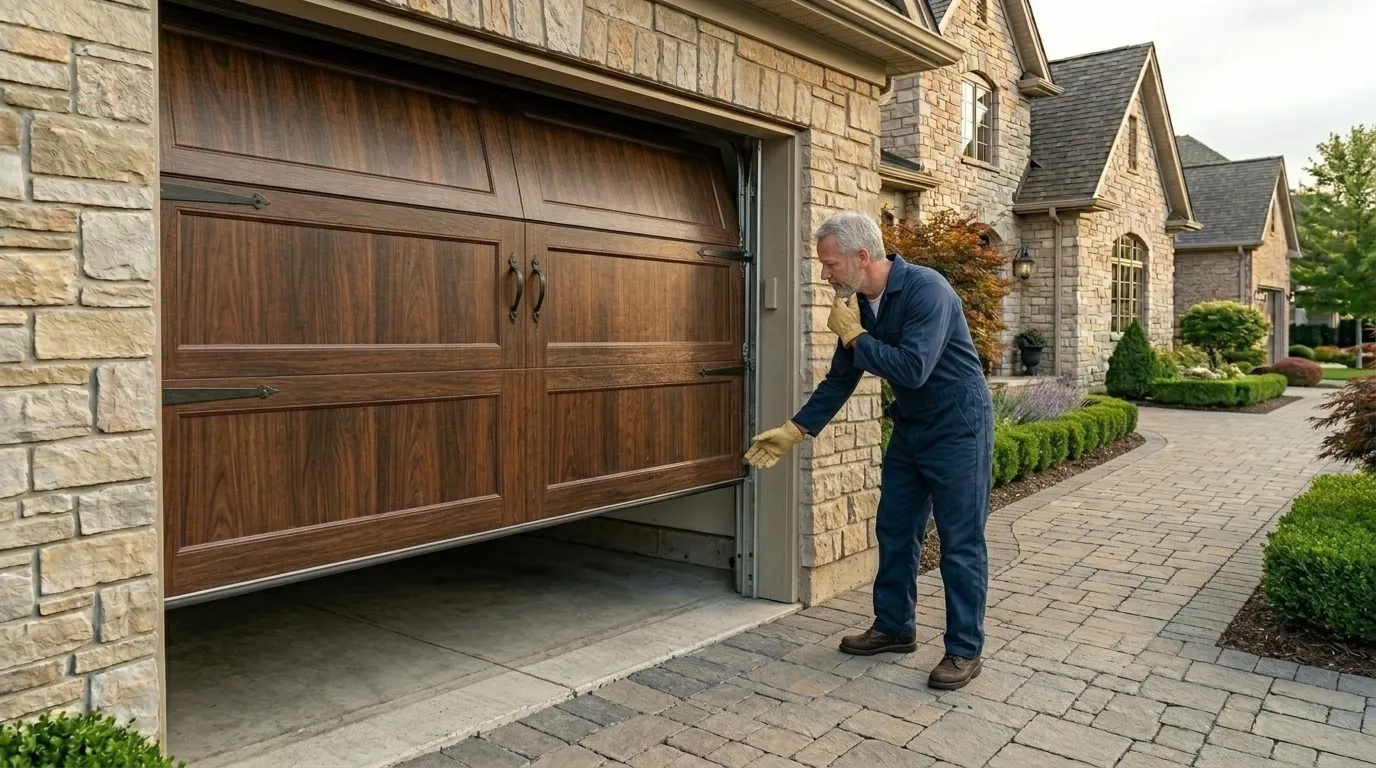
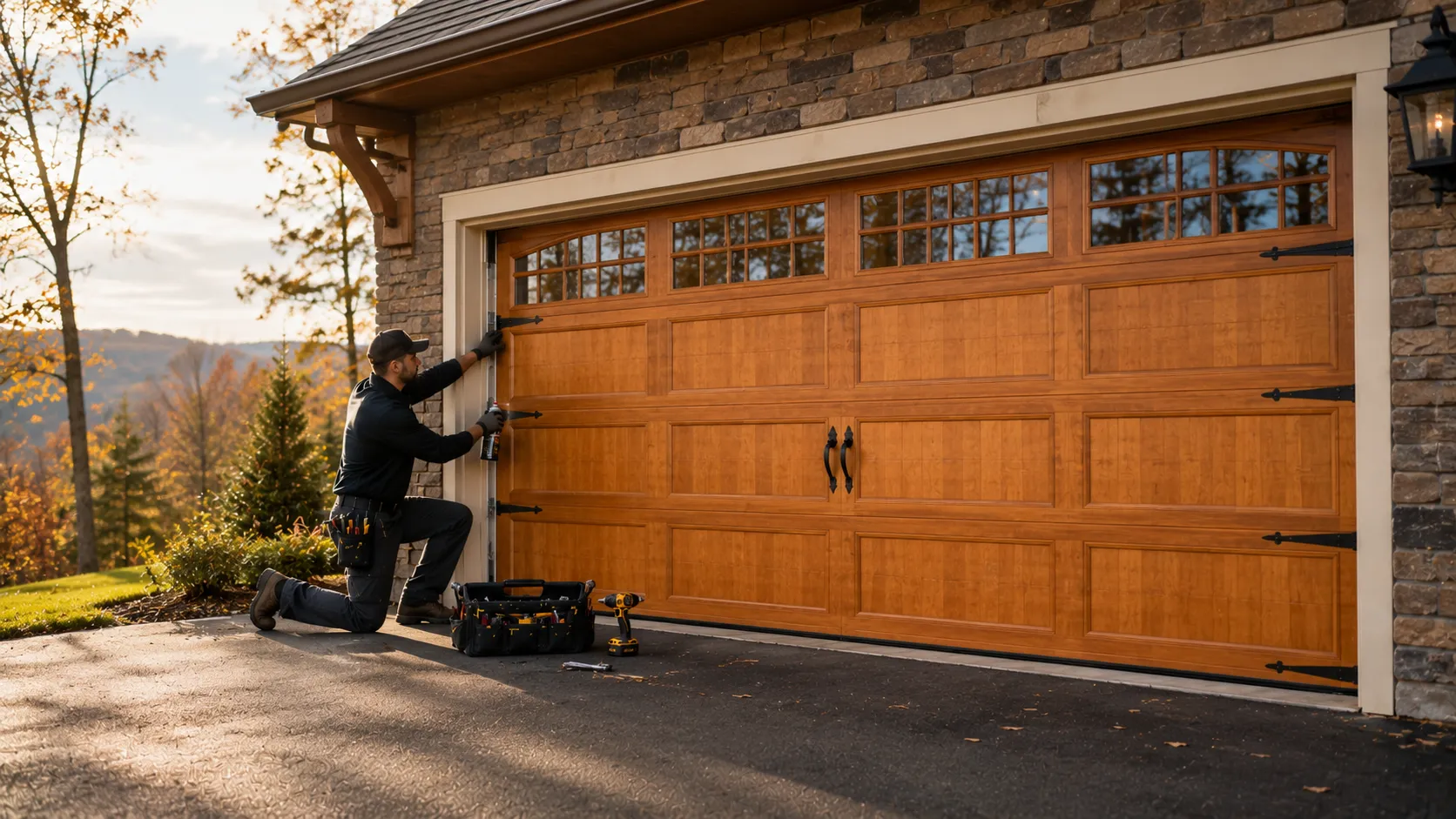
The cold-moderate band this area sits in isn't dramatic compared to some places, but it's consistent, and consistency is what wears a door down. Freeze-thaw cycles through the winter months work on the bottom seal and the weatherstripping until it cracks and lets in draft and dust. Dry air for most of the year means wood-look composite panels and painted steel both lose moisture at the surface faster than they would somewhere wetter, and that shows up as hairline cracking on older panels before it shows up as anything structural. On a service call we're checking the bottom seal condition, whether the weatherstripping is still flexible or has gone brittle, and whether panel seams have opened up enough to let light through at the edges. None of that is an emergency on its own, but on a door already carrying 1970s-era springs, a stiff seal adds resistance the opener has to push through on every single cycle, and that's often the difference between a door that lasts another five years and one that doesn't.

How it works

From “it’s stuck” to “it’s fixed”

Tell us what’s wrong - Albuquerque garage door service

Tell us what’s wrong

Describe the symptom - won’t open, loud bang, opener runs but the door won’t move.

On-site diagnosis - Albuquerque garage door service

On-site diagnosis

A technician tests the door under power and by hand and finds what actually failed.

Clear, up-front plan - Albuquerque garage door service

Clear, up-front plan

You get the fix that’s needed and what drives the cost - before any work starts.

Repaired & tested - Albuquerque garage door service

Repaired & tested

The repair is done, the door is set true and tested, and the work area left clean.

Serving Albuquerque, NM - tell us what your door’s doing and we’ll take it from there.

30areas covered
How we work

What to expect

A straight, honest approach on every Albuquerque job.

Diagnosis first

Every visit starts by finding what actually failed - not a pre-written parts list.

The right part for the door

Springs and openers matched to the door’s weight and age, so the fix holds up.

Straight answers

When a repair makes more sense than a replacement - or the reverse - you hear it plainly.

Clean, careful work

Tension released safely, hardware set true, the door tested under power before we leave.

Questions

Frequently asked

Straight answers about garage door repair in Albuquerque. Still unsure? Ask us directly.

How do I know if my service call needs more than a tune-up?

If the tech finds spring tension that's off, cable fraying at the drum, or track pulled away from the wall, that's beyond a tune-up. Given how much of the housing here dates to the 1968-1999 window, we see original hardware at end of life often enough that it's worth asking the tech directly what they found and why, rather than just accepting a quote.

Does the Albuquerque climate actually affect my garage door that much?

Yes, mostly through the seal and lubricant, not the steel itself. Cold-moderate swings mean lubricant thickens overnight and seals dry out and crack over a few winters. It's rarely dramatic, but it adds resistance the opener has to overcome, which shortens the life of everything else on the door.

Is it worth fixing an old door or should I replace it?

Depends what's original. A spring or cable swap on an otherwise sound door is usually worth it. If the track, drum, and opener are all original to a house built in the 1970s, replacement often makes more financial sense than patching each part as it fails. We'll tell you honestly which side of that line your door is on.

Do you carry parts for older torsion springs on the truck?

For common sizes, yes. Some older or discontinued spring and drum sizes from 1960s and 70s builds aren't stock items, and we may need a day or two to order them. We'd rather tell you that upfront than promise a same-visit fix we can't deliver.

Ready to get your garage door sorted?

Tell us what it’s doing and where you are in Albuquerque - we’ll take it from there.

Request a QuoteCall