The Seasonal Bit
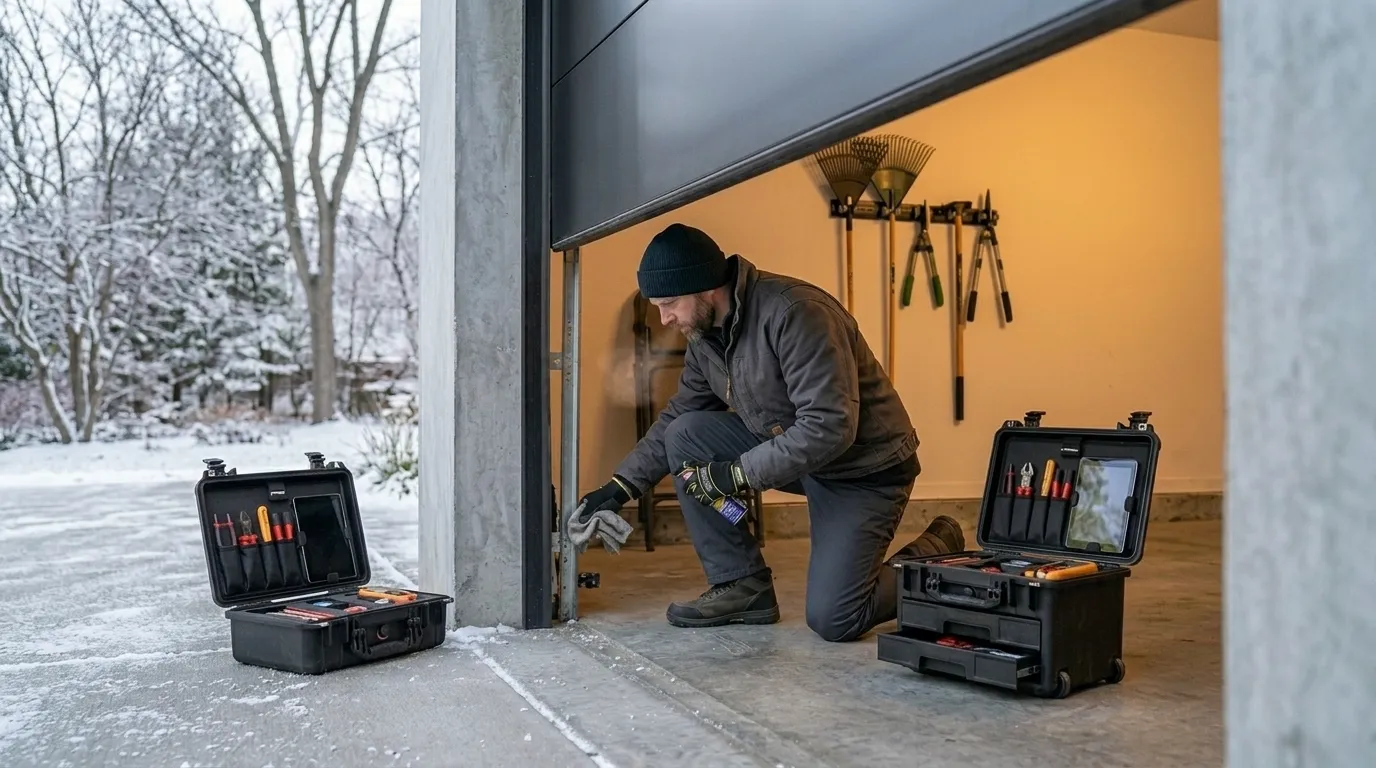
Our climate band runs cold-moderate, which means the swing between a January morning and a July afternoon does real work on steel and lubricant, even without the humidity extremes some regions deal with. Grease that was fine in summer stiffens up in a cold snap and makes the opener strain on the first pull of the day - that's a specific sound, a labored motor hum, not a squeak.
Across the 13 or so named areas in our service area, the pattern repeats block to block, because the housing went up in waves during the same few decades. A house in Taylor Ranch and a house in Alameda built in the same stretch of the 1970s will start making the same noise on the same kind of cold morning, for the same reason: the metal contracts, the old lubricant thickens, and the track tolerances that were fine at 70 degrees get tight at 30. It's not your door being unlucky. It's the season doing what it does to hardware this age.
What Is Going On
A rhythmic thump once per rotation is almost always a flat spot on a roller - common on doors old enough to still have the original steel or nylon rollers instead of anything sealed. A sharp metallic pop, usually once, followed by the door refusing to move, is a spring giving out; on a lot of the 1970s-era doors we see, that's a single torsion spring built for a lighter door than what's actually hanging on it now if panels were ever swapped.
A low groan as the door starts is usually the opener's gears working against a track that's slightly out of parallel, which shows up more in houses from this build era because the tracks were often installed without the shimming standards used later. A rattle along the whole run, not just at the top, points to loose hardware - bolts that have backed out over decades of thermal cycling. Each sound points somewhere specific. None of them are the door being "old" as a blanket explanation, and none of them fix themselves.