The Split Between Old and New
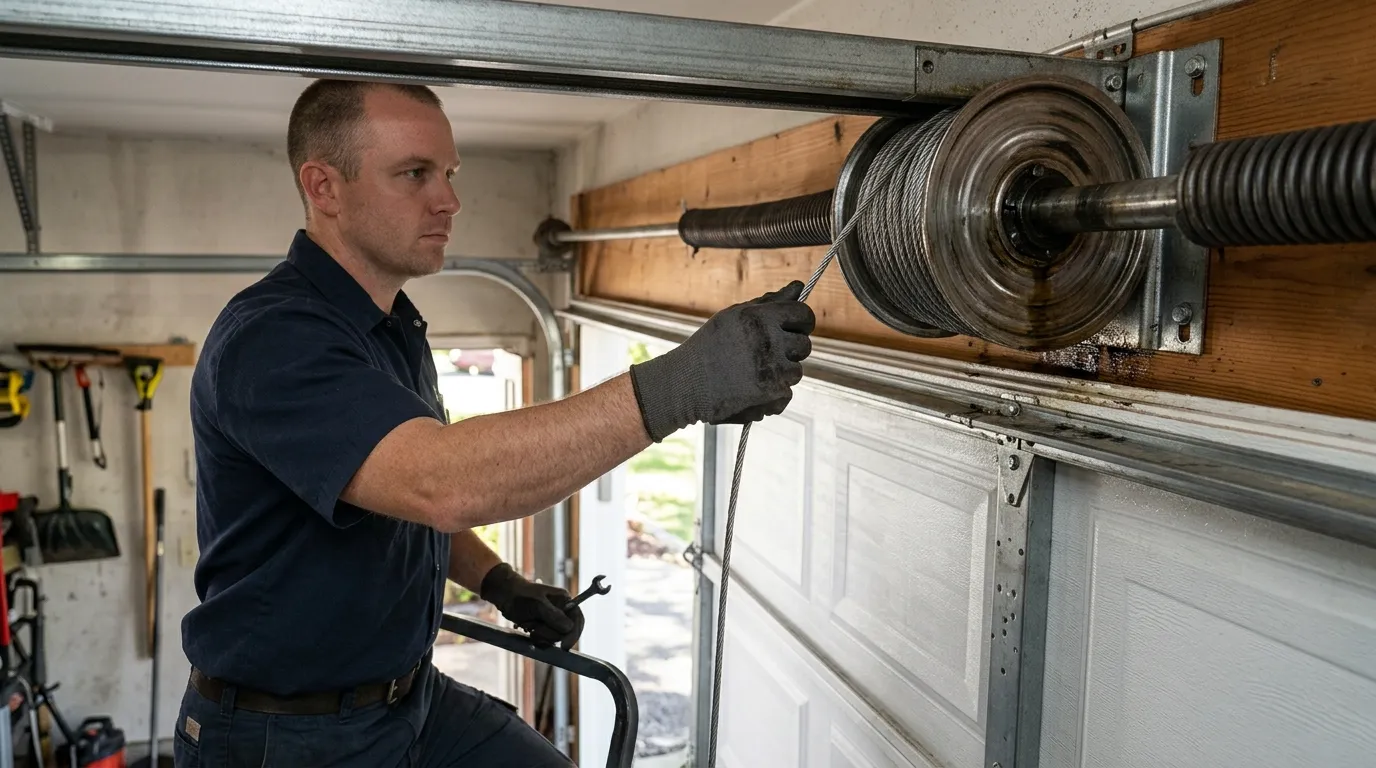
Across the wider Albuquerque area, houses run anywhere from 1968 to 1999, with the median landing around 1979 - a spread of two full decades of different construction styles, opener technology, and door hardware. Bosque Farms doesn't have that spread. The typical house here went up right around that same 1979 mark, which means the neighborhood is more uniform in age than a lot of the areas we cover closer to the city. That's actually useful: it means the failures we see out here tend to repeat house to house rather than varying wildly by block. A torsion spring rated for a door installed in the late 1970s has had roughly the same number of open-close cycles as the one next door, and if one has failed, the neighbor's is usually not far behind. We treat that as a heads-up worth passing along when we're out there, not as a reason to push a sale nobody asked for.
This Area's Housing
Bosque Farms has around 1,654 households, a small fraction of the roughly 33,690 across the whole service area - this is a lower-density, more rural stretch than the neighborhoods closer in. Median household income here runs about $63,889, noticeably below the roughly $72,188 median across the wider area we serve. That gap matters for how we talk about repair versus replacement: we're not going to default to recommending a full door swap when a spring, cable, or roller fix solves the actual problem. Out here especially, we try to fix what can be fixed and say plainly when it can't, rather than treating every service call as an opening to sell a new door. The housing stock being older and more uniform in age also means original hardware - openers, torsion setups, sometimes even the doors themselves - is more common here than in newer parts of the metro, and that hardware is reaching the point where parts availability, not the mechanism itself, becomes the limiting factor.