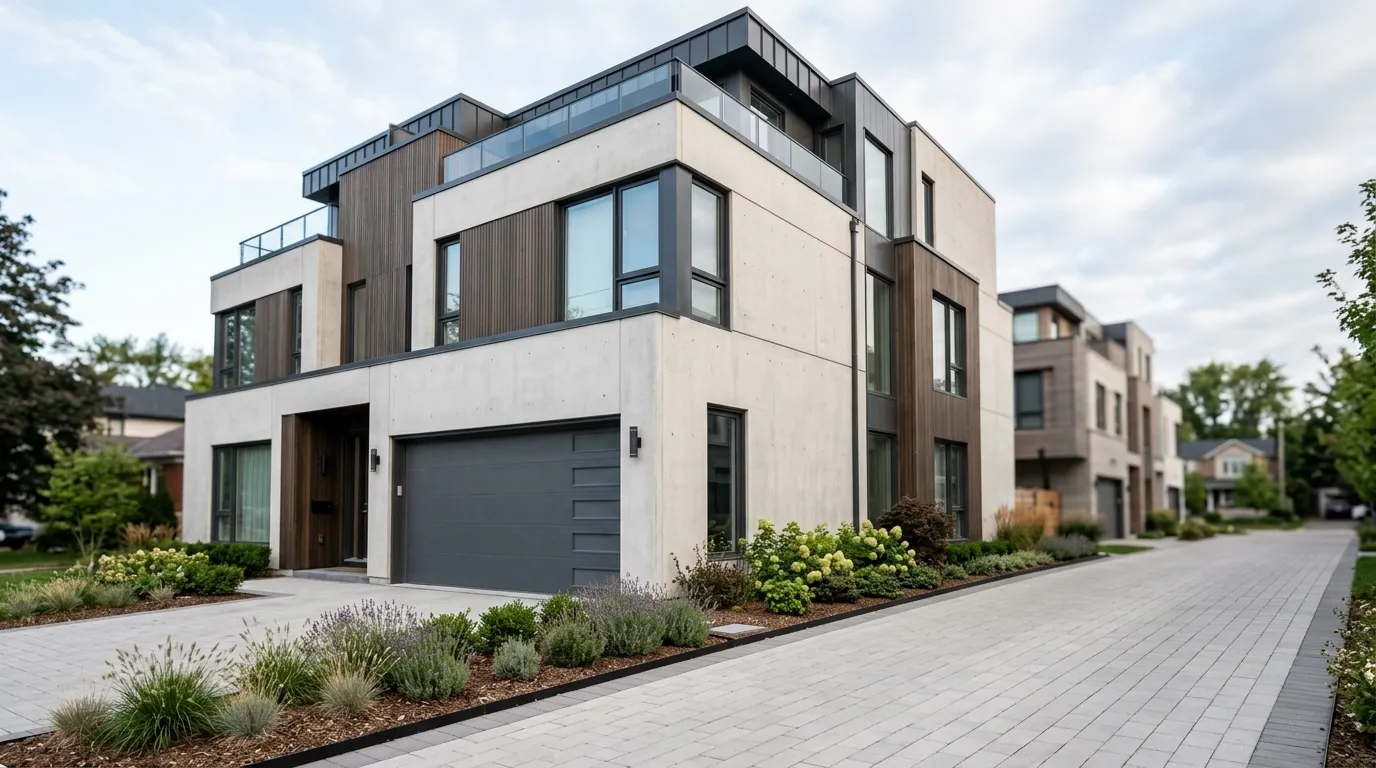
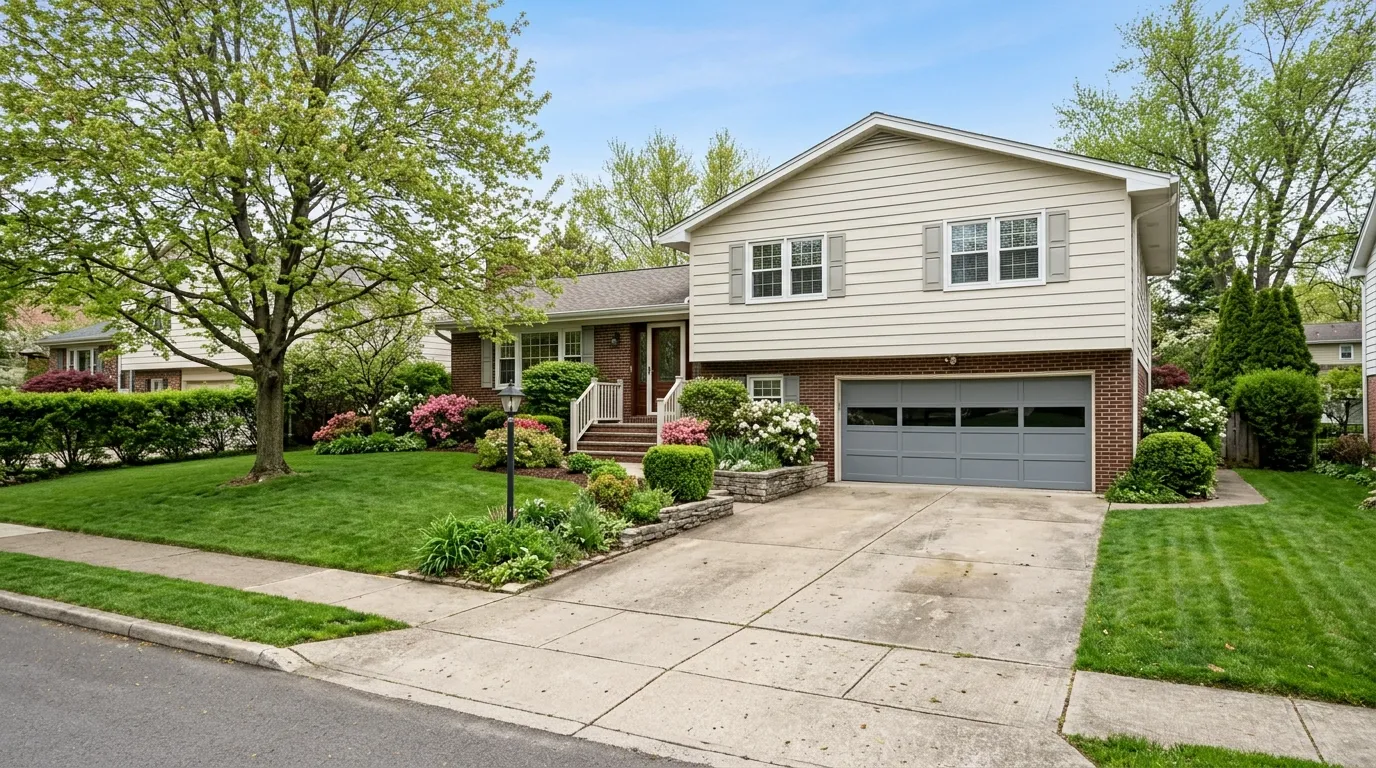
Serving Cedar Crest homes built mostly in the 1980s, 15 miles up from Albuquerque. We work on the taller, wider doors and openers common to this area's newer builds.
Cedar Crest sits about 15 miles from our shop in Albuquerque, up in the East Mountains rather than down in the valley. We don't keep a truck stationed out here - every job means a drive up, so we schedule Cedar Crest calls in a block rather than promising a same-hour arrival like we might for a job five minutes from the shop. That's not a knock on the area, it's just honest about the distance. If your spring lets go on a Tuesday morning, tell us that up front and we'll route around it as best we can, but plan on the drive time being part of the job.
The road up gains real elevation, and that matters for more than travel time. Garage doors at altitude and in mountain-adjacent microclimates see different wear than doors in the flatter parts of the metro, which is part of why we ask a few more questions about your specific setup before we quote anything sight unseen.
The Split Between Old and New
Across the wider Albuquerque service area, most housing stock dates to the 1960s and 70s, with a median build year around 1979. Cedar Crest breaks from that pattern - homes here run newer on average, with a median build year closer to 1985. That six-year gap doesn't sound like much until you look at what changed in garage door manufacturing and opener wiring standards in that window. A door bought for a 1985 build is a different animal than one bought for a 1968 tract house: different track widths became common, different opener mounting became standard, and insulated sectional doors started showing up more often than older one-piece slab doors.
We mention this because a lot of general troubleshooting advice online assumes the older stock that dominates the rest of the metro. If you've read that your torsion spring should look a certain way or your opener bracket should sit a certain place, and it doesn't match what's in your garage, that's likely why - your house isn't the median Albuquerque house, it's a Cedar Crest house.
This Area's Housing
Cedar Crest is a smaller pocket than most of the named areas we cover - around 465 households, with a median income near $143,750, noticeably higher than the roughly $72,188 median across the broader service area. That income level tends to track with heavier doors: more insulated steel and composite sectional doors, more openers with battery backup and smart-home tie-ins, fewer bare single-layer doors than you'd find on older, lower-cost tract housing closer to the city center.
The area also sits within what we'd call a cold-moderate climate band rather than the flatter valley climate, meaning temperature swings between day and night can be sharper up here. That affects lubrication schedules and how often you'll want to check weatherstripping and bottom seals, since rubber and vinyl parts age differently with bigger daily temperature spreads than they do in the valley.
What the Housing Means for Your Door
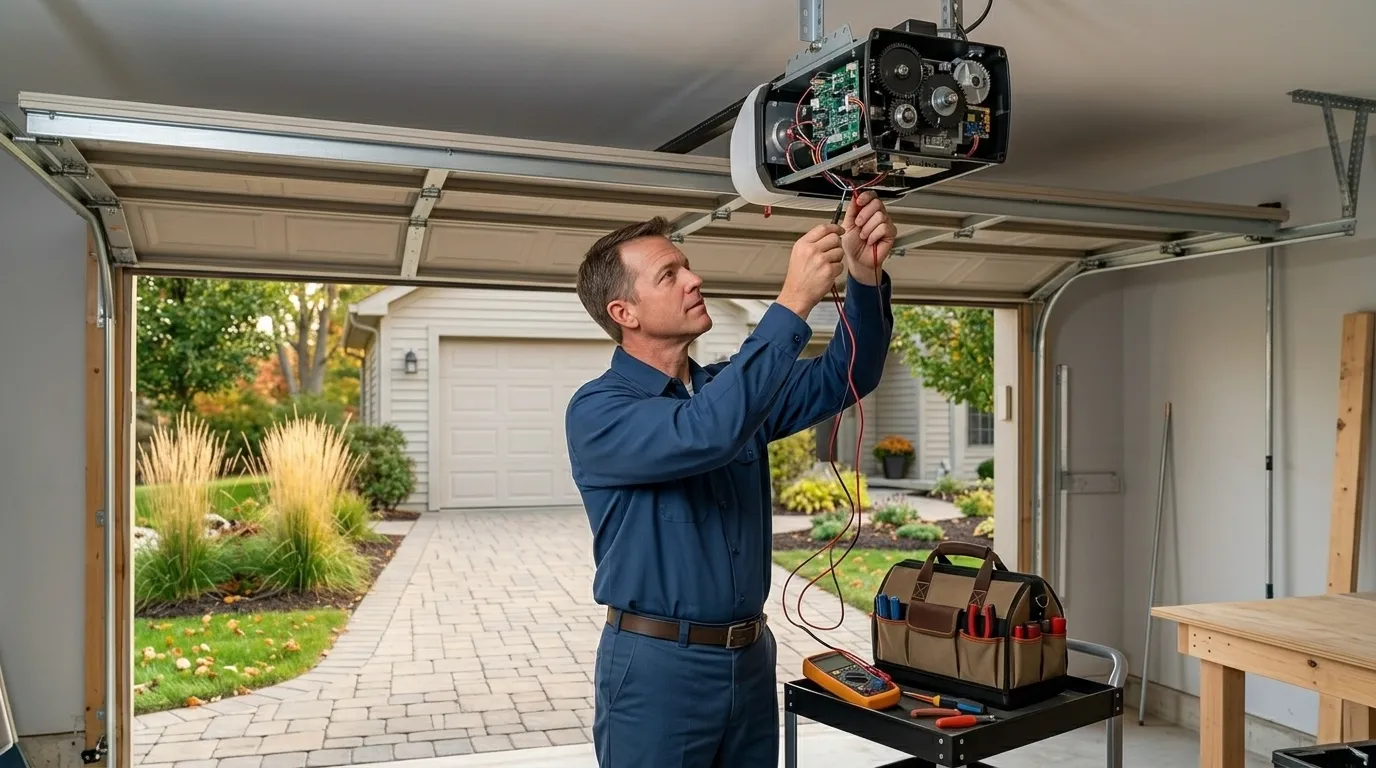
Given the 1985 median build year, the most common failure we expect on a Cedar Crest call is opener-related rather than the old spring-and-slab problems that dominate work in older Albuquerque neighborhoods. Openers from that era and the replacements installed since have circuit boards and drive mechanisms that fail differently than a worn-out torsion spring on a 1968 door - think dead logic boards, stripped gears, or sensors knocked out of alignment, more than a snapped cable on ancient hardware.
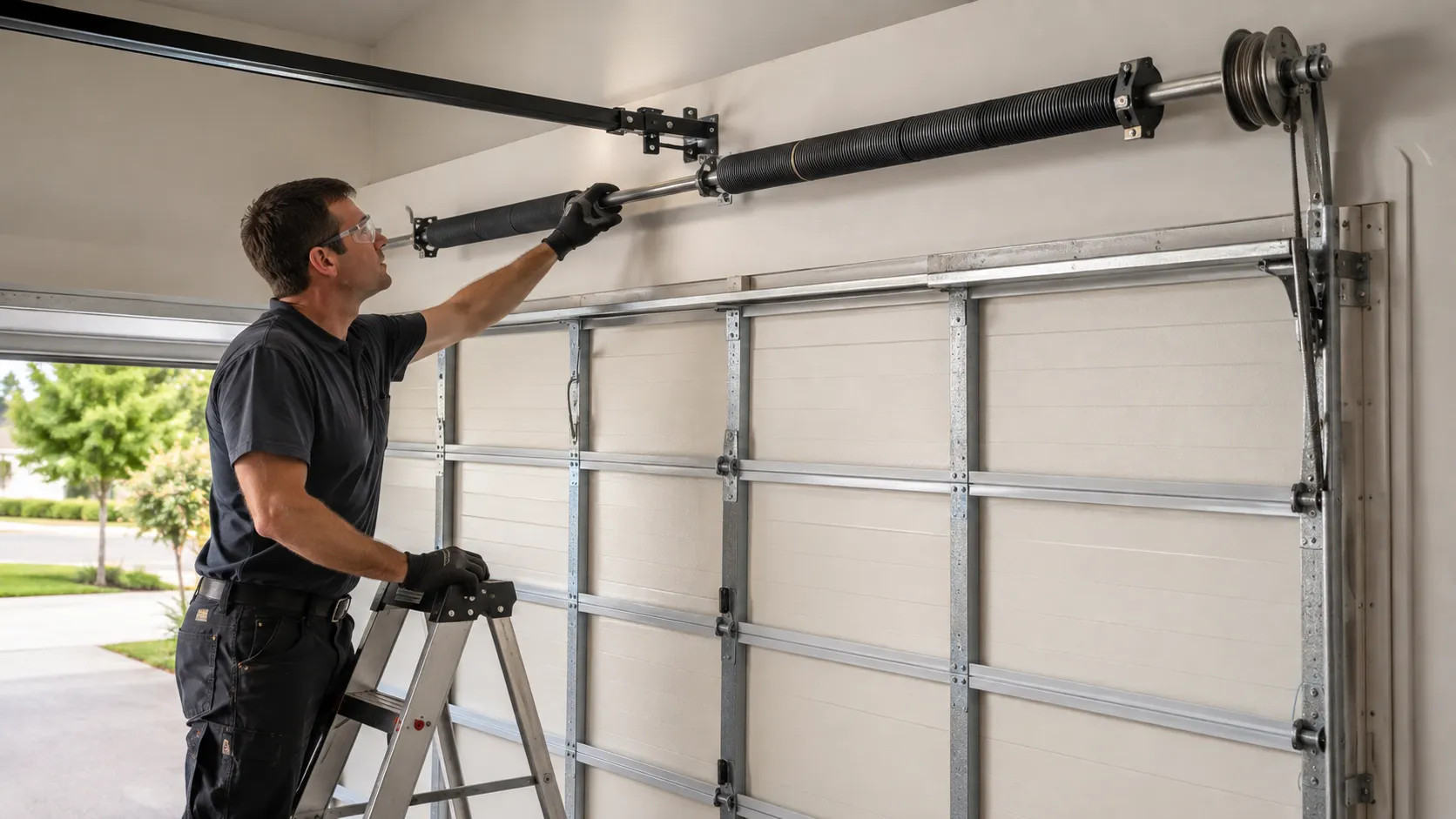
Heavier insulated doors, which are more common here given the income level and build era, also put more strain on springs sized for lighter doors if a previous owner ever swapped a door without upsizing the spring to match. That's a real check we do before assuming a spring failure is just wear - sometimes it's a mismatch that was there since installation.
One limitation worth being upfront about: because we're driving up from Albuquerque, we don't stock every part on the truck for less common opener models, and a specific circuit board or drive gear can mean a return trip once we've ordered the part. We'll tell you at diagnosis if that's likely rather than let you assume a one-visit fix.
How it works
From “it’s stuck” to “it’s fixed”
01
Tell us what’s wrong
Describe the symptom - won’t open, loud bang, opener runs but the door won’t move.
02
On-site diagnosis
A technician tests the door under power and by hand and finds what actually failed.
03
Clear, up-front plan
You get the fix that’s needed and what drives the cost - before any work starts.
04
Repaired & tested
The repair is done, the door is set true and tested, and the work area left clean.
Serving Albuquerque, NM - tell us what your door’s doing and we’ll take it from there.
No. We're based in Albuquerque, about 15 miles away, and we drive up for Cedar Crest calls rather than keeping a truck stationed here. We schedule these jobs in blocks rather than promising immediate arrival, so let us know your timing constraints when you call.
Why does my opener act different from my neighbor's older house in the valley?
Most of the wider Albuquerque area was built in the 1960s and 70s, but Cedar Crest's median build year runs closer to 1985. Openers and door hardware standard in the mid-80s differ from what shipped a decade or two earlier, which is why generic troubleshooting from older-stock houses doesn't always match your setup.
Will you always have the part on the truck?
Not always. We don't stock every opener board or drive gear, especially for models more common in newer builds like most Cedar Crest homes. If your part isn't standard stock, we'll tell you at diagnosis and may need a return trip once it's ordered.
Ready to get your garage door sorted?
Tell us what it’s doing and where you are in Albuquerque - we’ll take it from there.