Serving Corrales homes from Albuquerque, 9 miles out. We know the 1980s-era doors and hardware common across Corrales properties and what tends to fail first.
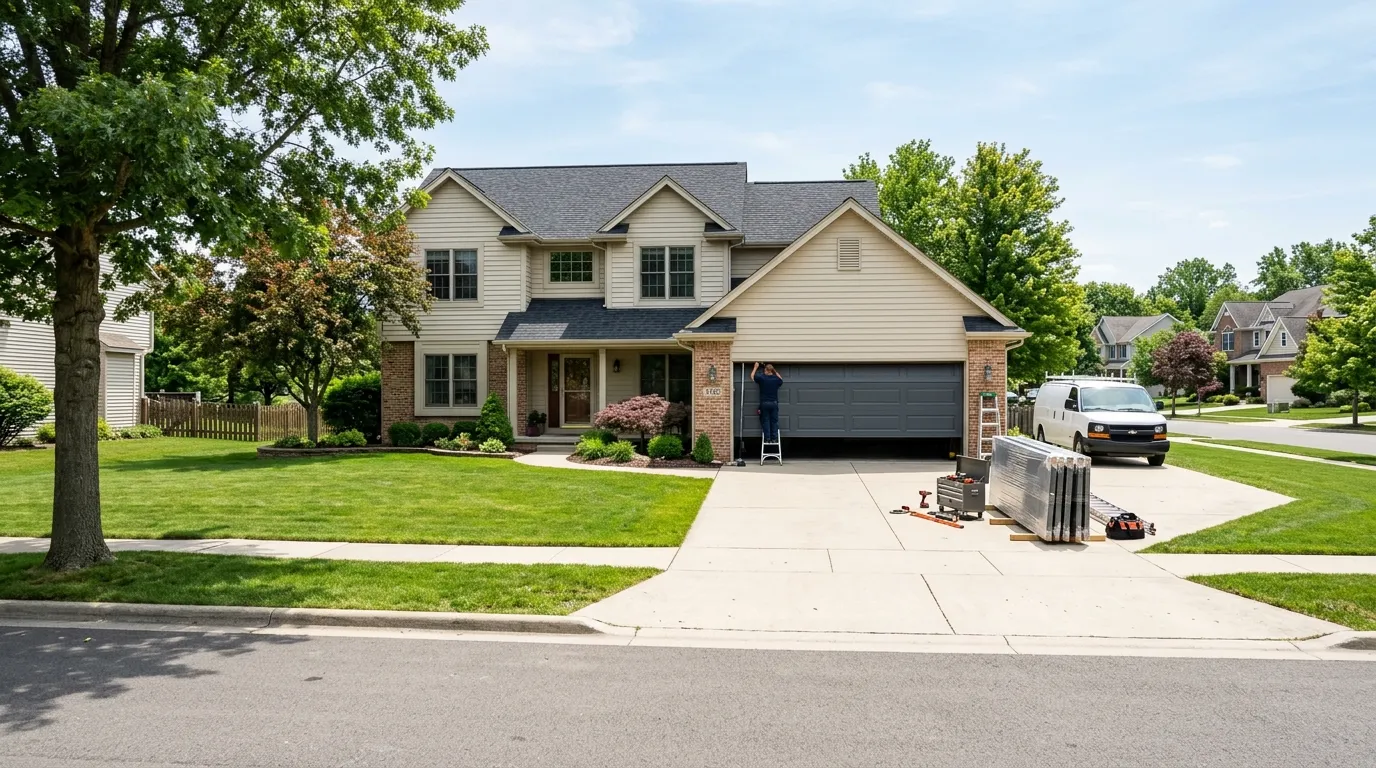
We run out of Albuquerque, about 9 miles from Corrales, so we're not a shop sitting on your street. That's worth saying plainly: there's no depot here and we won't pretend otherwise. What we do is send a truck out for the job, same as we do for the other outlying areas we cover - places like Los Ranchos, North Valley, and Bernalillo, all within a similar range. Corrales sits far enough from the city core that it has its own character, and that's really what this page is about. A garage door tech who only knows Albuquerque's older neighborhoods is going to walk into a Corrales garage and see hardware he doesn't expect if he hasn't paid attention to what actually got built out here. We have. The distance means you're planning a visit rather than a walk-in, but it doesn't change what we bring to the door once we're there - the same read on springs, tracks, and openers we'd give any house in the service area.
The Split Between Old and New
Here's the difference that matters: across the wider service area the median home was built around 1979, with a lot of that stock going back to the 1960s and 70s. Corrales runs later - the median build year here is closer to 1986. That's not a small gap. It's the difference between a house wired for an opener from day one and a house where an opener got bolted on as an afterthought to a door built before garage door openers were standard equipment. Corrales homes, being newer on average, are more likely to have had a garage designed around a sectional door and a ceiling-mounted opener from the start, rather than retrofitted decades later. That doesn't mean every Corrales garage is uniform - a build spread means you'll find both 1970s holdouts and newer construction on the same road. But the center of gravity here is later than in the older river-adjacent neighborhoods closer to the city, and that shifts what we expect to find when we open the panel.
This Area's Housing
Corrales has around 3,543 households, and the median household income here, at $114,207, runs well above the broader service-area figure of $72,188. That income level tends to track with houses that got upgraded doors and openers earlier rather than running original equipment into the ground - insulated sectional doors, belt-drive openers, that kind of thing show up more often on service calls out here than in older, lower-turnover neighborhoods. We're not going to guess at square footage or lot size because we don't have that data, but the combination of a later median build year and higher household income points toward a housing stock that's had more done to it over time, not less.
What the Housing Means for Your Door
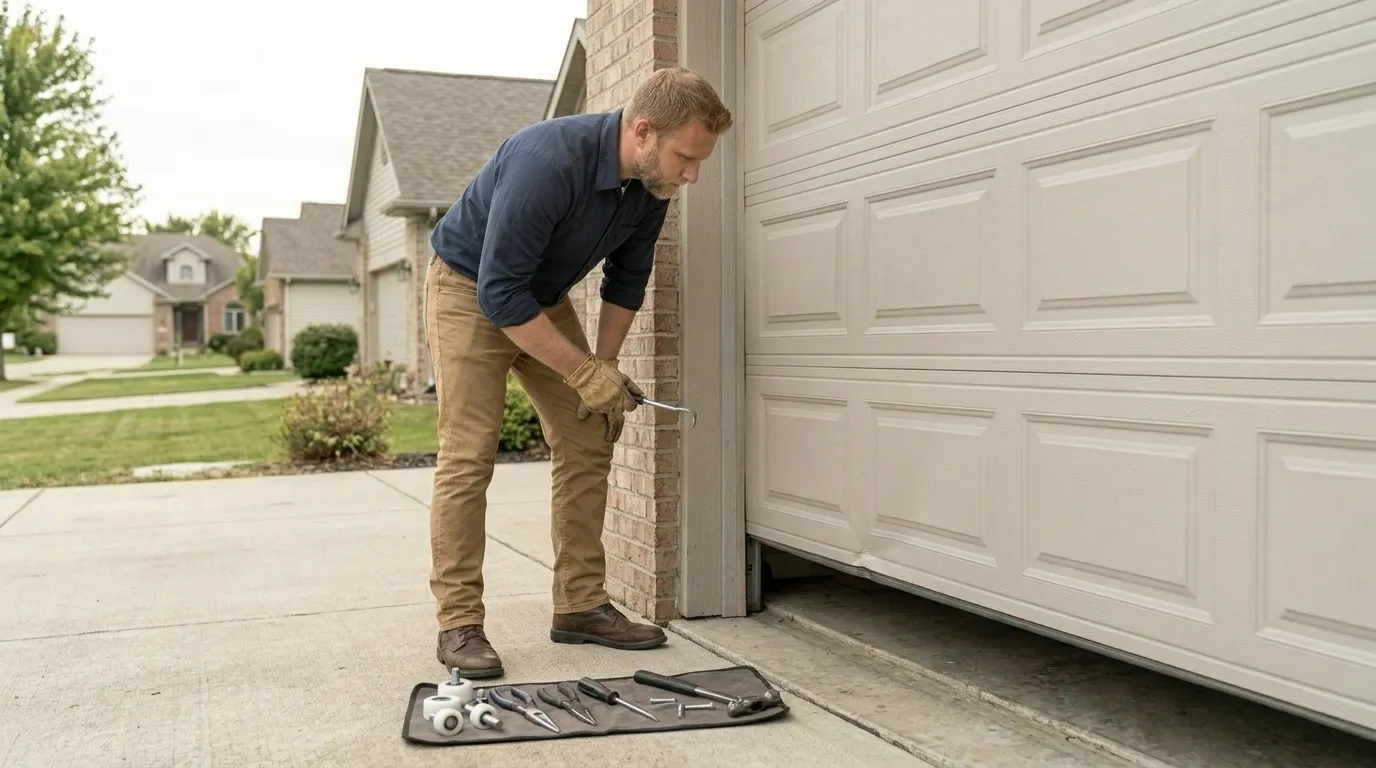
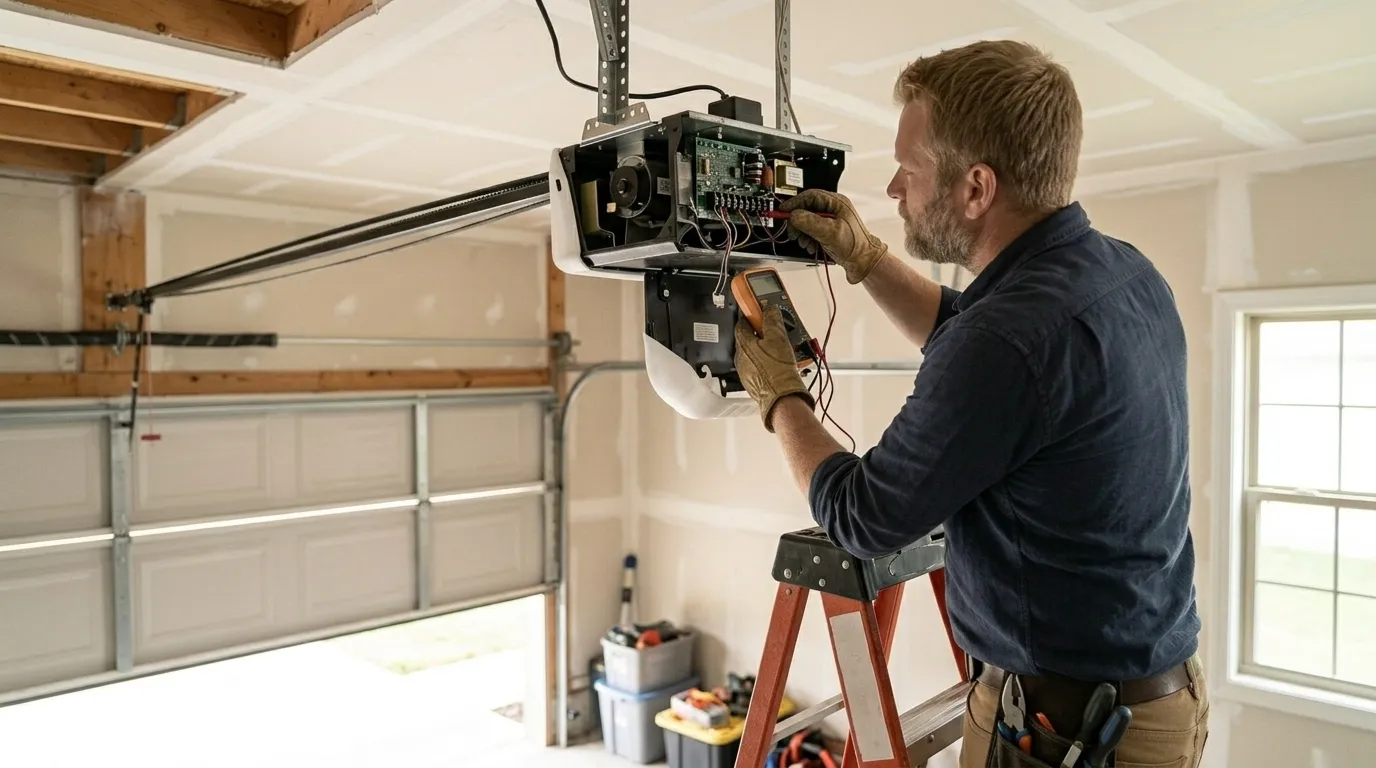
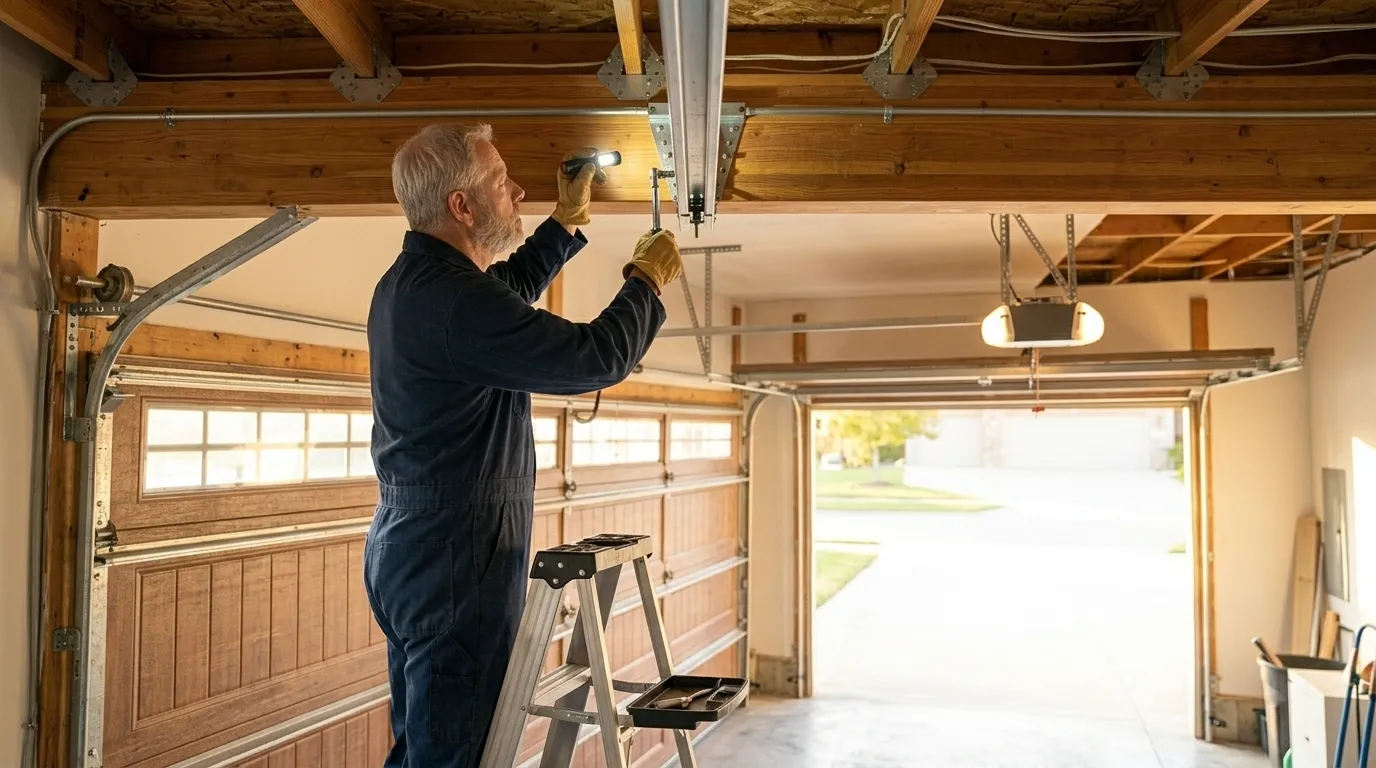
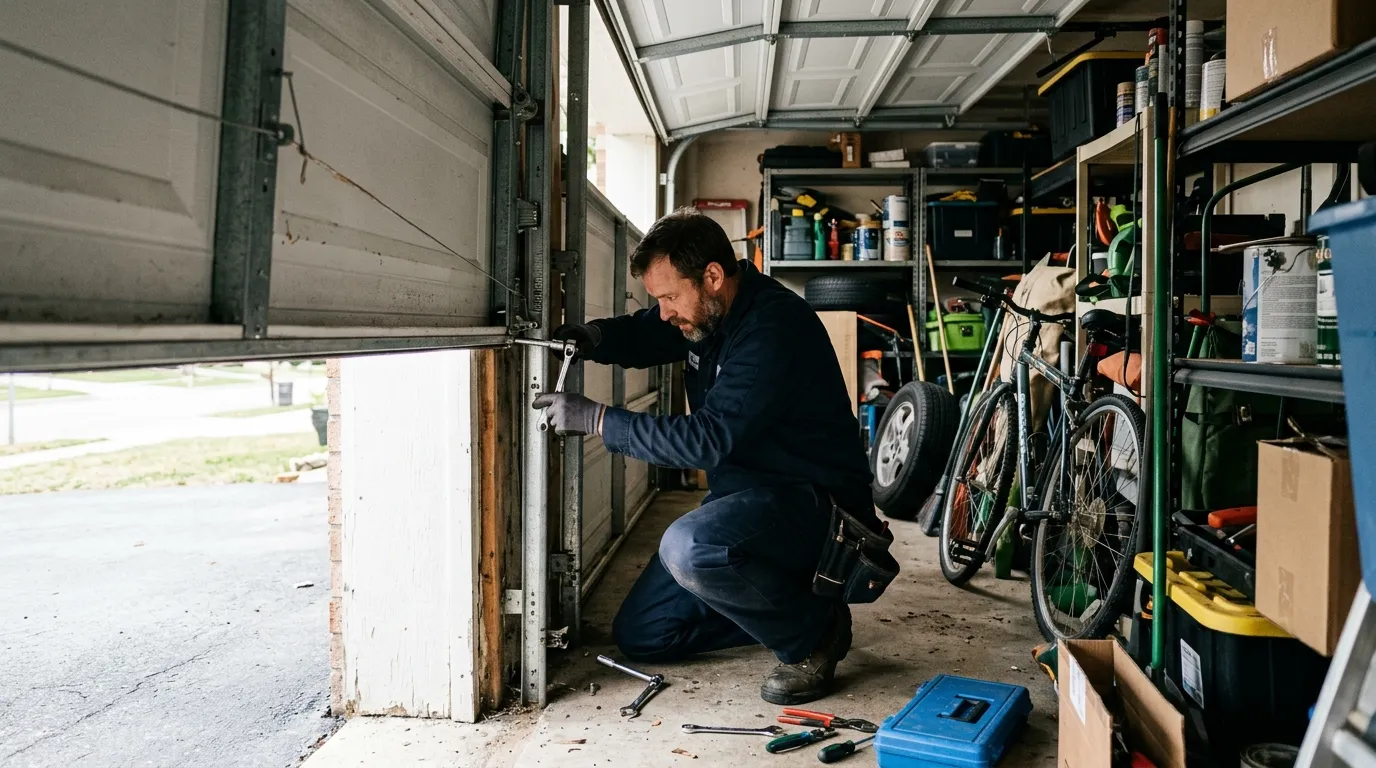
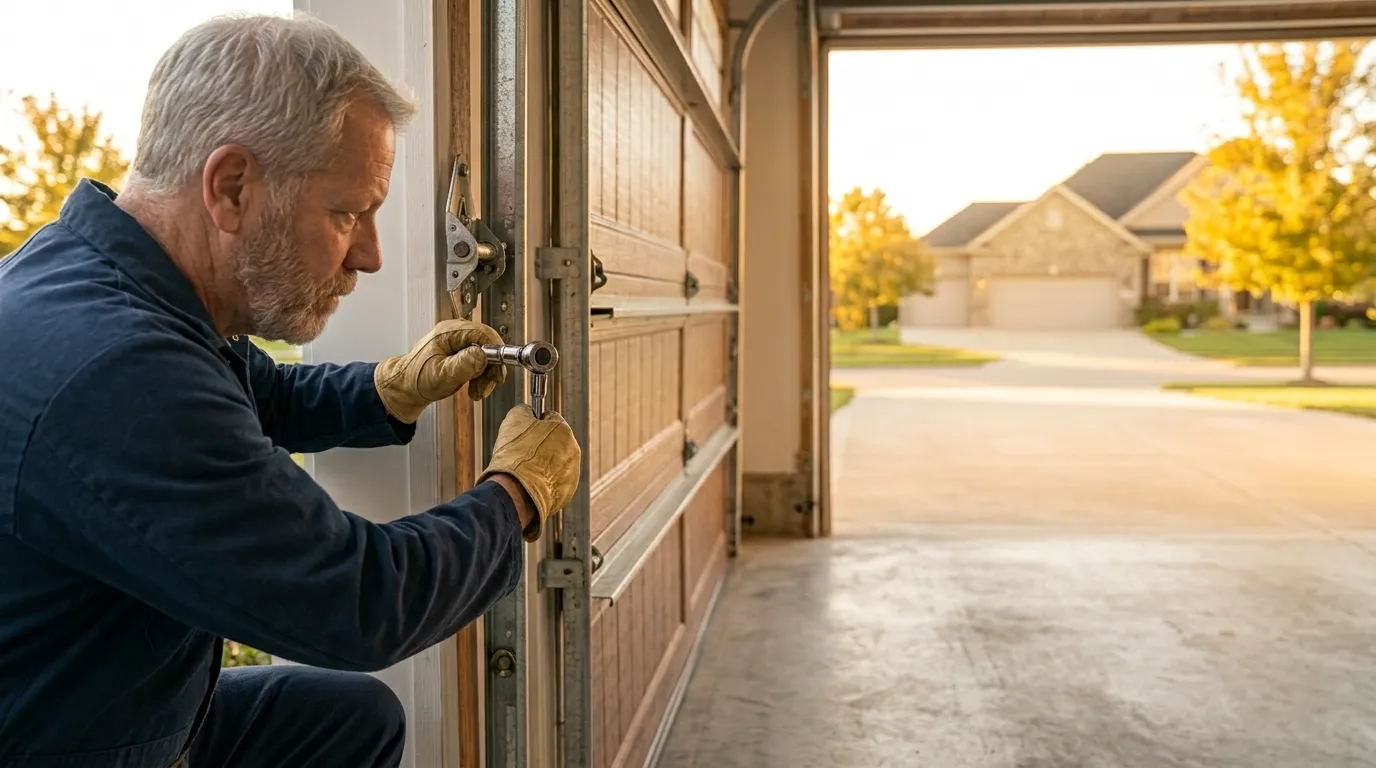
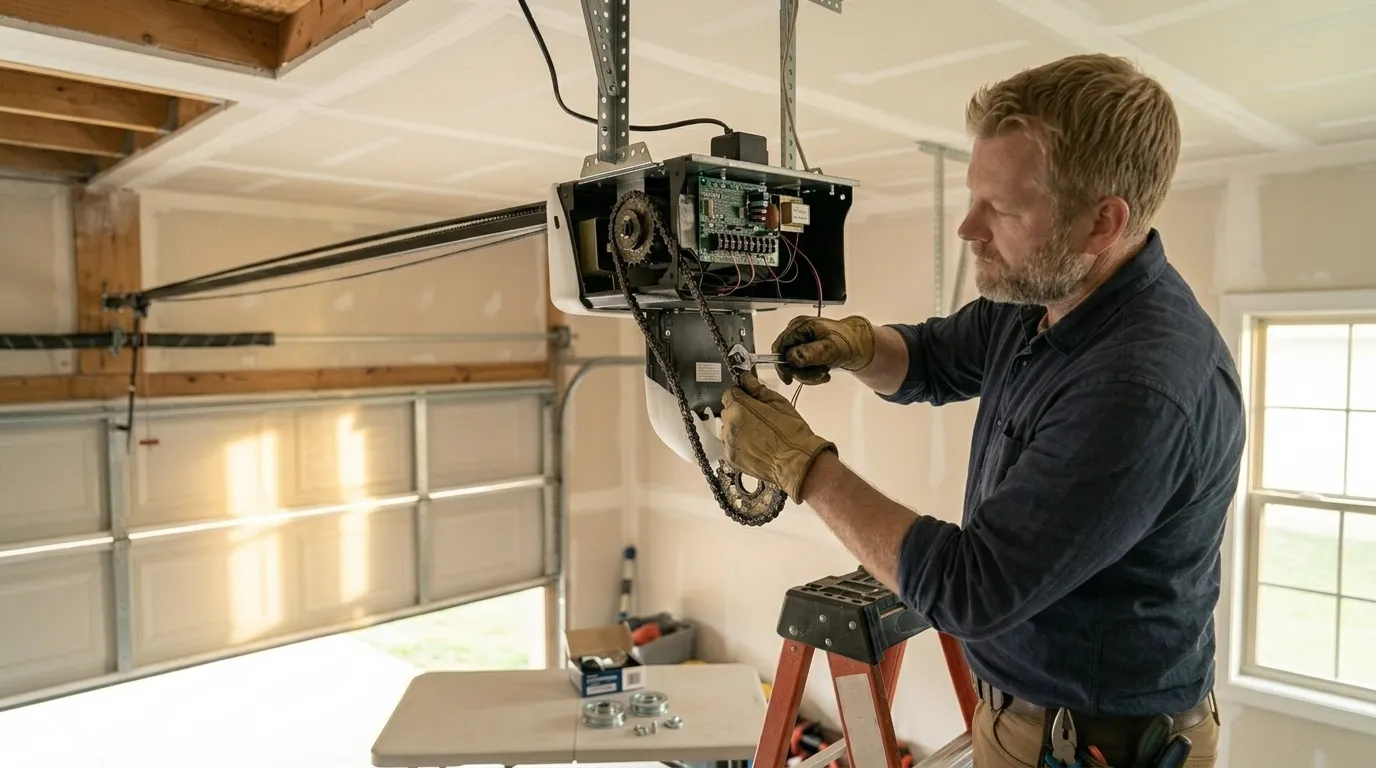
With a median build year around 1986, most Corrales garages came standard with torsion springs mounted centered above the door rather than the side-mount setups common on older one-piece doors. That's good news for parts availability - centered torsion hardware is still the standard configuration, so springs, cables, and drums are easy to source. Where we still see age catching up with these doors is the opener itself: a unit installed when the house was built in the mid-80s is well past any reasonable service life, and the circuit boards and drive gears in openers that old are the most common failure point we run into on calls out this way. The area's cold moderate climate also plays a role - repeated freeze-thaw cycles over a few decades work on weatherstripping and can stiffen grease in older bearings, which shows up as a noisy or sticking door before anything actually breaks. One thing we won't do is push a full door replacement on a house where the panels and track are sound and it's just the opener or a spring that's gone. Replacement makes sense when the door itself has warped or the track is bent beyond adjustment - otherwise it's usually a repair, not a rebuild.
How it works
From “it’s stuck” to “it’s fixed”
01
Tell us what’s wrong
Describe the symptom - won’t open, loud bang, opener runs but the door won’t move.
02
On-site diagnosis
A technician tests the door under power and by hand and finds what actually failed.
03
Clear, up-front plan
You get the fix that’s needed and what drives the cost - before any work starts.
04
Repaired & tested
The repair is done, the door is set true and tested, and the work area left clean.
Serving Albuquerque, NM - tell us what your door’s doing and we’ll take it from there.
No. We run out of Albuquerque, about 9 miles away, and send a truck to Corrales for service calls. There's no local depot, just a scheduled visit like we'd do for any of the outlying areas we cover.
Are Corrales garage doors different from ones in older Albuquerque neighborhoods?
Generally yes. Corrales homes run newer on average, with a median build year around 1986 versus roughly 1979 across the wider service area, so you're more likely to find centered torsion springs and a built-in opener setup rather than a retrofitted one.
What fails most often on a Corrales garage door?
On houses from the area's typical build era, the opener itself is the most common failure - units from the mid-80s are well past a reasonable service life. Springs and cables wear too, but the opener's drive gear and circuit board tend to go first.
Will you tell me if I need a new door instead of a repair?
Yes. If the panels are sound and the track isn't bent, we'll fix the spring or opener rather than sell a replacement. Replacement makes sense when the door or track itself is damaged, not just because the hardware is old.
Ready to get your garage door sorted?
Tell us what it’s doing and where you are in Albuquerque - we’ll take it from there.